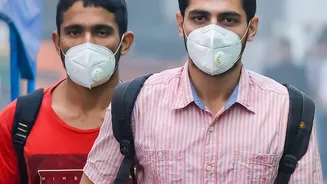








Waking up to a scratchy, sandy feeling in your throat is a familiar part of life in Delhi during smog season. That persistent tickle and discomfort isn't just in your head—it's a direct response to the air you're breathing.
Why Smog Is So Harsh on Your Throat
Delhi's smog is a toxic cocktail
of pollutants, but the primary culprits behind your throat irritation are tiny particulate matter (PM2.5), nitrogen oxides, and sulfur dioxide. Think of your throat's delicate lining, or mucosa, as a soft, moist surface. When you breathe in smog, these microscopic particles act like sandpaper, physically scratching the tissue. Simultaneously, gases like sulfur dioxide can dissolve in the moisture of your throat, creating mild acidic compounds that cause a chemical-burn-like effect. This dual assault leads to inflammation, redness, dryness, and the persistent scratchy sensation known as 'Delhi throat'.
Immediate Steps for Soothing a Sore Throat
When your throat already feels raw, the goal is to soothe the inflammation and hydrate the irritated tissues. A warm salt water gargle is one of the most effective first steps. Mix half a teaspoon of salt in a glass of warm water and gargle for 30 seconds before spitting it out. This helps reduce swelling and wash away some of the trapped irritants. Drinking plenty of warm fluids throughout the day—like herbal teas, clear broths, or simply warm water with honey and ginger—also helps. Honey has natural anti-inflammatory properties and coats the throat, while ginger can help reduce inflammation. Steam inhalation, either from a bowl of hot water or a humidifier, can also add much-needed moisture to dry airways, providing significant relief.
Your First Line of Defence: Minimising Exposure
While remedies can soothe symptoms, prevention is crucial. The most important step is to reduce your exposure to polluted air. Check the Air Quality Index (AQI) daily and try to stay indoors as much as possible on 'Severe' or 'Very Poor' days. When you do have to go outside, wearing a well-fitted N95 or FFP2 mask is non-negotiable. Unlike cloth or surgical masks, N95 respirators are designed to filter out at least 95% of fine particulate matter (PM2.5), which are the most harmful particles for your throat and lungs. At home, keep windows and doors closed during peak pollution hours and consider investing in an air purifier with a HEPA filter to maintain cleaner indoor air.
Is It Smog or Something Else?
It can be difficult to distinguish between a pollution_induced sore throat and a viral infection. A key difference is the absence of other systemic symptoms. A smog_related sore throat typically involves a dry or scratchy feeling, a persistent dry cough, and sometimes itchy or watery eyes. It rarely comes with a fever or body aches, which are common signs of viral infections like the flu. If your throat irritation is accompanied by a high temperature, extreme fatigue, painful swallowing, or swollen lymph nodes, it is more likely an infection.
When to See a Doctor
While most cases of smog_related throat irritation can be managed at home, certain symptoms warrant professional medical advice. You should consult a doctor if your sore throat persists for more than a week without improvement or if it keeps coming back. Seek prompt medical attention if you experience severe difficulty swallowing, shortness of breath, wheezing, chest pain, or a cough that lasts more than three weeks. These could be signs that the pollution is affecting your respiratory system more deeply, potentially exacerbating underlying conditions like asthma or leading to a more serious infection.