
Meet Our Cosmic Neighbor
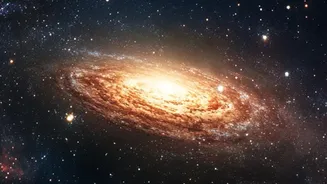
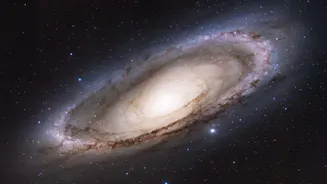
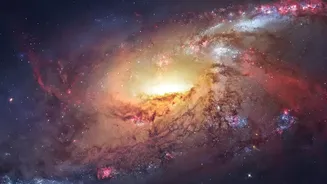
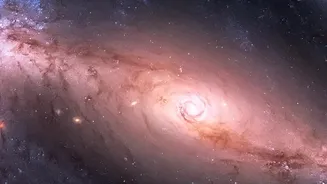
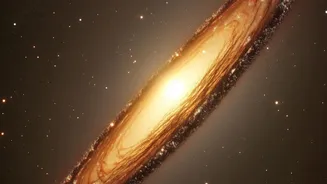
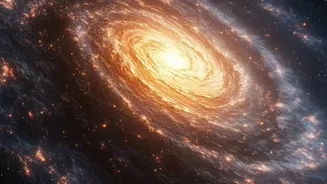
At a distance of 2.5 million light-years, the Andromeda galaxy (M31) is our closest major galactic neighbor and a cosmic marvel. Visible to the naked eye as a faint, elongated smudge of light in the autumn sky, this spiral galaxy is similar in size to our own
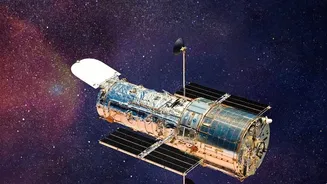
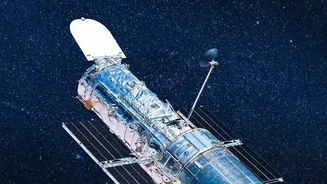
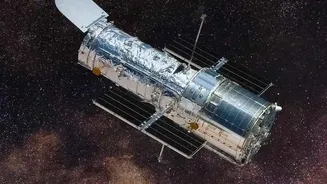
Milky Way. Its relative proximity makes it an unparalleled natural laboratory for astronomers. By studying Andromeda, scientists can gain insights into the processes that shape large spiral galaxies like ours, effectively looking at a fossil record of galactic life cycles. Hubble is the only telescope powerful enough to resolve individual stars at that distance, allowing scientists to build a detailed history of its activity.
The Stellar Nursery Goes Quiet
The headline-grabbing idea of 'disappearing stars' isn't about existing suns vanishing. Instead, it refers to a sharp decline in the birth rate of new stars. A recent study, published in The Astrophysical Journal and using a vast trove of data from the Hubble Space Telescope, has mapped this slowdown in unprecedented detail. By analyzing nearly 200 million individual stars, researchers determined that Andromeda's star formation has been steadily decreasing for the last 500 million years, with an even more dramatic drop in the last 40 million years. To put the numbers in perspective, 500 million years ago, Andromeda was churning out stars at a rate of about one solar mass per year. Today, that has plummeted to just one-fifth of a solar mass annually.
Reading the Fossil Record in Starlight
To uncover this history, scientists acted like cosmic archaeologists. They used the fact that different types of stars have different lifespans and colors. Massive, young stars burn hot and bright, giving off a distinct blue light, but they live for a comparatively short time. Older, less massive stars are cooler and glow with a redder hue. By mapping the distribution of blue and red stars across two-thirds of Andromeda's disk, the team could create a historical map of its star-forming activity. Regions rich in blue stars pointed to recent births, while red-dominated areas signaled that the stellar nurseries had long since closed down. This technique allowed them to effectively rewind time and watch how the galaxy's creative energy has waned.
Not a Shortage, but a Slowdown
Intriguingly, the cause of this decline does not appear to be a lack of fuel. Andromeda still possesses vast reservoirs of the cold gas and dust necessary to form new stars. Instead, researchers believe the galaxy is naturally winding down after a period of intense activity. About two billion years ago, Andromeda experienced a massive burst of star formation, likely triggered by a merger or close encounter with another, smaller galaxy. The current slowdown is seen as a long-term 'breather' following that frenetic era. Much of the recent decline is concentrated in a star-forming ring located about 32,000 light-years from the galactic center, which was once a hub of activity but is now growing quiet.
A Case of Galactic Interference?
Another piece of the puzzle might involve Andromeda's small satellite galaxy, M32. The new study found a noticeable 'dead zone' of star formation in the part of Andromeda's disk closest to M32. This suggests that M32 may have punched through Andromeda's disk around 60 million years ago, disrupting the gas clouds and halting their ability to collapse and form stars. While the exact timing and nature of this interaction are still being investigated, it presents a compelling explanation for at least some of the localized shutdown in star birth.
A Glimpse of Our Own Future
Understanding why Andromeda's stellar fire is fading is crucial because it provides a potential preview of our own galaxy's fate. The Milky Way is also a large spiral galaxy, and these findings help model how such galaxies age and transition into a more quiescent state. Furthermore, Andromeda and the Milky Way are on a collision course, destined to merge in about 4.5 billion years. Studying the current state of our future partner gives us a clearer picture of the cosmic environment our solar system will eventually inhabit. This research confirms that galaxies are not static collections of stars, but dynamic, evolving systems with complex life stories.