





First, What Is El Niño?
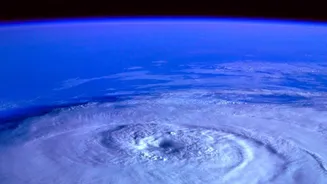
El Niño is a natural and recurring climate pattern, not a direct result of man-made climate change. It involves the unusual warming of surface waters in the central and eastern Pacific Ocean near the equator. Typically, strong trade winds push warm surface water westwards
towards Asia. During an El Niño, these winds weaken, allowing the warm water to slosh back towards the Americas. This large-scale shift in ocean heat disrupts weather patterns across the globe, often for months at a time.
A Natural Heater on a Warming Planet
Think of the Pacific Ocean as a massive heat reservoir. El Niño effectively turns up the thermostat by releasing huge amounts of that stored ocean heat into the atmosphere. This natural warming effect is now happening on a planet that is already hotter due to decades of greenhouse gas emissions. The result is a double impact: the baseline warming from human activity gets an extra, significant push from El Niño. Projections for the current 2026 event suggest it could be one of the strongest on record, amplifying its effect on global temperatures.
The 2°C Threshold Explained
The Paris Agreement, a landmark international accord, aims to limit long-term global warming to well below 2 degrees Celsius above pre-industrial levels, while pursuing efforts to limit it to 1.5°C. This isn't an arbitrary number; scientists consider it a critical guardrail beyond which the risks of catastrophic and potentially irreversible climate impacts—like the collapse of ecosystems—increase dramatically. The headline's 'overshoot' refers to the possibility that the global average temperature for a single month, supercharged by El Niño, could exceed this 2°C mark for the first time. Projections from the University of Miami estimate a 35-40% chance of this happening for at least one month in early 2027.
Is This Overshoot Permanent?
No, but that doesn't mean it's not serious. A temporary breach of the 2°C mark for a month or two is not the same as failing the Paris Agreement's long-term goal, which is measured over decades. Once the El Niño event subsides, its warming influence will fade, and global average temperatures are expected to 'ease' back down. However, they will settle onto the steadily rising baseline of human-caused warming, not return to past levels. Scientists view this potential overshoot as a crucial dress rehearsal—a brief, real-world glimpse into the kinds of extreme conditions that could become normal in a world that is permanently 2°C warmer.
What It Could Mean for India
For India, El Niño's impacts are often direct and disruptive. The phenomenon is strongly linked to weaker monsoon circulation, which can lead to deficient rainfall, drought-like conditions, and stress on agriculture and water supplies. In fact, about 60% of El Niño years have been associated with below-normal monsoon rainfall in India. The current powerful El Niño has already been linked to a drier-than-normal June. A strong event layered on top of existing climate change could also mean more frequent and intense heatwaves, warmer nights, and increased demand for water and electricity.