





The Case for Coconut Water: Nature's Sports Drink
Coconut water, the clear liquid found inside young green coconuts, is often praised as a natural isotonic drink. Its claim to fame lies in a powerful electrolyte profile, especially its high potassium content. A single cup can offer over 500 mg of potassium,
a mineral crucial for regulating fluid balance, nerve signals, and muscle contractions. This makes it an excellent choice for replenishing fluids lost through sweat, particularly after light to moderate exercise or exposure to heat. It's naturally low in calories and fat, offering a light, slightly sweet alternative to sugary sports drinks. For those seeking quick, simple hydration without a heavy feeling, coconut water is a formidable contender. It is absorbed quickly and is best consumed fresh to maximize its benefits.
The Power of Buttermilk: The Probiotic Cooler
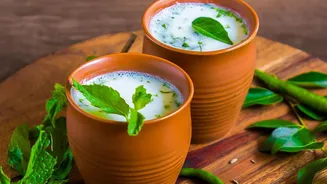
Traditional buttermilk, known as 'chaas', is the liquid left over after churning butter from cream. It can also be made by diluting curd. Its benefits extend far beyond simple hydration. Buttermilk is a fantastic source of probiotics, the beneficial bacteria that support a healthy gut microbiome. A healthy gut aids digestion, boosts immunity, and can even improve skin health. Nutritionally, buttermilk provides a more rounded profile than coconut water. It contains a notable amount of protein, which promotes satiety, and is an excellent source of calcium, essential for bone and teeth strength. While it does contain electrolytes like potassium, its primary strength lies in its digestive and cooling properties, making it a traditional favourite to have with or after meals.
A Nutritional Head-to-Head
When placed side-by-side, the nutritional differences become clear. Per 100ml, coconut water is generally lower in calories (around 18-30 kcal) compared to buttermilk (around 40-60 kcal). However, buttermilk delivers significantly more protein (about 3-4 grams) and calcium, whereas coconut water has virtually no protein. Coconut water typically has a slight edge in potassium content, a key electrolyte for hydration. Buttermilk, on the other hand, often contains more sodium, another electrolyte lost through heavy sweating. Buttermilk is also a richer source of B vitamins, including B12 and riboflavin, which help convert food into energy. Sugar content can be similar in unsweetened versions of both drinks.
When to Choose Coconut Water
Opt for coconut water when you need rapid rehydration and an electrolyte boost without the calories. It is the ideal choice after a workout, a run, or spending time in the sun, as its minerals help restore what you've lost through sweat. Its high potassium content is particularly effective for preventing muscle cramps. If your main goal is simply to replenish fluids quickly and you prefer a lighter drink, coconut water is your best bet. It's often recommended on an empty stomach to maximize its hydration potential.
When to Choose Buttermilk
Buttermilk shines as a drink to support overall wellness, particularly digestive health. It is the perfect accompaniment to meals, especially a spicy lunch, as its cooling properties and probiotics can aid digestion and prevent issues like bloating and acidity. The protein in buttermilk also makes it more filling, helping you feel satiated. If you've been sweating heavily and need to replace sodium, or if you're looking for a drink that supports gut health and provides more nutrients like calcium and B vitamins, buttermilk is the superior option.