






A Journey Decades in the Making
The quest to visit Pluto began long before New Horizons launched. In the early 1990s, scientists began advocating for a mission to the solar system's last unexplored planet. After years of proposals and even a budget cancellation that was later overturned,
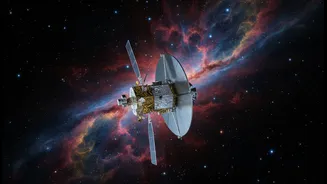
NASA officially selected the New Horizons mission in 2001. Led by Principal Investigator Alan Stern, the team at Johns Hopkins Applied Physics Laboratory and the Southwest Research Institute engineered a craft built for the long haul. On January 19, 2006, it blasted off from Cape Canaveral, becoming the fastest human-made object ever launched from Earth. Still, its primary target was so distant that the journey would take nearly a decade.
The Long, Quiet Wait
For nine and a half years, New Horizons silently sped across the solar system. To conserve power and resources, the spacecraft spent much of this time in hibernation, with its main systems powered down. Mission controllers would wake it for brief annual check-ups to ensure everything was functioning. A critical moment came in February 2007, when the probe flew past Jupiter. This maneuver wasn't just for a check-in; it was a crucial gravity assist that shaved three years off its travel time to Pluto. This flyby also served as a dress rehearsal, allowing the team to test its scientific instruments on Jupiter and its moons. The long cruise was a testament to the team's foresight, planning for a brief, intense encounter billions of miles from home.
First Postcard from Pluto
On July 14, 2015, the years of waiting paid off spectacularly. New Horizons flew within 12,500 kilometers of Pluto, capturing the first-ever close-up images of the dwarf planet. The world was captivated by what it saw. Instead of a simple, cratered ice ball, Pluto was revealed to be a stunningly complex world. The most iconic feature was a massive, heart-shaped nitrogen glacier, now named Tombaugh Regio. The probe discovered towering mountains of water ice, flowing glaciers of exotic ices, and hints of a surprisingly young surface, suggesting ongoing geological activity. It took 15 months to download all the data from the flyby, as the signal was incredibly weak over the vast distance. The mission fundamentally rewrote our understanding of Pluto, transforming it from a fuzzy dot into a dynamic and active world.
An Encore in the Kuiper Belt
The mission's success at Pluto was just the beginning. The team had always planned for an extended mission into the Kuiper Belt, a vast ring of icy bodies beyond Neptune. Even before the Pluto flyby was complete, scientists were using the Hubble Space Telescope to find the next target. They found it in a small object initially nicknamed Ultima Thule, later officially named Arrokoth. On January 1, 2019, New Horizons performed a flawless flyby, making Arrokoth the most distant and primitive object ever explored by a spacecraft. The images revealed a strange, reddish, snowman-like object formed from two lobes that gently merged. This suggested it was a planetesimal—a building block of planets—that had remained largely unchanged since the dawn of the solar system, providing invaluable clues about how planets form.
The Journey Continues
Even now, more than 20 years after its journey began, New Horizons continues its work. As of mid-2026, the spacecraft is nearly 6 billion miles from Earth, still healthy and collecting data on the outer heliosphere—the vast bubble of plasma blown outward by the sun. After a year-long hibernation, the probe woke up in June 2026 to resume its scientific mission. Its instruments are measuring the solar wind and dust particles in a region only the Voyager probes have previously reached, providing a new level of detail. The mission's success demonstrates the immense scientific return on investment from long-duration projects. While the initial cost of around $700 million seemed substantial, the wealth of discovery over its extended life has proven its value.