



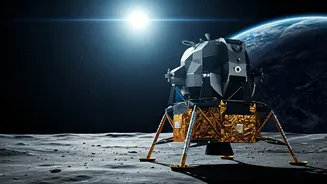



A New Strategy for the Moon
NASA has officially awarded four new contracts to deliver science and technology to the lunar surface by 2028. The awards, totaling approximately $590 million, went to three American companies: Astrobotic Technology, Firefly Aerospace, and Intuitive Machines.
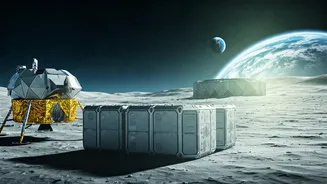
This move is part of the agency's Commercial Lunar Payload Services (CLPS) initiative, a program designed to outsource lunar logistics to the private sector. Instead of building and operating its own landers, NASA acts as a commercial customer, buying a spot for its scientific instruments on rockets and landers built by these firms. This approach is designed to foster a competitive commercial space economy, reduce costs, and increase the frequency of missions needed to support the broader Artemis program, which aims to establish a long-term human presence on the Moon.
The Winning Companies and Their Missions
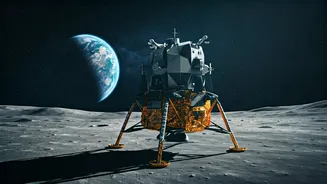
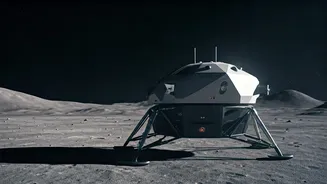
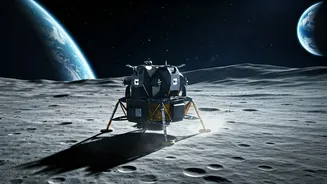
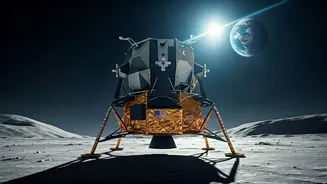
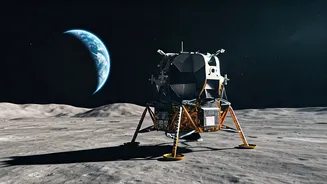
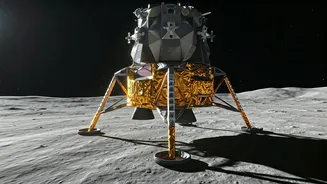
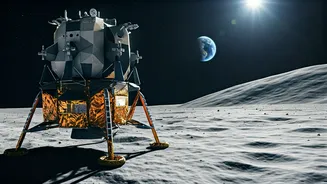
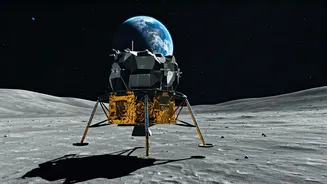
The nearly $600 million in funding is divided among four distinct missions. Pittsburgh-based Astrobotic secured the largest share, with $297.9 million for two separate missions using its Peregrine lander. Texas-based companies Firefly Aerospace and Intuitive Machines received one contract each. Firefly was awarded $144.2 million for a mission using its Blue Ghost lander, while Intuitive Machines, which has already landed on the Moon, received a contract valued at up to $148.3 million for a flight with its Nova-C lander. All missions are slated to launch by late 2028 and will utilize updated versions of landers that have previous flight heritage, enabling a faster production cadence for NASA.
Astrobotic's Two-Lander Deal
Astrobotic's two new missions will use its Peregrine lander, a vote of confidence in the design despite the failure of its first mission in 2024 to reach the Moon due to a propulsion issue. The company has since gained valuable experience, which it will apply to these upcoming flights. The new missions, Peregrine-2 and Peregrine-3, will target the Gruithuisen Domes, a volcanic formation on the Moon's near side. Each lander will carry a suite of NASA payloads, along with available capacity for other commercial and academic customers. The news comes as Astrobotic is set to be acquired by Voyager Technologies, a move intended to create a more robust, full-service lunar platform.
Firefly and Intuitive Machines Build on Experience
Firefly Aerospace's $144 million award will fund its sixth contracted lunar mission, demonstrating its growing role in the lunar economy. The mission will use the company's Blue Ghost lander and is scheduled for a 2028 launch. The company aims to complete the mission in about two years, half the time of its first Blue Ghost flight, by leveraging its flight-proven designs. Intuitive Machines, meanwhile, adds a sixth CLPS contract to its name. The up-to-$148.3 million award is designed to qualify its Nova-C lander as a production-line vehicle, shifting from custom engineering to mass production of lunar transport. The company aims to establish a high-volume pipeline for repeatable and reliable service to the Moon.
Laying the Groundwork for a Moon Base
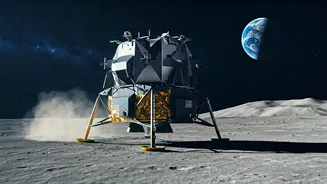
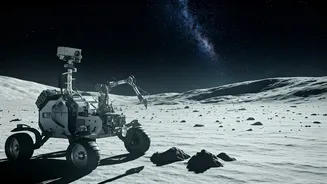
These are not just science missions; they are foundational steps toward a permanent lunar settlement. Each of the four landers will carry an identical set of three core NASA instruments. These include a laser retroreflector for navigation, a spectrometer to measure the radiation environment, and a set of stereo cameras to study how the lander's engine plume interacts with the lunar surface. This data is critical for understanding how to safely and repeatedly land larger spacecraft and for protecting future astronauts who will live and work on the Moon. These CLPS missions are a key part of the 'Moon Base' initiative, an ambitious plan to send a flurry of robotic landers to the Moon annually to prepare for human habitats.