




An Unblinking Eye on the High-Energy Universe
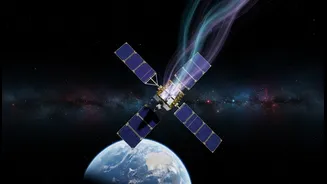
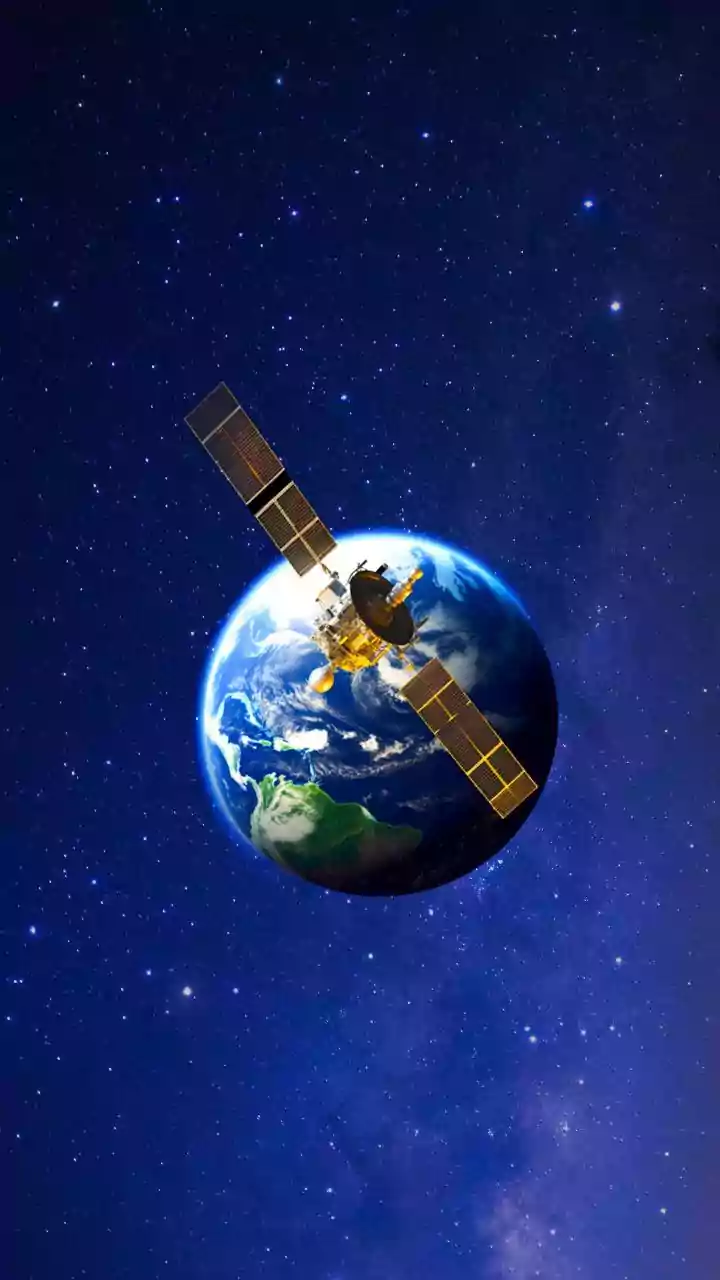
Launched in 2008, the Fermi Gamma-ray Space Telescope was designed for a five-to-ten-year mission to observe the universe in high-energy light. Gamma rays are produced by the most extreme phenomena, from supermassive black holes and exploding stars to pulsars
spinning hundreds of times a second. Fermi carries two main instruments: the Large Area Telescope (LAT) and the Gamma-ray Burst Monitor (GBM). Together, they provide an all-sky survey every three hours, mapping the most energetic and dynamic processes in space. The mission, a partnership between NASA, the U.S. Department of Energy, and international institutions, has far exceeded its original lifespan, delivering groundbreaking science for well over a decade.
The Inevitable Descent
Like all satellites in low-Earth orbit, Fermi is subject to atmospheric drag. Though its orbit is hundreds of miles high, it is not a perfect vacuum. Trace amounts of Earth's atmosphere extend to this altitude, creating a minuscule but constant friction on the spacecraft. This drag causes the observatory to gradually lose altitude and speed. NASA documents confirm that Fermi's orbit is slowly decaying. Initially launched into an orbit of about 565 kilometers, that altitude has been decreasing ever since. If nothing is done, the celebrated observatory will eventually fall back to Earth, burning up in the atmosphere and bringing a premature end to its valuable mission.
Why Saving Fermi Matters
The reason for a rescue mission is simple: Fermi's instruments are still in excellent condition and continue to produce world-class science. The telescope has revolutionized our understanding of the high-energy cosmos. It discovered massive structures now known as the "Fermi Bubbles" extending from the center of our galaxy, likely the remnants of an eruption from our central black hole. It has cataloged thousands of gamma-ray sources, including new types of pulsars that only emit gamma rays. Fermi was also pivotal in the birth of multi-messenger astronomy, observing the gamma-ray counterpart to a gravitational wave event caused by merging neutron stars, a landmark discovery. Its work has provided insights into dark matter, the origin of cosmic rays, and the physics of the universe's most powerful explosions.
The Proposed Rescue: A 100-Mile Boost
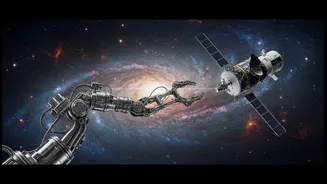
The plan to save Fermi is both ambitious and a sign of the times in space exploration. NASA is looking for a commercial partner to develop a robotic spacecraft capable of rendezvousing with the telescope, docking with it, and then firing its own thrusters to push Fermi into a higher, more stable orbit. This maneuver, often called a reboost, would effectively reset the clock on its orbital decay. The target is to raise its orbit by about 100 miles (approximately 160 kilometers), which would be enough to secure another decade of operations. The challenge is significant, as Fermi was not originally designed to be serviced or docked with in this manner. This initiative follows a similar request for information NASA put out for the Hubble Space Telescope, signaling a new strategy to extend the lives of valuable legacy missions through commercial partnerships.
A New Model for Space Sustainability
Successfully reboosting the Fermi observatory would do more than just save one mission. It would prove a new model for space logistics and sustainability. As more satellites are launched, the ability to service, refuel, or reposition them in orbit becomes increasingly vital. A successful commercial reboost of Fermi would serve as a powerful demonstration of these capabilities. It represents a shift from a disposable model of space hardware to one where valuable assets can be maintained and their operational lives extended. This not only maximizes the scientific and financial investment already made but also helps manage the growing problem of orbital debris by keeping functional satellites in service and ensuring older ones can be de-orbited safely when the time comes.