
A New Cosmic Mystery
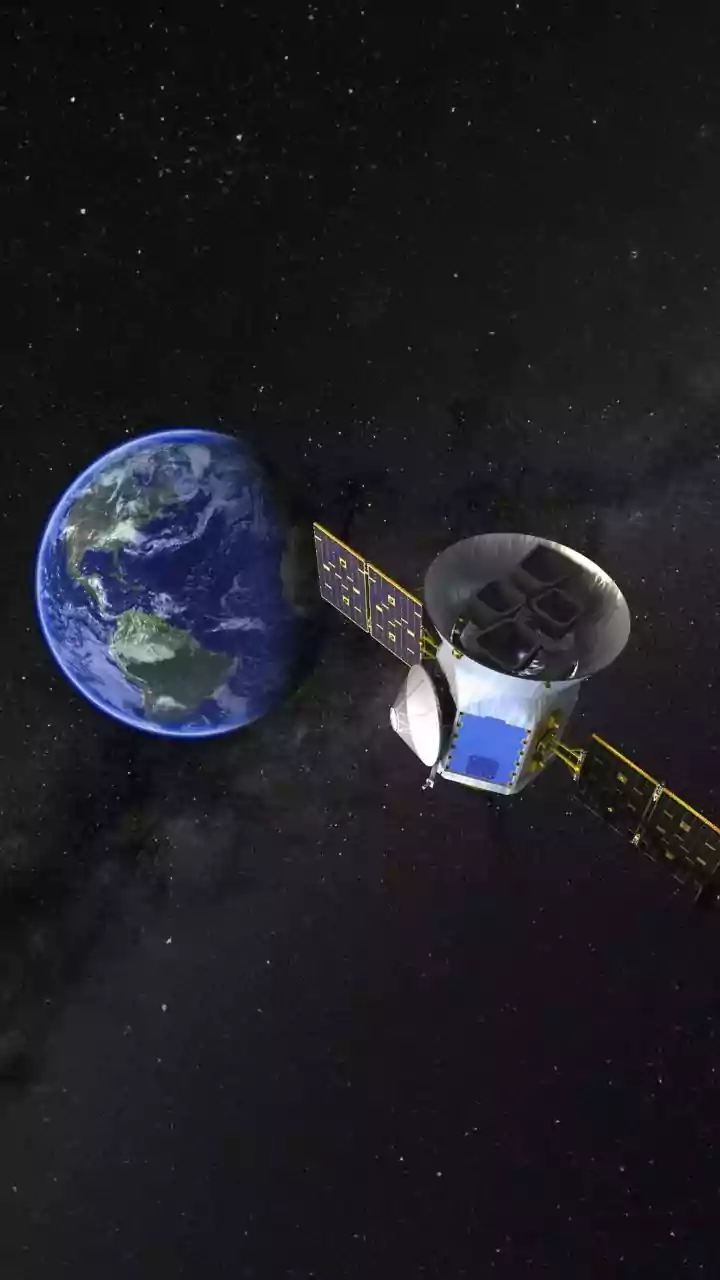
The James Webb Space Telescope (JWST) has been peering into the universe's infancy, a period just a few hundred million years after the Big Bang. In this ancient darkness, it spotted something exceptionally bright and red in a distant galaxy known as GN-z11.
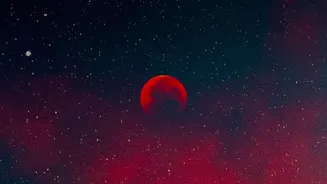
This galaxy existed when the universe was only about 400 to 440 million years old. At first, astronomers were baffled. The object was far too luminous to be a normal star, yet it had some star-like qualities. This led to a tantalizing hypothesis: they might have found a 'quasi-star', an object more commonly called a black hole star.
What Is a Black Hole Star?
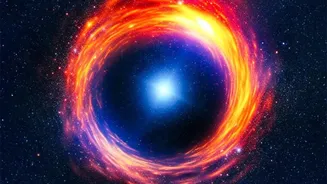
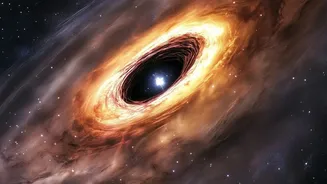
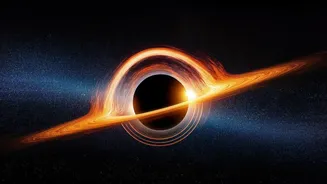
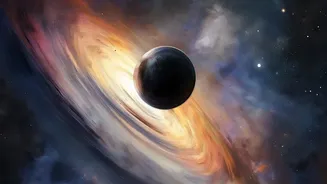
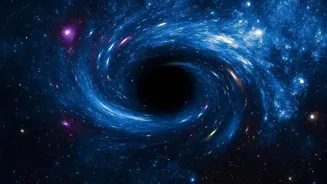
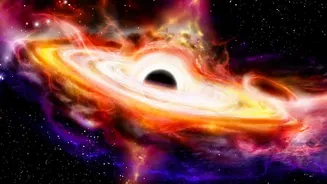
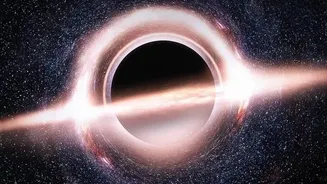
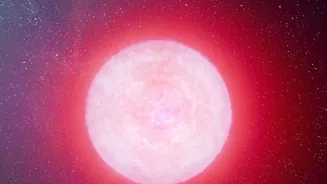
Imagine a star, but instead of a core powered by nuclear fusion like our sun, it has a black hole at its centre. This is the theoretical concept of a quasi-star. It’s thought that in the very early universe, massive clouds of primordial gas could collapse to form gigantic protostars, thousands of times the mass of our sun. The core of such a behemoth could collapse under its own gravity, forming a black hole, while the star’s vast outer layers would remain intact. The incredible energy to make the star shine would not come from fusion, but from matter from the star's envelope falling into the central black hole, a process that releases a tremendous amount of light and heat. This outward pressure from the black hole's feeding frenzy would balance the inward pull of gravity, keeping the whole object stable for a time.
Solving a Supermassive Problem
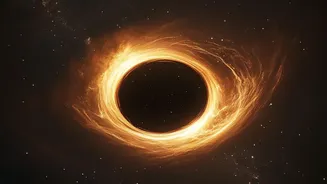
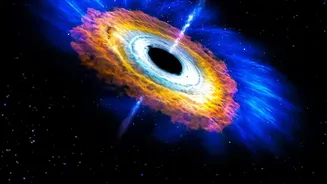
The existence of quasi-stars could solve one of the biggest puzzles in cosmology: how did supermassive black holes get so big, so fast? Astronomers have found enormous black holes, millions or even billions of times the mass of the sun, in the very early universe. Standard theories suggest black holes grow by consuming matter or merging with other black holes, but there simply wasn't enough time for them to reach such colossal sizes so soon after the Big Bang. Black hole stars offer a shortcut. These objects would act as 'seeds', starting life with an already-large black hole at their core which could then grow rapidly. Over its lifetime, as the central black hole consumes the star from the inside out, it would grow into an intermediate-mass black hole, providing the perfect progenitor for the supermassive giants we see in the hearts of galaxies like our own Milky Way today.
Evidence and Caution
The evidence for the object in galaxy GN-z11 being a black hole star is compelling, but not yet definitive. Scientists detected extremely dense gas, a powerful outflowing wind, and specific chemical signatures that are typically associated with a supermassive black hole actively consuming matter. The object's distinct red colour and extreme brightness are also consistent with theoretical models of quasi-stars. However, the term 'possible' is crucial. Alternative explanations, though less likely, could involve unusual clusters of the universe's very first stars, known as Population III stars. The scientific community remains cautious, and more observations will be needed to confirm that they have indeed found a new type of celestial object and not something else that mimics its appearance.