

A New Eye on the Cosmos
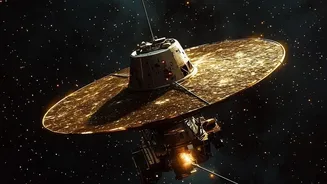
On August 30, 2026, the Nancy Grace Roman Space Telescope launched aboard a SpaceX Falcon Heavy rocket, beginning its journey to a stable orbit nearly one million miles from Earth. Named after NASA’s pioneering first chief of astronomy, Nancy Grace Roman,
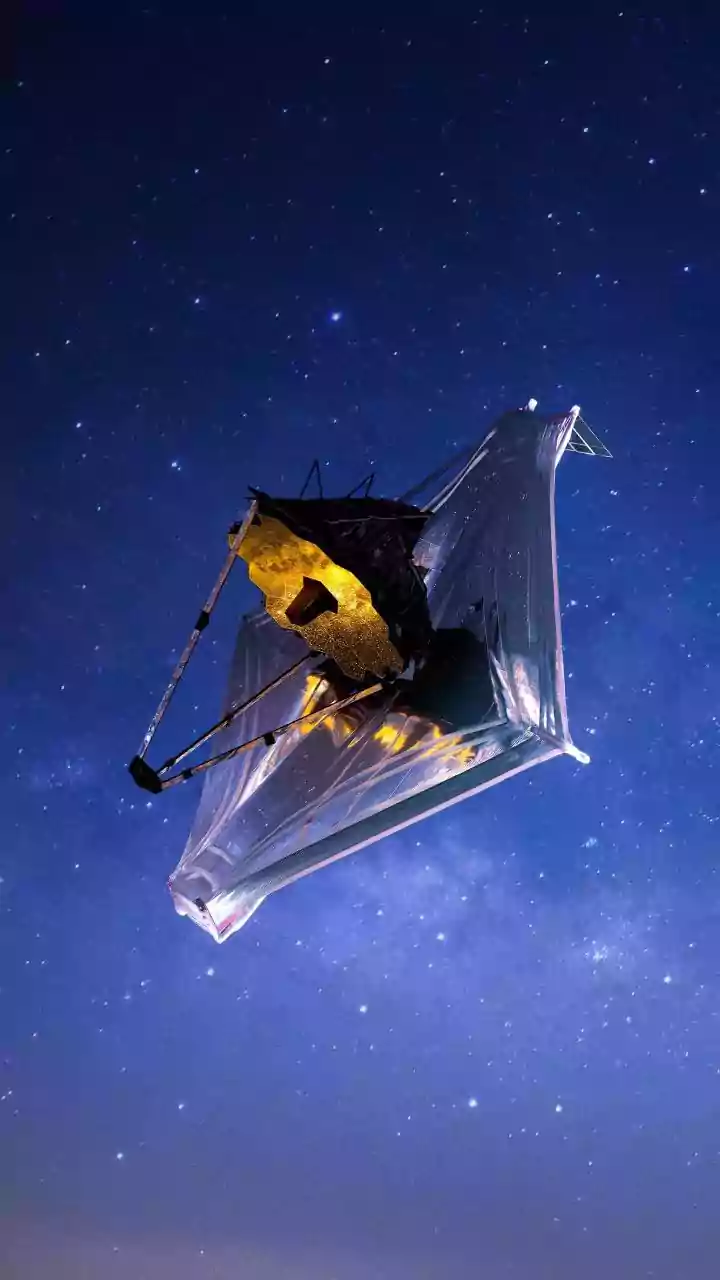
this observatory is the agency's next great flagship mission, following in the footsteps of Hubble and James Webb. However, Roman has a unique job. It’s not designed to zoom in on single, tiny targets but to scan vast swathes of the sky. Its purpose is to create the largest, most detailed cosmic maps ever made, addressing fundamental questions about the evolution and fate of our universe. While its first official science images are not expected until early 2027, the mission is already poised to reshape astronomy by the sheer volume of data it will collect.
The Power of a Panoramic View
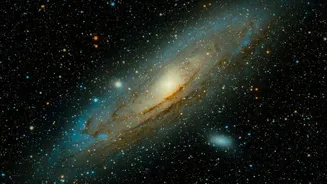
Roman’s primary advantage is its incredible field of view. Its Wide Field Instrument can capture an area of the sky at least 100 times larger than Hubble’s can in a single snapshot, with the same stunning clarity. Think of it as the difference between looking at the sky through a drinking straw and looking through a massive panoramic window. This capability makes Roman a survey instrument of unprecedented power. Scientists estimate it will be about 1,000 times faster than Hubble for mapping large areas of the universe. In its five-year primary mission, it is expected to photograph more than a billion galaxies and hundreds of billions of stars, creating a treasure trove of data that will keep astronomers busy for decades.
Chasing Cosmic Phantoms: Dark Energy and Dark Matter
Two of the biggest mysteries in modern physics are dark energy and dark matter. Together, they are believed to make up about 95% of the universe, yet we don’t know what they are. Dark matter is the invisible “glue” that holds galaxies together, while dark energy is the mysterious force causing the universe’s expansion to accelerate. Roman will tackle these enigmas head-on. By mapping the precise locations and shapes of hundreds of millions of galaxies, it will trace the influence of dark matter through a phenomenon called weak gravitational lensing, where massive objects bend the light from more distant galaxies. At the same time, by tracking thousands of exploding stars called supernovae, it will measure the expansion history of the universe with exquisite precision, giving scientists crucial clues about the nature of dark energy.
A Census of a Million Worlds
While Hubble and JWST have brought us breathtaking images of individual exoplanets, Roman will conduct a galactic census. One of its key techniques is gravitational microlensing, which occurs when a star and its planet pass in front of a more distant star, causing the background starlight to briefly brighten. This method is sensitive to planets that other techniques miss: planets with large orbits, planets with low mass, and even “rogue planets” that drift through space without a host star. Scientists predict Roman could discover over 100,000 exoplanets, including thousands found through microlensing, dramatically increasing our catalog of known worlds and revealing how common systems like our own truly are.
Paving the Way for What Comes Next
Beyond its primary surveys, Roman is also a trailblazer for future technology. It carries a sophisticated Coronagraph Instrument, designed as a technology demonstration. This device is engineered to block the overwhelming glare from a star, allowing the telescope to directly image the much fainter planets orbiting it. While it will perform limited science, the real goal is to prove the technologies needed for a future mission—a potential Habitable Worlds Observatory—that could one day use a similar technique to take images of Earth-like planets and search for signs of life in their atmospheres. Roman is not just answering today's questions; it's building the tools to answer tomorrow's.