



The Eruption That Shook the World
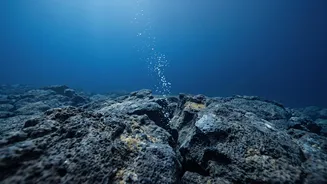
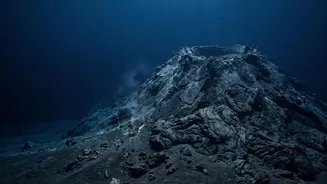
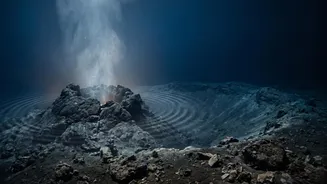
When the Hunga Tonga-Hunga Ha'apai volcano erupted on January 15, 2022, it wasn't just another volcanic event. It was the largest underwater explosion ever recorded by modern instruments. The blast was so powerful it sent atmospheric shockwaves circling
the globe multiple times and rocketed a record-breaking amount of water vapour high into the stratosphere, altering its chemistry in ways scientists are still studying. The eruption triggered a devastating tsunami that surprised experts with its speed and reach, impacting coastlines across the Pacific. Unlike typical earthquake-generated tsunamis, this one was a complex beast, driven by multiple factors including the atmospheric pressure wave. The event served as a stark reminder of how little we understood about the full potential of submarine volcanoes and exposed major gaps in our global monitoring capabilities.
The Planet's Deep-Sea Playlist
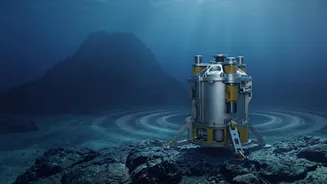
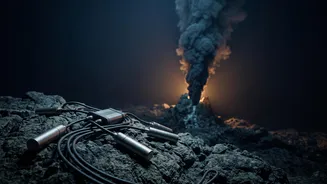
The latest buzz in the scientific community revolves around the unique sounds generated by these underwater events. Recent studies have zeroed in on the acoustic signals from the Hunga Tonga eruption. Using hydrophones—essentially underwater microphones—researchers can listen to the symphony of an eruption, from sharp cracks to deep rumbles. A breakthrough finding from a New Zealand-led team, published in early September 2026, revealed that the most destructive tsunami wave from Hunga Tonga was not caused by the initial blast. Instead, it was generated by the subsequent collapse of the volcano's caldera, a massive inward slump after the magma chamber emptied. This collapse produced its own distinct and powerful sound signature that traveled through the ocean.
A Sonic Boom Before the Wave
This is the crucial lesson from Hunga Tonga. The sound waves generated by the caldera collapse traveled through the water at nearly 1.5 kilometres per second—up to ten times faster than the tsunami waves they created. This means that a network of hydrophones thousands of kilometres away could detect the acoustic signal of a volcano collapsing long before the resulting tsunami makes landfall. This offers the potential for a revolutionary new type of early warning system. Current systems are primarily designed to detect earthquake-triggered tsunamis and struggled to accurately forecast the complex waves from Hunga Tonga. By listening for the specific 'boom' of a caldera collapse, authorities could gain precious, life-saving time to issue evacuation orders for coastal communities.
Listening In on the Indian Ocean
This science isn't just relevant to the Pacific. The Indian Ocean is a hotbed of tectonic activity, home to its own underwater volcanoes like Barren Island, one of India's active volcanoes. The memory of the 2004 Indian Ocean tsunami underscores the critical importance of robust warning systems for the region's vast coastlines. Encouragingly, hydroacoustic monitoring networks are already being utilized in parts of the Indian Ocean to detect signals related to volcanic activity. These systems listen for 'T-waves'—acoustic energy from underwater seismic events—that can indicate everything from new lava flows to the precursors of a major eruption. The recent intensified activity and eruption of Indonesia's Anak Krakatau, which led to airport closures, is another potent reminder of the ever-present volcanic risk in the broader region.