




The Last of Its Kind
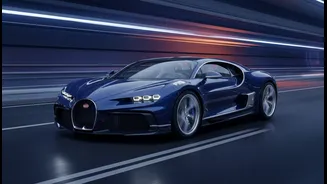
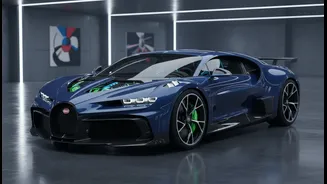
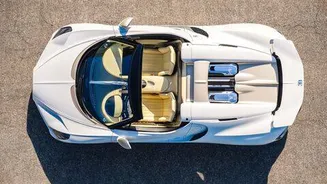
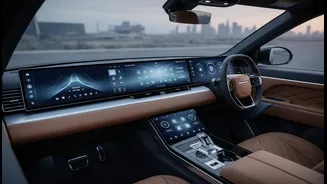
The final car, number 99, is more than just a production milestone; it’s a bespoke masterpiece aptly named 'The Last of Its Kind'. Finished in a subtle two-tone livery of Pearl and Sparkle, its aesthetic is one of understated elegance. Inside, the cabin
is a blend of Magnolia leather and Grey Carbon Matt accents, featuring unique details specified by the owner through Bugatti's Sur Mesure personalization program. Instead of the usual dancing elephant sculpture in the gear selector, this car features a falcon head, a nod to the owner's Middle Eastern heritage. Sketches of the Mistral's W16-powered predecessors, the Veyron and Chiron, are stitched into the door panels, providing a visual link to the legacy this car now concludes.
An Ode to the W16 Engine
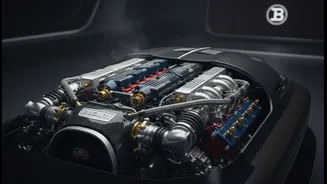
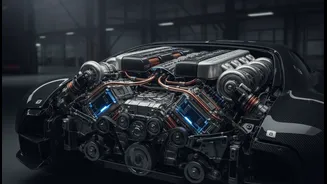
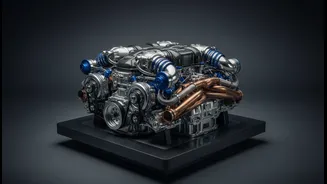
The heart of the Mistral, and the true reason for its significance, is the 8.0-litre, quad-turbocharged W16 engine. First introduced in the Veyron in 2005, this engineering marvel redefined the hypercar landscape, delivering unprecedented power and propelling Bugatti to numerous speed records. The version in the Mistral produces a colossal 1,600 PS, making it not just a tribute but a formidable performance machine. Its final act was setting a world record for the fastest open-top production car in November 2024, reaching an astonishing 282 mph (453.91 km/h). The Mistral was conceived as the ultimate send-off for this engine, a unique roadster designed to give the W16 a final, glorious voice under open skies.
A Legacy of Top-Down Motoring
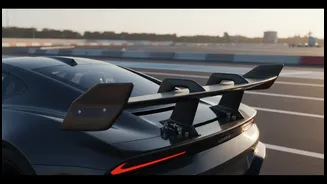
The Mistral isn’t just the end of the W16; it's also the culmination of Bugatti's rich history of creating breathtaking open-top cars. The vehicle pays homage to historic models like the 1934 Type 57 Grand Raid Usine, a winning roadster. The Mistral was designed from the ground up as a dedicated roadster, not simply a convertible version of the Chiron, ensuring its design and performance were optimized for the roofless experience. Features like the intricate, X-shaped taillights are not just stylistic; they are functional, helping to cool the mighty engine. Every element, from the air intakes mounted behind the occupants' heads to amplify the engine's roar to the aerodynamic profile, was crafted to create the most intense roofless experience possible.
The Dawn of a New Era
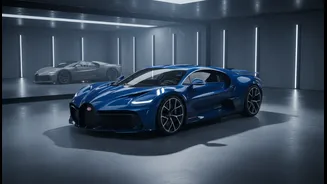
While the W16 era is over for road cars, Bugatti is already looking to the future. The company has already unveiled its next-generation hypercar, the Tourbillon. Marking a significant shift, the Tourbillon will be powered by an all-new, naturally-aspirated V16 engine paired with a hybrid electric system. Developed in partnership with Cosworth and electric hypercar specialists Rimac, this new powertrain promises to deliver a staggering 1,800 horsepower. Just days before announcing the final Mistral, Bugatti inaugurated 'La Manufacture,' a new facility at its Molsheim home dedicated to building the Tourbillon. This transition signals a strategic pivot towards electrification, blending Bugatti's tradition of extreme performance with the next wave of automotive technology.