
More Than Just Stacking Rocks
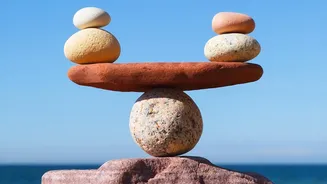
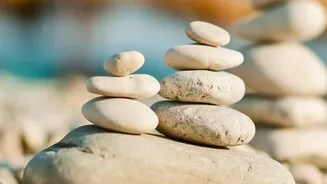
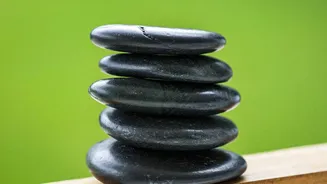
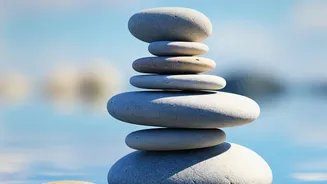
At first glance, stone balancing looks simple: one rock placed on top of another. But it's far more nuanced than casual stacking. True stone balancing involves finding the unique point of equilibrium for each stone, often on a contact point that is incredibly
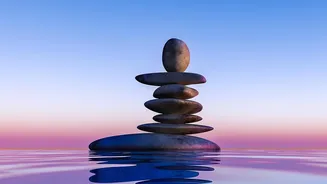
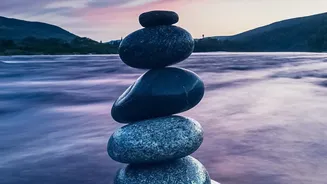
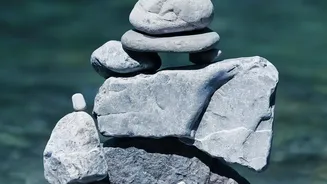
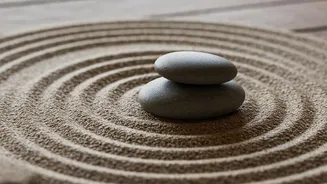
small. The resulting sculptures appear to defy gravity, not because of glue or tricks, but through a patient dialogue between the artist, the stones, and the force of physics. Practitioners distinguish this from simple rock piling, where stones have multiple, wide points of contact. The art lies in creating a structure that is highly improbable, a testament to stillness and sensitivity.
A Meditative State of Flow
The intense concentration required for stone balancing is often described as a form of active meditation. Practitioners report that as they become absorbed in finding the perfect balance point, the mental chatter of daily life fades away. This process induces a 'flow state,' a condition of complete immersion in an activity. In this state, the mind becomes quiet, and the senses heighten. You are not just looking at the rock; you are feeling its texture, its weight, and the subtle vibrations that signal whether it is stable or about to fall. This deep focus on the present moment is a core principle of mindfulness, making stone balancing a powerful tool for reducing stress and anxiety.
Training for the Mind and Body
The benefits of this practice extend beyond the moments spent by the water's edge. Regularly engaging in stone balancing can train your brain for improved focus in other areas of life. The discipline of maintaining concentration on a single, delicate task strengthens your ability to filter out distractions and pay attention. Furthermore, the physical act itself enhances fine motor skills and hand-eye coordination. The precise, gentle movements required to place and adjust each stone build dexterity and a greater awareness of your body in space. This combination of mental focus and physical control makes it a holistic exercise.
The Philosophy of Impermanence
A key lesson in stone balancing is learning to let go. Even the most masterfully built sculpture is temporary. A gust of wind or a slight vibration can bring it tumbling down in an instant. Rather than a source of frustration, this impermanence is embraced as part of the practice. Artists often speak of the joy in creating something so delicate that nature can reclaim it effortlessly. Many practitioners even make a point of dismantling their creations before they leave, returning the stones to where they found them. This act teaches acceptance and non-attachment, reminding us that the value is in the process of creation, not just the final product.
How to Begin Your Balancing Journey
Starting with stone balancing is accessible to everyone. The first step is to slow down and be present. Find a comfortable spot near some rocks, perhaps at a beach or by a river. Instead of immediately trying to build a tall tower, start with a single rock. Try to balance it vertically on a stable base stone. Feel for small depressions or natural imperfections in the base rock that can serve as a 'tripod' for the balancing stone. Roll the stone gently, feeling for the point where it 'clicks' and wants to stand on its own. It requires patience; your first successful balance may take time, but the feeling of achieving that stillness is its own reward.