




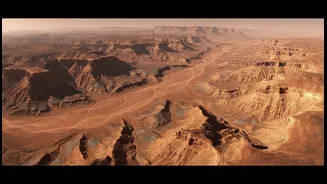


The Ghost of a Martian Ocean
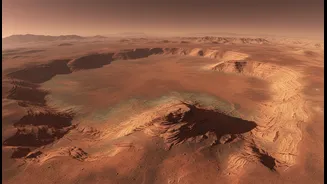
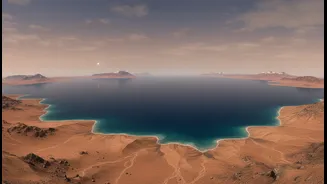
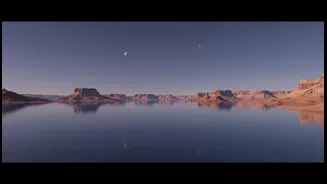
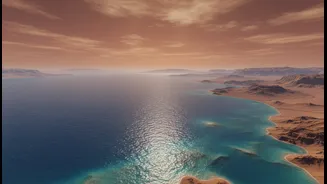
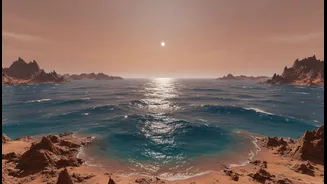
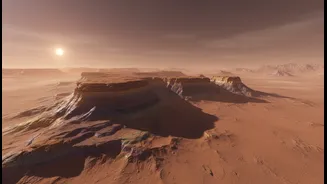
The idea of a Martian ocean is not new. For years, scientists have looked at the vast, low-lying plains of the planet’s northern hemisphere, a region known as Vastitas Borealis, and theorised it was once the floor of a great sea, dubbed Oceanus Borealis.
Evidence has been mounting, from signs of ancient river deltas to radar data suggesting sedimentary deposits instead of purely volcanic rock. However, the case was never closed. A major sticking point was the lack of a clear, consistent shoreline. Previous missions had spotted features that looked like ancient coastlines, but they were found at wildly different elevations, which weakened the argument for a single, stable body of water. If a planet-spanning ocean existed, it should have left a more consistent mark, much like the sea levels on Earth. The mystery remained: where was the definitive proof?
A 'Bathtub Ring' Etched in Stone
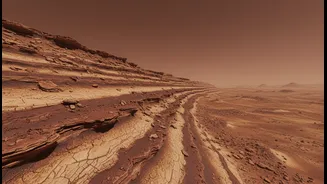
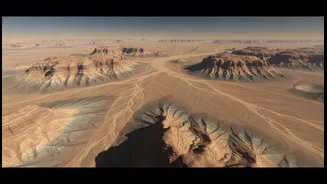
The breakthrough came when researchers decided to look for a different, more stable kind of feature. Instead of searching for shifting shorelines, which can be easily erased or altered over billions of years, they looked for the Martian equivalent of a continental shelf. On Earth, a coastal shelf is the broad, gently sloping area that extends from a continent's coast out into the ocean before dropping off into the deep sea. It's a massive, long-lasting geological feature. Using topographic data gathered by Mars orbiters, scientists identified a similar, tell-tale band encircling the northern basin. This feature, a wide, flat zone, suggests the former presence of a stable ocean that existed for millions of years—long enough to carve out such a significant landform. Some have described it as a planetary 'bathtub ring,' a clear marker where water once met land on a massive scale.
Why This Finding Changes Everything
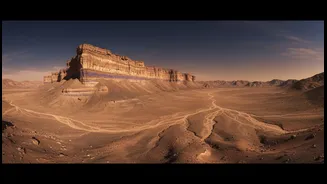
This discovery of a coastal shelf is powerful because it ties together multiple threads of previous evidence. For one, it provides a stable, consistent elevation level that was missing from the old shoreline theories. Furthermore, scientists noted that many of the previously identified river delta candidates line up perfectly with the edge of this newly mapped shelf. This suggests that ancient rivers were indeed flowing down from the southern highlands and emptying into a large, standing body of water at this specific boundary. The combination of a massive shelf and corresponding river deltas creates a much more cohesive and compelling picture. It moves the conversation from a tantalising theory to one with direct, observable geological proof that is difficult to dispute. The evidence now points to an ocean that may have covered up to a third of the planet’s surface.
A Warmer, Wetter, Living Planet?
The implications of a long-lasting Martian ocean are profound. A massive body of water like this would require a thicker atmosphere and a warmer, more stable climate than Mars has today. For millions of years, the planet might have had a hydrological cycle similar to Earth's, with rain, rivers, and a vast northern sea. This is precisely the kind of environment that could have been friendly to the emergence of life. While this discovery doesn't prove life existed, it dramatically strengthens the case that Mars was once habitable. The sedimentary deposits along this ancient coastal shelf are now prime targets for future exploration. Just as coastal sediments on Earth preserve a rich fossil record, these Martian features could be the best place to find buried signatures of past life, should any have existed. The hunt for ancient Martians just got a major new lead.