






Beyond the Mat: What is Sound Yoga?
When you hear “Sound Yoga,” you might picture a typical yoga class with a calming playlist. But the practice, rooted in the ancient tradition of Nada Yoga (the “yoga of sound”), is far more intentional. It's a holistic experience where sound is not just
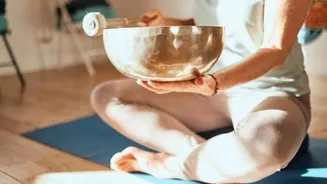
background noise, but a central element of the practice itself. Practitioners use instruments like Tibetan singing bowls, gongs, chimes, and even the human voice through chanting to create specific vibrations. The core idea is that everything in the universe, including our own bodies, is in a state of vibration. Sound Yoga uses the principle of resonance to help restore a state of harmony, using external sounds to calm the internal chatter and rebalance our physical and energetic systems.
The Forgotten Art of Breathing
Breath is life, yet most of us go through the day breathing shallowly, unaware of its power. In yoga, conscious breathing is known as Pranayama, which translates to the control or extension of our life force. This practice is fundamental to yoga for good reason. Deep, intentional breathing stimulates the vagus nerve, which activates the body's “rest and digest” response, effectively calming the entire nervous system. Scientific studies have shown that regular pranayama can lower stress and anxiety, improve lung function, enhance cognitive function, and cultivate a powerful sense of mindfulness. By consciously slowing and deepening the breath, we send a signal to our brain that we are safe, allowing both mind and body to release tension and find a state of equilibrium.
How Sound Amplifies Breath Awareness
This is where the magic of Sound Yoga truly reveals itself. For many, quieting the mind to focus on the breath is a significant challenge. Sound provides a tangible anchor for our awareness. The resonant frequencies of a singing bowl or a gong can guide the brain into slower brainwave states, like alpha and theta, which are associated with deep relaxation and meditation. In this quieter mental state, the subtle sensation of the breath becomes more pronounced and easier to follow. The external sound acts as a guide, helping to quiet distracting thoughts and creating a focused environment for breathwork. Furthermore, the vibrations themselves can be felt in the body, which can help release physical tension in the muscles and fascia, making deep breathing feel more accessible and expansive.
What to Expect in a Session
A Sound Yoga class or a related sound bath experience typically involves lying or sitting in a comfortable position, often with blankets and bolsters for support. The session may begin with gentle stretches or traditional yoga postures designed to prepare the body for stillness. The practitioner then uses various instruments to create an immersive soundscape. You might feel the vibrations physically, a sensation that many find deeply relaxing. Some practices, like Bhramari (Humming Bee Breath), even involve making your own sound to create an internal vibration that calms the nervous system. The goal isn’t to analyse the sounds, but to simply receive them, allowing them to wash over you and guide your focus inward. Benefits reported by participants often include profound relaxation, reduced anxiety, emotional release, and improved sleep quality.
Finding Your Own Rhythm
Curious to explore the connection between sound and breath? You don't need to attend a formal class to begin. Start by simply listening. At home, put on a playlist of instrumental music, singing bowls, or ambient sounds. Close your eyes and, instead of just hearing the music, try to follow one sound. Notice how it affects the pace and depth of your breath. You can also experiment with your own voice. Try a simple practice of inhaling deeply and then humming for the entire duration of your exhale. Notice the gentle vibration in your chest and head. This practice of vibrational toning can be a powerful way to calm your mind and connect more deeply with your body’s natural rhythms.