
The Mission: Conquering the Ghats
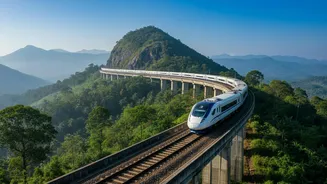
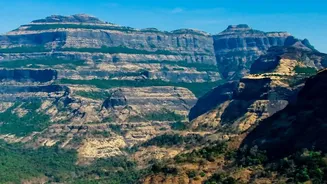
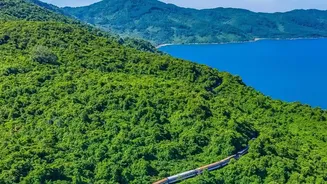
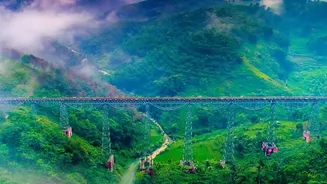
The trial is taking place on the Sakleshpur-Subrahmanya Road ghat section, a 55-km stretch of the Bengaluru-Mangaluru railway line renowned for its demanding terrain. This segment, which cuts through the lush Western Ghats, features steep gradients, 108
sharp curves, 57 tunnels, and over 226 bridges. These conditions pose significant operational challenges for any train, affecting speed, braking, and overall stability. The goal of these trials, overseen by the Research Designs and Standards Organisation (RDSO), is to rigorously assess the Vande Bharat's performance and safety systems under these extreme conditions before it can be cleared for passenger service on this vital route.
What Makes This Vande Bharat Special?
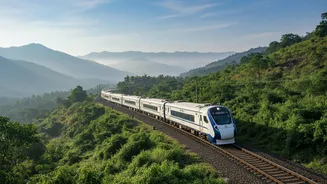
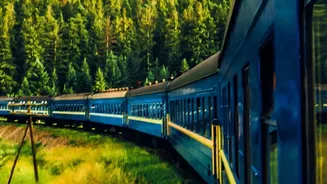
The train under observation is a custom-built 20-coach rake from the Integral Coach Factory (ICF) in Chennai. While Vande Bharat trains are known for their speed and aerodynamic design, this version has been specifically equipped with an Automatic Emergency Braking (AEB) system. This technology is crucial for operating on steep mountain passes, as it automatically applies the brakes if the train exceeds the permitted speed on downhill stretches, a mandatory safety requirement for the ghat area. Unlike conventional trains that often use additional 'banker' locomotives to climb steep inclines, the self-propelled Vande Bharat trainset relies on its distributed power and advanced braking for safe operation, which is precisely what these trials are designed to validate.
The Broader Significance for Passengers
Successful completion of these trials will be a major milestone, paving the way for the launch of a Vande Bharat service between Bengaluru and Mangaluru. This has been a long-pending demand that would drastically improve connectivity between Karnataka's state capital and its coastal region, benefiting tourists, students, and professionals alike. Currently, train travel on this route is limited and often sells out quickly. A Vande Bharat service would offer a faster, safer, and more comfortable alternative, potentially reducing travel time and providing a premium experience through one of India's most scenic landscapes. The trials represent a critical step in expanding the high-speed rail network into geographically complex but economically important regions of the country.
An Engineering and Strategic Leap
Beyond connecting two cities, this exercise is a testament to Indian engineering. Proving that a 20-coach, semi-high-speed trainset can safely and efficiently operate through the Western Ghats showcases the growing capability of the nation's railways. The Vande Bharat platform, developed under the Make in India initiative, is central to modernizing the country's passenger rail services. These trainsets feature regenerative braking, which saves significant electricity, and offer enhanced passenger amenities like automatic doors, bio-vacuum toilets, and GPS-based information systems. By pushing the operational boundaries of these trains, Indian Railways is not just testing a new route; it's stress-testing its vision for the future of domestic travel—one that is faster, more efficient, and capable of overcoming formidable natural barriers.