

Figures dubbed 'America's Nostradamus' make bold predictions that capture the public imagination. But what separates prophecy from probability, and what should we understand about astrology before we start believing in cosmic destinies?
The Allure of Modern Prophecy
Every so often,
a figure emerges who is hailed as a modern-day Nostradamus, offering chilling predictions about wars, economic collapses, and natural disasters. Recently, author John Hogue has been cited for his interpretations of Nostradamus's writings, forecasting major global turmoil, including a potential 27-year war and the decline of American power by 2028. These claims, often tied to astrological cycles and ancient texts, create a compelling narrative. The appeal is understandable; in times of uncertainty, the idea that someone has a roadmap to the future offers a sense of control. However, these predictions are typically vague, unfalsifiable, or based on interpreting cryptic texts, making them impossible to prove or disprove until after the fact.
Astrology: An Ancient Practice, Not a Science
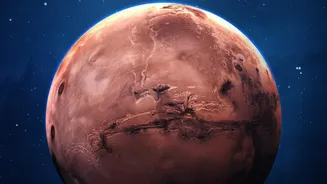
Astrology’s roots stretch back to ancient Babylon, where it was deeply intertwined with astronomy. For early civilizations, observing the sky was essential for predicting seasons and navigating. Over time, these observations merged with mythology to form the belief that the positions of celestial bodies influence human personality and destiny. However, as the scientific method developed during the Enlightenment, astronomy and astrology diverged. Today, the scientific community overwhelmingly classifies astrology as a pseudoscience, as its claims have not been supported by controlled studies and lack a known physical mechanism. The gravitational pull of the delivering doctor, for instance, is far stronger than that of a distant planet like Mars.
The Science of Why We Believe
If there's no evidence, why do more than half of Americans report reading their horoscopes and believing the advice? The answer lies in psychology. One of the primary drivers is the 'Barnum Effect', a phenomenon where individuals believe that generalized personality descriptions are tailored specifically for them. Astrological readings often use 'Barnum statements' like 'You have a great need for other people to like and admire you', which applies to almost everyone. Furthermore, our brains are wired to find patterns, and we often connect vague astrological advice to our daily lives through confirmation bias—remembering the 'hits' and forgetting the 'misses'. We also tend to accept positive and flattering descriptions more readily, a tendency known as the Pollyanna Principle.
A Tool for Self-Reflection, Not Prediction
For many, astrology isn't about predicting the future but understanding the present. In a complex world, it provides a narrative framework that can make personal strengths, weaknesses, and emotional patterns feel less random and more a part of a larger, cosmic design. Thinking 'I'm a Pisces' can create a sense of belonging and identity. During stressful times, turning to astrology can be a coping mechanism, offering comfort and a sense of order amid chaos. While it can serve as a placebo, enhancing self_confidence or motivation, it’s important to recognize this as a psychological effect, not the influence of celestial bodies. The comfort it provides is real, even if the mechanism behind it is belief rather than cosmic alignment.
Astronomy vs. Astrology: What's the Difference?
The confusion between astronomy and astrology is common, but the distinction is critical. Astronomy is the scientific study of everything outside Earth's atmosphere—stars, planets, galaxies—using the scientific method, observation, and physics. Astronomers use telescopes and data to understand how the universe physically works. Astrology, on the other hand, is a belief system that interprets the symbolic meaning of celestial positions to comment on human personality and events. It relies on horoscope charts, not physical observation. Put simply, astronomy is a science that seeks to explain the cosmos, while astrology is a tradition that seeks to find personal meaning within it.