




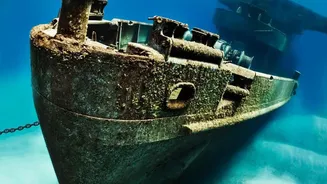
A Discovery Thousands of Years in the Making
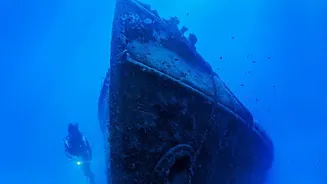
Near Kekova Island, a region known for treacherous currents, underwater archaeologists have made a find that pushes the boundaries of maritime history. While the wooden hull of the ship itself has long since disintegrated, its precious cargo remains.
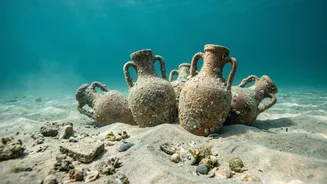
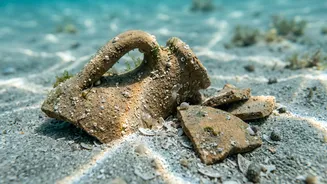
More than 30 ceramic storage jars, known as amphorae, and three stone anchors were found scattered on the seabed. The discovery was led by Associate Professor Hakan Öniz of Akdeniz University, as part of a wider project to map the ancient maritime history of the Anatolian coast. Though first documented in 2024, the true significance of the site has only recently come to light, revealing a direct link to the dawn of complex civilizations.
A Time When Pyramids Were New
To grasp the importance of a 4,700-year-old shipwreck, we have to travel back to the Early Bronze Age, around 2700 BCE. This was a transformative period in human history. In Egypt, the first great pyramids were being constructed at Giza and Saqqara. Across the Near East and the Aegean, societies were becoming more complex, cities were growing, and the demand for raw materials and luxury goods was fuelling new and ambitious trade routes. Finding physical evidence of sea trade from this early era is exceptionally rare. This discovery is not just another wreck; if its age is confirmed, it will surpass the previous record-holder, the 4,200-year-old Dokos shipwreck found off Greece, becoming a new benchmark in archaeology.
The Cargo's Silent Story
Since the ship's timbers are gone, scientists dated the wreck by studying its cargo. The style of the flat-bottomed amphorae, with their distinctive side handles, perfectly matches pottery found at sites in the Jordan Valley, Egypt, and even Troy. Analysis of the clay suggests the jars were made in workshops in the Jordan Valley, a region known today as part of Jordan and Israel. They were likely filled with valuable commodities like olive oil or wine for a long-distance voyage. The ship was probably heading west from a port in the Levant, perhaps towards the flourishing Minoan civilization on Crete or the legendary city of Troy, when it met its end. This provides crucial physical proof of a sophisticated trade network connecting the Levant, Anatolia, Egypt, and the Aegean nearly five millennia ago.
Life Aboard an Ancient Vessel
The find offers more than just evidence of trade routes; it gives us a tantalising glimpse into the daily lives of the world’s earliest long-distance sailors. One particularly fascinating discovery is a unique amphora with nine distinct markings and two holes in its body. Archaeologists speculate this may have been a churn. This raises the incredible possibility that sailors undertook these perilous voyages with live goats aboard, allowing them to produce fresh butter or cheese while at sea. Such details transform our abstract understanding of Bronze Age trade into a human story of ingenuity and survival on the open water. The ship itself, based on the cargo's spread, is estimated to have been about 10 metres (33 feet) long.
The Future of the Past
The work at Kekova is far from over. Researchers are now conducting detailed analysis of the residue found inside some of the miraculously intact jars. One archaeologist, upon seeing the amount of material preserved, said she 'nearly fainted'. This analysis could confirm what goods were being transported and may even reveal other, unexpected substances that were part of this ancient economy. Each new piece of information will help to build a clearer picture of this interconnected Bronze Age world. The discovery reminds us that the Mediterranean has been a superhighway of commerce and culture for thousands of years, a 'blue homeland' whose depths still hold many secrets.