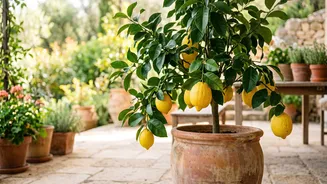







Why Size Is Not Just A Number
Choosing a pot for your lemon tree might seem simple, but it's a balancing act. A pot that’s too small will quickly become root-bound. This restricts the plant's ability to absorb nutrients and water, stunting its growth and preventing it from producing
fruit. On the other hand, a pot that's too large can be even more dangerous. Excess soil holds onto moisture that the young root system can't absorb, creating a soggy environment perfect for root rot, which can quickly kill the plant. The goal is to provide enough room for growth without overwhelming the roots. Container size is one of the most important factors for success.
Starting Small and Smart
When you first bring home a young lemon tree, resist the urge to plant it in its final, large container. A small starter tree, like those sold in 4-inch containers, should be moved into a pot that is about 8 to 12 inches in diameter and at least 12 inches deep. Citrus roots tend to grow downwards before they spread outwards, so depth is particularly important in the early stages to accommodate this growth pattern. This initial pot provides ample room for the first year or two of growth without the risk of overwatering associated with a massive container.
Signs It’s Time to Repot
Your lemon plant will give you clear signals when it's ready for a bigger home. The most obvious sign is roots growing out of the drainage holes at the bottom of the pot. Other indicators include the soil drying out very quickly, often within a day of watering, or water running straight through the pot without being absorbed. You might also notice slowed growth, browning or dropping leaves, or twig dieback, even if you are watering and fertilizing correctly. Generally, a lemon tree needs to be repotted every two to three years, though faster-growing varieties like the Meyer lemon may need it annually.
The Gradual Sizing-Up Strategy
The golden rule of repotting is to increase the pot size gradually. Jumping to a pot that is vastly larger than the current one can shock the plant and lead to the dreaded root rot. When it's time to repot, choose a new container that is only two to four inches larger in diameter than the previous one. For example, if your tree is in a 12-inch pot, the next one should be around 14 to 16 inches. This incremental approach ensures that the root system can comfortably grow into its new space, absorbing water and nutrients efficiently. The best time to repot is during the spring or early summer, when the tree is in an active growth phase and can establish itself more quickly.
Choosing Your Pot Material
While size is paramount, the material of the pot also plays a role in your lemon tree's health. Porous materials like terracotta and unglazed ceramic allow for excellent aeration and let excess moisture evaporate, which is great for preventing root rot. However, they also dry out much faster and are heavy. Non-porous containers made of plastic or fiberglass are lightweight and retain moisture well, meaning you'll water less frequently. If you choose plastic, ensure it has multiple large drainage holes. Fabric grow bags are another excellent option, offering superior drainage and aeration.
The Final Destination Pot
Eventually, your lemon tree will reach its mature size for container living. The final pot size helps limit the tree's ultimate height. For most dwarf and semi-dwarf lemon trees, a pot that is 20 to 24 inches in diameter and equally deep is a good final size. This is roughly equivalent to a 15 to 25-gallon container. A pot this size provides the stability and root volume needed for a mature tree to produce a healthy harvest of lemons for years to come. Once in its final pot, you won't need to size up further, but you may need to refresh the soil and prune the roots every few years to maintain its health.