





A Sky-High Solution to Ground-Level Gridlock
Varanasi’s narrow, winding streets have long been choked with traffic, a challenge for the millions of pilgrims and tourists who visit annually. Getting from the main Cantonment Railway Station to the sacred Kashi Vishwanath Temple and Godowlia Chowk
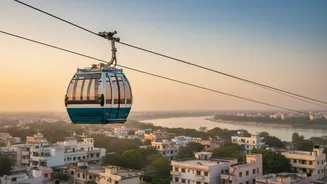
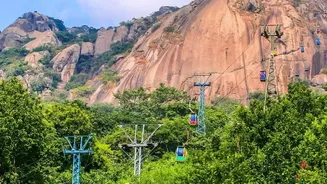
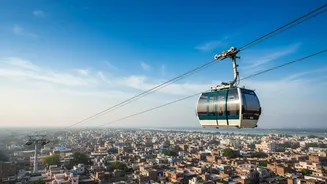
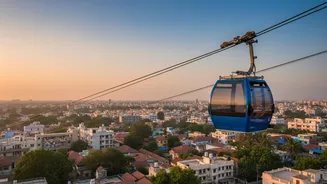
could take an hour or more. The government's answer is a 3.75-kilometre aerial ropeway, a cable-car system designed to glide over the congestion. With an expected opening in 2026, the project will use around 150 ten-seater cabins to ferry passengers across the city in just 16 minutes. This isn't just a tourist ride; it's a new form of public transit, making Varanasi one of only a handful of cities globally to integrate a ropeway into its urban transport network.
The Promise of a 16-Minute Ride
The system, built by the National Highways Logistics Management Limited with Swiss technology, is a feat of modern engineering in an ancient setting. It’s designed to be a high-capacity people mover, capable of transporting up to 6,000 passengers per hour and around 96,000 per day. For a fare expected to be as low as 50 rupees, pilgrims arriving by train can bypass the stressful road journey and get to the temple's doorstep quickly and efficiently. The project is a key part of the massive infrastructure overhaul in India's spiritual cities, aimed at improving accessibility while preserving heritage. By taking cars, auto-rickshaws, and buses off the key pilgrimage route, the ropeway aims to reduce both traffic and pollution.
From Street Chaos to Station Squeeze
However, solving one problem often creates another. The ropeway doesn't eliminate the crowd; it simply moves it. Instead of being spread across kilometres of congested streets, up to 6,000 people per hour will now converge on five stations. The new pressure point becomes the queue. How do you design waiting areas, ticketing systems, and security checks that can handle such a massive, concentrated flow of people without creating dangerous bottlenecks? This is especially critical at the terminal stations, Cantonment and Godowlia Chowk, which will act as funnels for the entire system. The challenge is to manage the flow of passengers from the moment they arrive at the station until they board a gondola, ensuring a smooth, safe, and stress-free experience that lives up to the project's promise.
The Global Search for Crowd Control
Varanasi isn't facing this challenge in isolation. The city's administration is already actively seeking solutions for its wider crowd management problems. An initiative called the Sustainable Cities Challenge, in partnership with the Toyota Mobility Foundation, recently awarded innovators for ideas to manage pedestrian flow in the old city. Winners proposed solutions using AI and big data to monitor crowds in real-time and a system of colour-coded wayfinding and digital signage to guide people. These people-first strategies highlight a growing understanding that infrastructure alone is not enough. The science of queue design, honed at places like major international airports, theme parks, and other global pilgrimage sites like Tirupati, involves complex modeling of human behaviour to prevent stampedes and reduce frustration. The lessons from these initiatives will be crucial for the ropeway's success.