






A Vision of Paradise
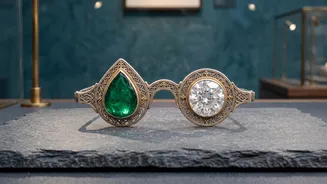
They are known as the ‘Astaneh-Ye Ferdaws’, or the ‘Gate of Paradise’ spectacles. These are not ordinary eyeglasses; their lenses are two pear-shaped slices carved from what is believed to have been a single Colombian emerald of over 300 carats. A companion
pair, the ‘Halqeh-Ye Nur’ or ‘Halo of Light’, features lenses cut from a single Golconda diamond estimated to have been over 200 carats in its rough state. Dating back to the height of the Mughal Empire around the 17th century, these spectacles are a testament to an era of unparalleled artistic achievement and lapidary skill. While the identity of the royal patron who commissioned them remains a mystery, their sheer quality and the immense value of the gems suggest they were reserved for an emperor or a high-ranking prince.
More Than Meets the Eye
In Mughal culture, these were not just aids for vision but tools for spiritual enlightenment. Emeralds, with their deep green hue, were cherished as symbols of paradise, healing, and eternal life. It was believed that looking through the green lenses could ward off evil, soothe the soul, and offer a glimpse of the divine. There is even speculation that Emperor Shah Jahan, heartbroken after the death of his wife Mumtaz Mahal, may have used emeralds to soothe his tear-strained eyes, making these spectacles a potential relic of one of history's greatest love stories. Similarly, diamonds were associated with spiritual illumination and enlightenment. The choice of these specific gems was therefore deeply intentional, blending opulence with profound belief.
An Unthinkable Feat of Craftsmanship
The technical skill required to create these lenses in the 17th century is staggering. Slicing a flawless, flat plane from a colossal diamond or a brittle emerald without shattering it is a masterclass in lapidary arts, even by today's standards. The original rough emerald is believed to have come from Colombia, while the diamond was likely sourced from India's famed Golconda mines. The gems were painstakingly cleaved and polished into perfectly transparent lenses, designed to be worn. The current frames, however, are a later addition. Around 1890, the original lenses were mounted into new gold and silver frames decorated with rose-cut diamonds, updating them to the fashion of the time.
A Journey Through Time
For centuries, these spectacular objects remained in private collections, their existence largely unknown to the wider world. They were held within the same family for about half a century before emerging into the public consciousness in 2021 when they were announced for auction by Sotheby's in London. With a combined pre-sale estimate of several million dollars, they captured the imagination of art historians and gemologists alike. While the spectacles ultimately did not find a buyer at the auction, their appearance brought their incredible story to light. They stand as unique artifacts that bridge science, art, and faith, offering a rare window into the luxurious and spiritual world of the Mughal court.