



A New Blueprint for Nuclear Spaceflight
In late 2026, a significant step was taken not with a rocket launch, but with the stroke of a pen. NASA and the U.S. Department of Energy (DOE) signed a landmark memorandum of understanding titled 'Accelerating American Leadership in Space Nuclear Power
and Propulsion'. This agreement isn't about deploying hardware tomorrow; it's a foundational pact to coordinate research, development, and safety protocols for the nuclear systems that will power future deep-space missions. By uniting NASA's expertise in spaceflight with the DOE's experience in nuclear science, the move establishes a clear, safety-focused framework. It signals a strategic shift towards ensuring that when nuclear power sources are sent into space, they are governed by a coherent and unified American strategy. This domestic cooperation is the first building block in a much larger, global conversation.
The Critical Difference: Power vs. Weapons
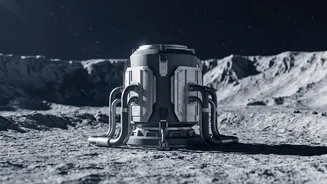
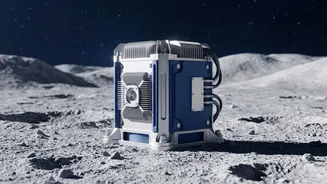
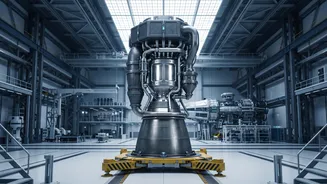
It is crucial to draw a line between what this new era of space nuclear technology is and what it is not. The conversation is about nuclear systems for power and propulsion, not nuclear weapons. The placement of weapons of mass destruction in orbit has been banned for decades under the 1967 Outer Space Treaty, a cornerstone of international space law that remains firmly in place. The need for nuclear power stems from simple physics: for sustained missions on the Moon, which endures two-week-long nights, or for crewed journeys to Mars, solar power is insufficient. Nuclear propulsion can drastically cut transit times for astronauts, reducing their exposure to harmful cosmic radiation, while nuclear reactors on the lunar surface can provide the steady, reliable power needed to run habitats and scientific equipment. It’s about enabling exploration, not escalating conflict.
The Artemis Accords: A Global Rulebook
While the NASA-DOE agreement provides a national blueprint, the international dimension is being shaped by the Artemis Accords. Grounded in the Outer Space Treaty, these accords are a non-binding set of principles for peaceful and sustainable civil space exploration. As of late 2026, an impressive 76 nations have signed on, including India. The Accords don't mention nuclear power specifically, but they provide the essential framework for its governance. Principles like transparency, interoperability of systems, and the deconfliction of activities are vital for managing advanced technologies in space. For example, the commitment to notify other nations of the location and nature of space activities becomes critically important when dealing with nuclear reactors. The Accords are, in effect, the multilateral forum where norms for using nuclear power safely and cooperatively will be established among a broad coalition of space-faring nations.
Geopolitics and the Great Power Divide
The push for a cooperative framework is happening against a backdrop of clear geopolitical competition. Two major blocs are emerging in the race back to the Moon. On one side are the United States and its many partners under the Artemis Accords. On the other is a significant partnership between China and Russia, who are collaborating on their own ambitious project: the International Lunar Research Station (ILRS). Both sides have announced plans to use nuclear reactors to power their future lunar bases. This division underscores the urgency of establishing clear rules of the road. Without a shared understanding of safety protocols and operational conduct, the risk of misunderstanding, accidents, or strategic miscalculation grows. The focus on 'cooperation' now is a direct attempt to build a stable system before competition leads to a chaotic and unregulated 'deployment' phase.
Why Rules of the Road Matter
An unregulated environment for nuclear power in space would be fraught with risk. An accident involving a reactor, either on launch or in orbit, could create radioactive debris that endangers other satellites and future missions. Without clear principles for safe operation and end-of-life disposal, the near-Earth and lunar environments could become more hazardous. This is why a focus on creating norms is so vital. It builds on previous international efforts, such as the UN's 1992 Principles Relevant to the Use of Nuclear Power Sources in Outer Space, which were adopted after the accidental reentry of a Soviet nuclear-powered satellite in 1978. By establishing a framework for cooperation and safety before these advanced systems become common, the global community is trying to ensure that space remains a domain for peaceful and sustainable exploration for generations to come.