



A New Gauntlet for a Modern Train
The Vande Bharat Express has become a symbol of modern Indian Railways, celebrated for its speed and passenger comfort across a growing network. However, expanding its reach into one of the country's most formidable landscapes, the Western Ghats, requires
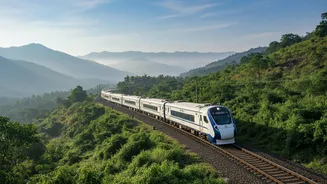
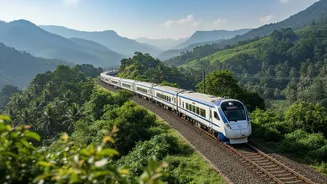
more than just raw power. The recent trials conducted by the South Western Railway's Mysuru Division on the Sakleshpur-Subrahmanya Road ghat section represent a critical test of the train's adaptability. This 55-kilometre stretch, part of the potential Bengaluru-Mangaluru route, is infamous for its steep gradients, numerous sharp curves, and vulnerability to landslides, especially during monsoons. Instead of pushing for the 160 kmph speeds the train is known for elsewhere, the focus here is on a much more fundamental question: can it operate with absolute safety in an environment that has challenged conventional trains for decades?
The Challenge of the Ghats
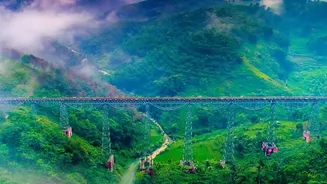
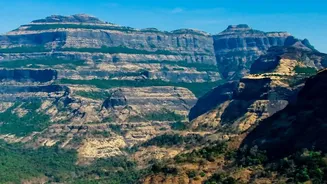
Navigating the Western Ghats is an engineering feat. The Sakleshpur-Subrahmanya Road section is a testament to this, featuring 57 tunnels and 226 bridges packed into a relatively short distance. The primary challenge is the steep gradient, which at 1 in 50, puts immense strain on a train's braking and propulsion systems. Traditionally, conventional trains require the assistance of 'banker' locomotives—additional engines attached to the rear to provide extra power while ascending and to control speed while descending. However, this approach is impractical for the integrated, self-propelled Vande Bharat trainsets. Furthermore, the Commissioner of Railway Safety has capped the maximum speed on this stretch at a cautious 30 kmph, highlighting the delicate balance required between motion and safety. The constant threat of rockfalls and landslides adds another layer of complexity, demanding a system that is not only powerful but also exceptionally reliable.
Engineering for Extreme Conditions
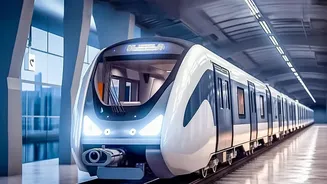
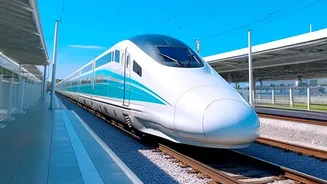
To conquer the ghats, Indian Railways has deployed a specially modified Vande Bharat rake manufactured by the Integral Coach Factory (ICF), Chennai. The cornerstone of this new design is an in-built Automatic Emergency Braking (AEB) system. This technology is designed to automatically apply the brakes if the train exceeds the permitted speed limit on the treacherous downhill stretches, providing a crucial safety net. During the recent trials, personnel from the Research Designs and Standards Organisation (RDSO) were on board to meticulously evaluate various parameters, including acceleration, braking effectiveness, stability on curves, and the overall performance of the AEB system. The train coaches were loaded with sandbags to simulate the weight of passengers, ensuring the tests were as realistic as possible. These trials are not a one-off event; they are scheduled to continue for several days to gather comprehensive data under different conditions.
What This Means for Passengers
The successful completion of these trials and subsequent safety clearances would be a landmark achievement, paving the way for the much-anticipated Vande Bharat service between Bengaluru and Mangaluru. For passengers, this promises to slash travel time and provide a faster, more comfortable daytime travel option between the state capital and the coastal hub, a long-standing demand in the region. While the journey through the ghat section will be slow, the overall time savings on the entire route could still be significant. More importantly, these trials underscore a commitment to responsible network expansion. By custom-engineering a solution for this specific corridor, Indian Railways is demonstrating that its modernisation drive is not a one-size-fits-all approach. It's about adapting advanced technology to suit India's diverse and demanding geography, ensuring that progress does not come at the cost of safety.