


The Moon's Monthly Journey
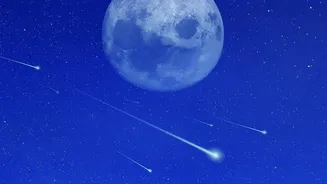
Following the Moon is the easiest way to get into stargazing. September offers some key dates. The New Moon occurs around September 11, providing the darkest skies, ideal for spotting faint objects. The First Quarter follows on September 18. The main
event is the Full Harvest Moon on September 26. This full moon, the one closest to the autumn equinox, is special because it rises near sunset for several evenings in a row, bathing the landscape in moonlight. It will rise in the east among the stars of the constellation Pisces.
A Parade of Bright Planets
September is a fantastic month for planet-spotting. Venus, the brilliant 'Evening Star', will dominate the western sky shortly after sunset all month. It will be exceptionally bright, especially around September 18-22. On the evening of September 14, the crescent Moon will pass very close to Venus, making for a beautiful pairing. In the pre-dawn hours, you can find Mars and Jupiter in the eastern sky. The waning crescent Moon will have a close encounter with Mars on September 6, and an even tighter pairing with bright Jupiter on September 8. Saturn will be visible for much of the night, rising in the southeast and appearing as a steady, bright point of light. It will appear near the full Harvest Moon on September 26.
Catch a 'Shooting Star'
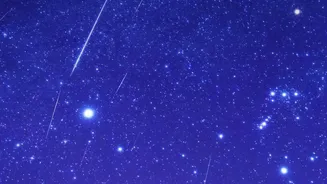
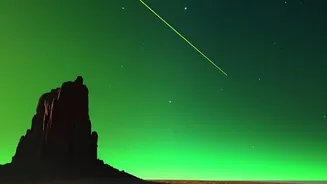
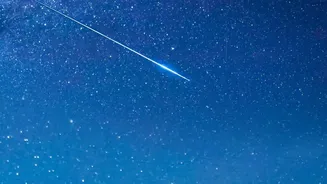
While September doesn't host one of the year's major meteor showers, you can still catch some celestial streaks. The September Epsilon Perseid meteor shower peaks around September 9. This is a minor shower, producing about 5-8 meteors per hour under perfect conditions, but it has a major advantage this year: the peak coincides with the dark skies around the New Moon. For your best chance, find a dark location away from city lights, let your eyes adjust, and look up after midnight. The meteors can appear anywhere in the sky.
Constellations to Find
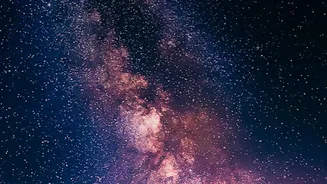
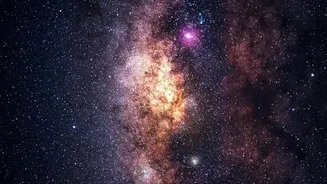
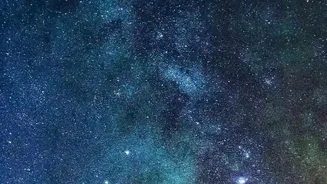
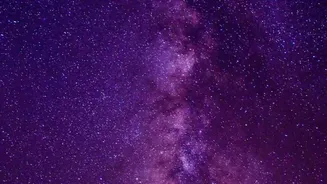
As summer's star patterns remain visible while autumn's begin to rise, September's sky is rich with constellations. The famous Summer Triangle, made of the bright stars Vega, Deneb, and Altair, will still be high in the sky. Look for the distinctive 'W' shape of Cassiopeia in the northeast. Rising in the east is the Great Square of Pegasus, which marks the winged horse from Greek mythology and points the way to other autumn sights. Early September evenings, especially during the dark window around the New Moon from September 2 to 17, are also your last best chance to see the core of our own Milky Way galaxy stretching across the sky from a truly dark location.
Spotting a Satellite
One of the most thrilling naked-eye sights isn't a star or planet at all—it's the International Space Station (ISS). Moving faster than any star, the ISS looks like a very bright, steady light gliding silently across the sky. Its appearance is predictable but depends entirely on your specific location. Several websites and mobile apps like 'Spot the Station' can tell you exactly when and where to look up from your city or town to see it pass overhead. These flyovers typically last only a few minutes, so being ready at the right time is key to witnessing this marvel of engineering with your own eyes.