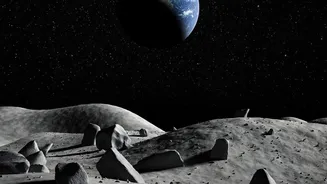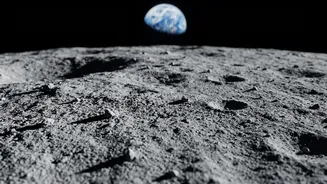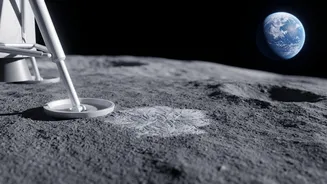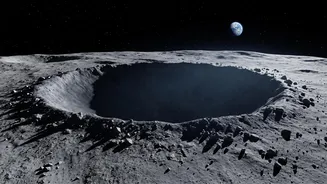

A Lunar Proving Ground
Scientists have long known the Moon is a harsh place, with no atmosphere, wild temperature swings, and a constant bombardment of deadly ultraviolet (UV) radiation. But as humanity prepares to return with the Artemis missions, a crucial question has emerged:
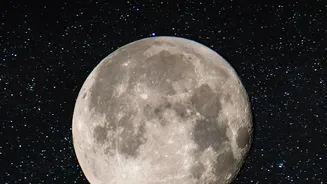
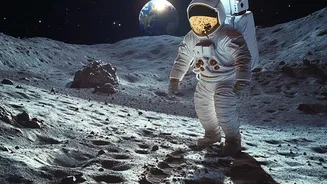
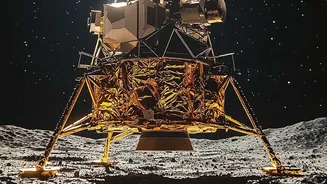
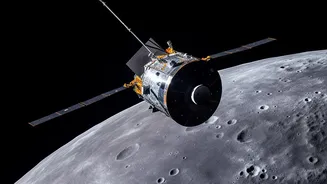
could microbes from Earth survive there? To find out, researchers didn't send fungi to the Moon, but brought the Moon to the fungi. Using data from NASA's Lunar Reconnaissance Orbiter, they created detailed simulations of conditions at three potential Artemis landing sites near the south pole. These simulations mimicked the low-angle sunlight, extreme cold, and radiation levels to see which Earth-based microbes, if any, could endure.
The Unexpected Champion: Black Mold
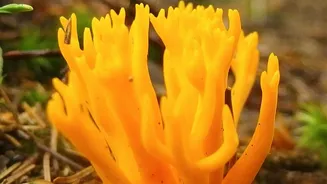
The study pitted several types of bacteria and fungi against the simulated lunar environment. The winner was a surprisingly familiar organism: Aspergillus niger, a type of black mold commonly found in damp places like bathrooms and even aboard the International Space Station (ISS). This fungus proved more resilient than even Deinococcus radiodurans, a bacterium famous for its extreme radiation resistance. The key to the fungus's success appears to be its dark pigmentation and thick cell walls, which act as a natural shield against the intense UV radiation that sterilizes most of the lunar surface. While some bacteria survived, the fungi, particularly A. niger, were able to persist in a wider range of simulated locations, including some that received partial sunlight.
Why the South Pole Matters
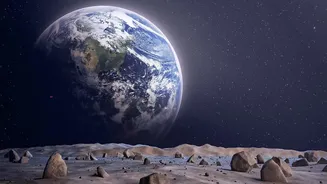
The focus on the lunar south pole is no accident. This region is a prime target for future exploration by NASA and other space agencies precisely because it is so extreme. The Sun hangs low on the horizon, creating areas of permanent shadow where temperatures are incredibly cold. These permanently shadowed regions (PSRs) are believed to hold water ice, a critical resource for future lunar bases. However, these same shadows that could preserve water could also protect stowaway microbes from Earth. The study found that while the sunlit lunar surface is deadly, the unique topography of the south pole creates small, survivable niches where microbes could persist for days or even longer.
A Double-Edged Sword for Exploration
The resilience of these fungi presents a dual challenge and opportunity. On one hand, it's a major planetary protection issue. When astronauts search for the building blocks of life or pristine geological samples, they need to be sure they aren't just studying contamination brought from Earth. The study makes it clear that contamination is not just possible, but that some organisms can survive long enough to complicate scientific analysis. On the other hand, understanding how these fungi survive could be invaluable. Their natural radiation-shielding abilities could inspire new technologies to protect astronauts and equipment. Scientists emphasize that the study showed survival, not growth or reproduction; the Moon still lacks the liquid water necessary for life to thrive. Yet, the sheer toughness of these organisms is a critical data point for the future of space exploration.