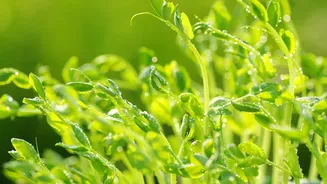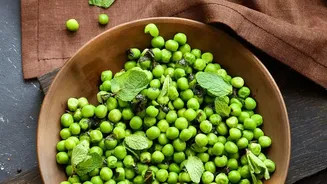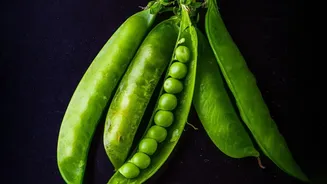


What is the Grass Pea?
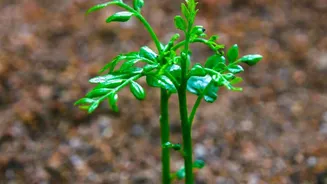
Known scientifically as Lathyrus sativus, the grass pea is an ancient legume that has been cultivated for over 8,000 years. In India, it is more commonly known as khesari dal. This hardy plant is often called an 'insurance crop' because it can survive
where others fail, thriving in conditions of drought, flood, and poor soil. Its remarkable resilience makes it a lifeline for farmers in arid and semi-arid regions of Asia and East Africa, providing a reliable harvest when staple crops like wheat and rice falter. It also naturally fixes nitrogen, which enriches the soil for future plantings.
A Nutritional Powerhouse
One of the most compelling attributes of the grass pea is its impressive nutritional profile. The seeds are packed with protein, with levels ranging from 26% to over 31%, significantly higher than chickpeas and other common pulses. This makes it a powerful tool against protein malnutrition. Beyond protein, it is also a good source of carbohydrates, fibre, and essential micronutrients, including B vitamins and minerals. Its high lysine content is another plus, though like many legumes, it is low in certain sulfur-containing amino acids.
The Climate-Ready Crop
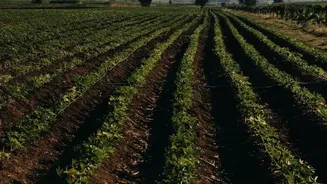
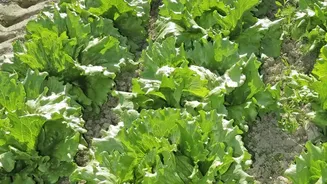
As climate change brings more extreme and unpredictable weather, the grass pea's unique characteristics make it more relevant than ever. Its deep root system allows it to tap into moisture far below the surface, making it exceptionally drought-tolerant. At the same time, it can withstand periods of waterlogging, a key advantage in monsoon-prone areas. Farmers value it as a 'relay crop,' often sown into rice paddies before the rice harvest to take advantage of residual moisture without needing extra fertiliser. Its ability to produce a reliable yield with low inputs makes it a model for sustainable agriculture.
A Controversial Past
Despite its benefits, the grass pea has a dark side. The seeds contain a neurotoxin called ODAP (β-N-oxalyl-L-α,β-diaminopropionic acid). When consumed in large quantities as a sole or primary food source over several months—typically during famines when no other food is available—it can cause a debilitating, irreversible paralysis of the lower limbs known as neurolathyrism. Because of this risk, India banned the sale and storage of khesari dal for human consumption in 1961. However, the ban was never fully enforced and cultivation for animal feed continued, meaning human consumption never truly stopped. It was a classic 'famine food': a saviour and a potential destroyer.
A Safer Future Beckons
For decades, scientists have worked to rehabilitate the grass pea. Traditional methods like soaking the seeds in water and discarding it can reduce the toxin content significantly. More importantly, plant breeders have made huge strides. Through conventional breeding and modern techniques, researchers have successfully developed low-ODAP and even ODAP-free varieties that are safe for consumption. In India, varieties like 'Ratan' and 'Prateek' have been developed with toxin levels well within safe limits. Based on these scientific advancements and the fact that no new cases of neurolathyrism have been reported in India for decades, an expert committee recommended lifting the decades-old ban in 2015, and the government announced its lifting in 2016. While the formal notification remains complex, with FSSAI now allowing for its incidental presence in other pulses, the path is clearing for the grass pea's official return.