

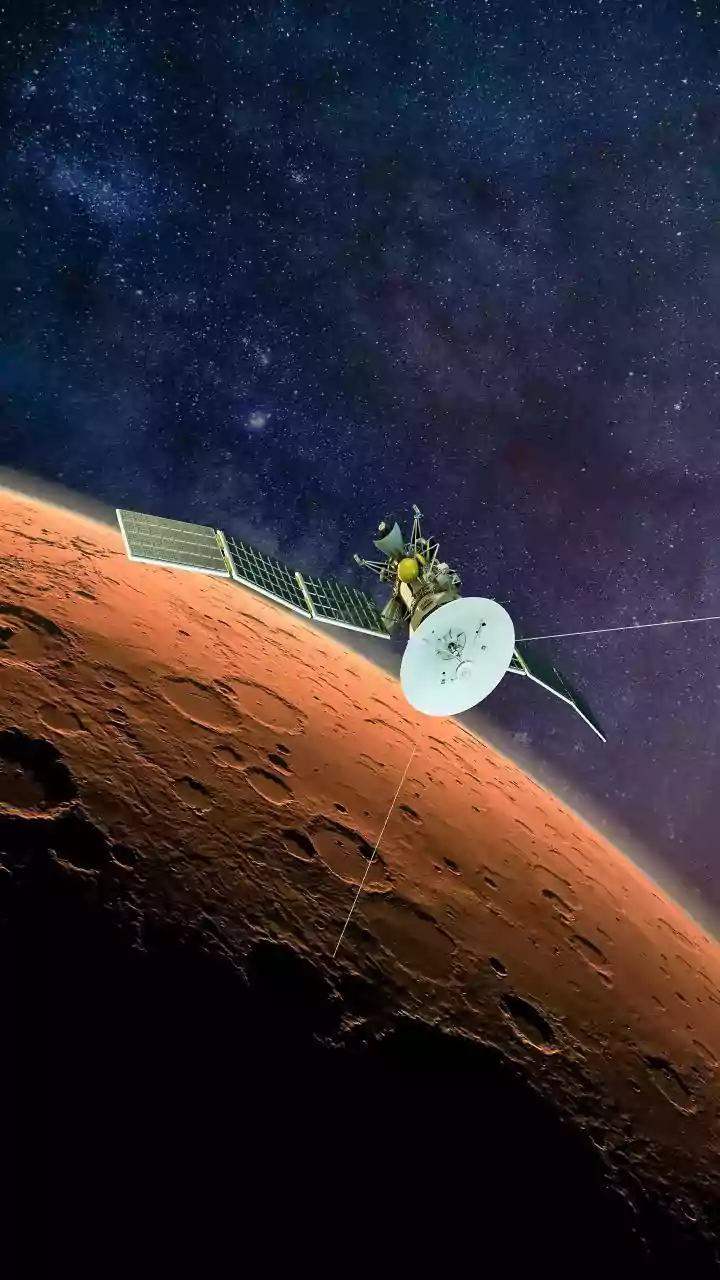




Swift's Storied Cosmic Watch
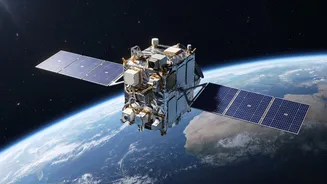
Launched in 2004, the Swift Observatory has been one of astronomy's most productive tools for more than two decades, far outliving its initial two-year mission. Its primary purpose is to study gamma-ray bursts (GRBs), the most powerful explosions in the universe.
As its name implies, Swift is designed to react rapidly, detecting a burst and swiveling its three telescopes to capture the event and its fading afterglow in X-ray, ultraviolet, and visible light. This rapid response allows a worldwide network of ground-based telescopes to quickly join the observation. Over its lifetime, Swift has provided invaluable data on thousands of cosmic events, from exploding stars to the collisions of celestial objects.
The Inevitable Pull of Gravity
Like all spacecraft in low Earth orbit, Swift has been slowly losing altitude due to atmospheric drag. This orbital decay has been accelerated in recent years by increased solar activity, which causes Earth's upper atmosphere to expand and exert more drag on the satellite. Without its own propulsion system to counteract this pull, Swift's orbit was decaying at an accelerating rate, putting it on a path to re-enter and burn up in the atmosphere later this year. To save the valuable observatory and extend its scientific life, NASA took an unconventional and daring step.
A High-Risk Rescue Attempt
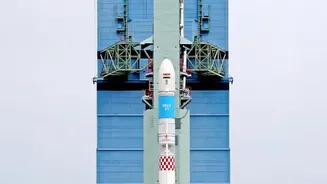
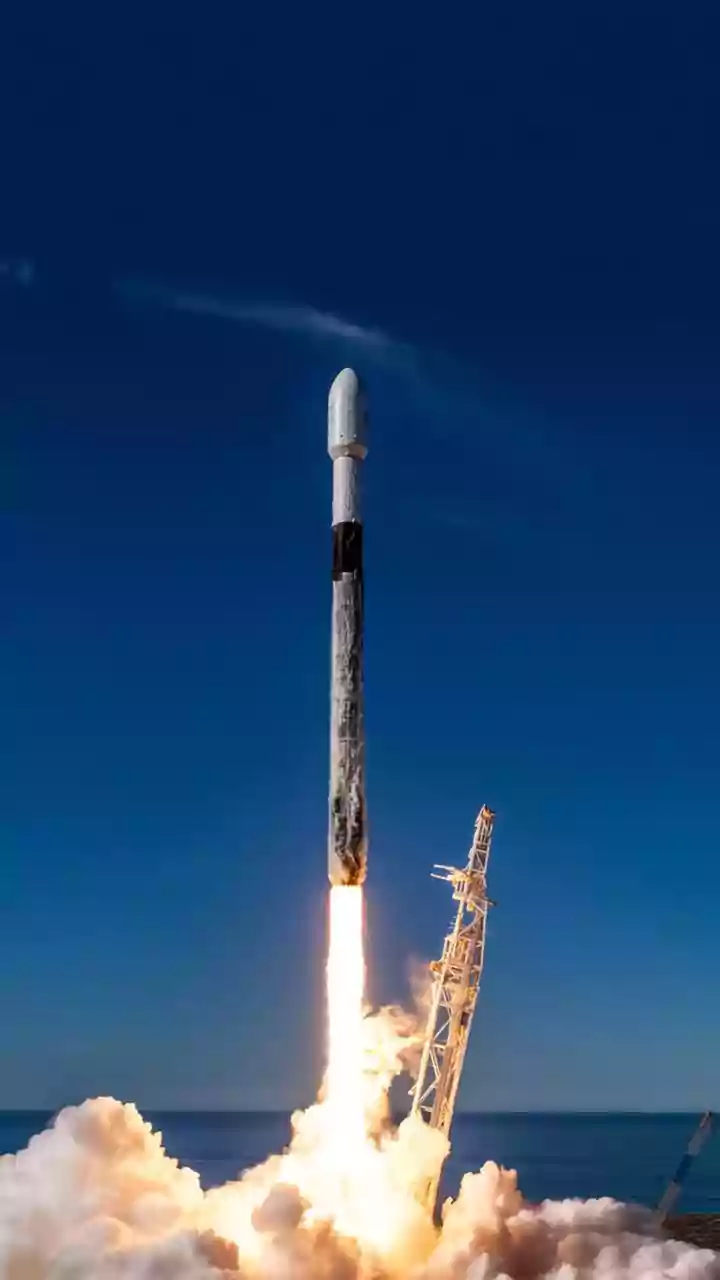
In 2025, NASA awarded a $30 million contract to Katalyst Space, an Arizona-based aerospace startup, for a high-risk, high-reward mission. The plan was developed on an unprecedentedly fast timeline, giving Katalyst less than a year to build and launch a first-of-its-kind robotic servicing spacecraft named LINK (Lightweight In-space Navigation and Kinematics). The LINK craft launched on July 3, 2026, on a mission to chase down Swift, grapple it, and physically push it into a higher, more stable orbit. This would have been the first time a commercial spacecraft docked with a government satellite not designed for in-orbit servicing.
What Went Wrong with the Support Craft
The ambitious rescue began to unravel in late July, about three weeks after launch. The LINK spacecraft suffered electrical issues that affected its attitude control system, which is responsible for orientation. This caused the servicer to begin spinning uncontrollably, complicating communications with ground control. While engineers managed to re-establish control and stabilize the spin, persistent problems with the system's reaction wheels ultimately made it impossible to safely conduct the rendezvous and capture. On August 19, NASA and Katalyst officially announced that the primary mission of boosting Swift's orbit was no longer possible due to the ongoing control issues.
The Future for Swift and In-Orbit Servicing
With the rescue mission abandoned, the Swift Observatory is now expected to re-enter Earth's atmosphere sometime after October 2026, where it will burn up. There are currently no plans for another boost mission. However, the LINK mission is not a total loss. NASA and Katalyst will use the troubled spacecraft to demonstrate and test rendezvous and proximity operations, gathering as much data as possible. This information will be vital for developing future satellite-servicing capabilities, a growing area of interest for both commercial and government space operations. While the outcome was not what was hoped for, NASA has emphasized that the high-risk attempt was worthwhile for the lessons learned and for pushing the boundaries of what's possible in space.