




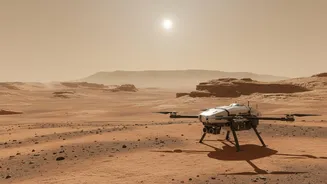
Ingenuity's Trailblazing Legacy
Before you can run, you have to learn to fly. For NASA, that first flight on another world was accomplished by the Ingenuity helicopter. Arriving with the Perseverance rover, the small, four-pound rotorcraft completed 72 flights, vastly exceeding its
planned mission. Ingenuity's primary goal was simple but audacious: to prove that powered, controlled flight was possible in Mars's incredibly thin atmosphere. It succeeded spectacularly, acting as an aerial scout for Perseverance and fundamentally changing how we approach planetary exploration. This success didn't just provide stunning aerial photos; it opened the door for more ambitious aerial concepts, transforming the helicopter from a technology demonstration into a primary tool for science and exploration.
Introducing the Skyfall Concept
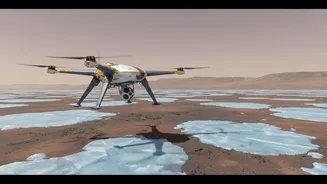
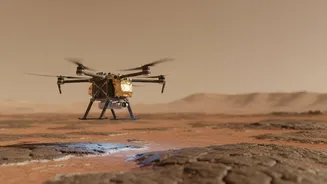
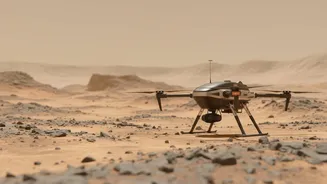
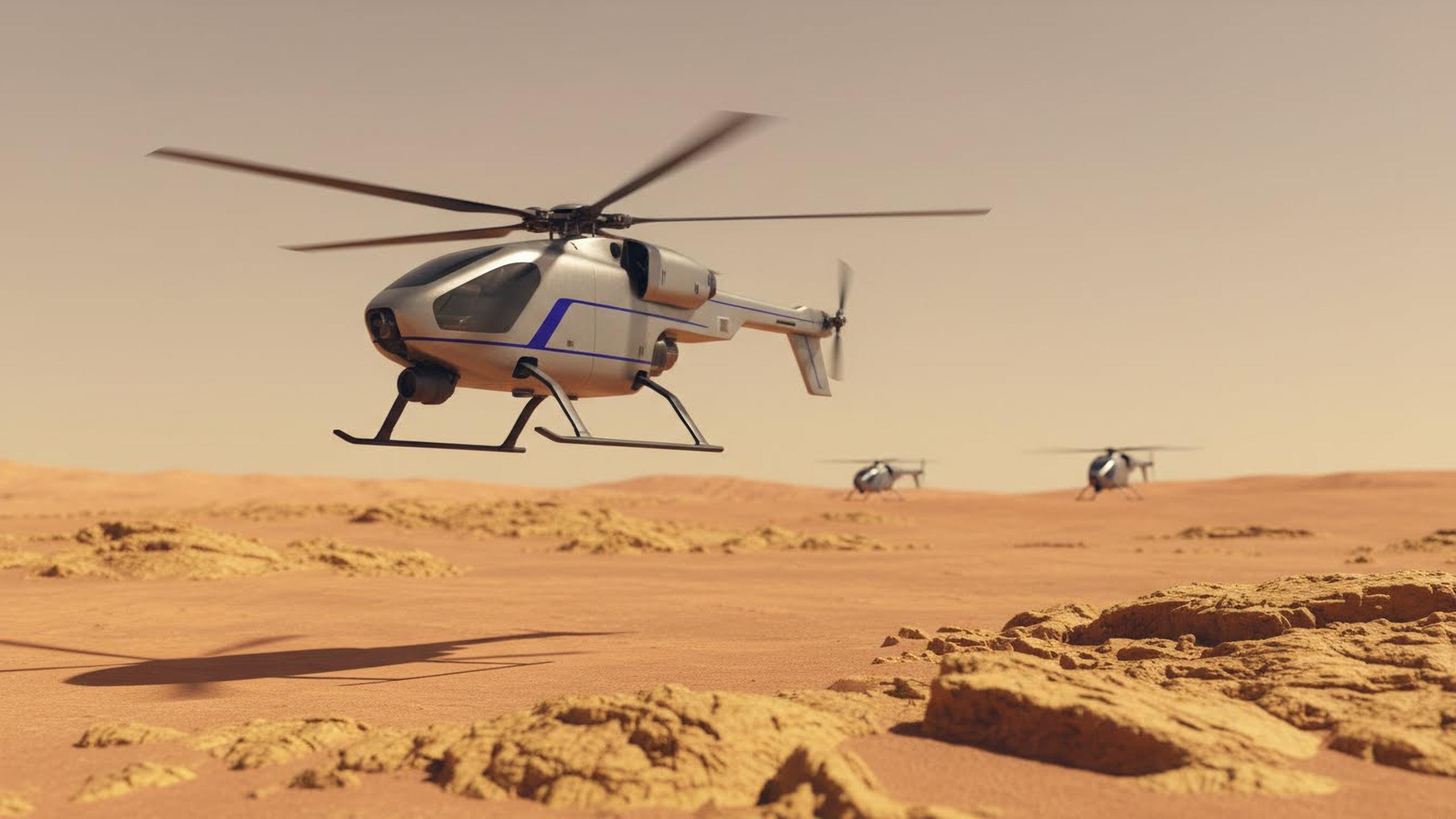
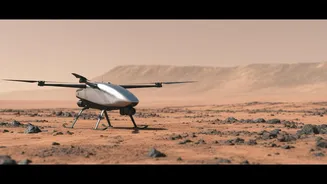
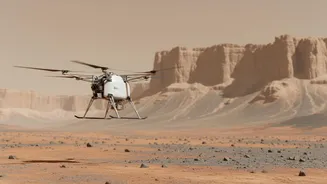
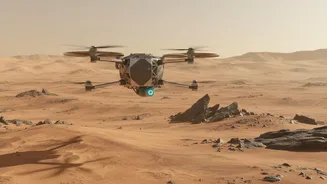
Enter Skyfall. This isn't just one helicopter, but a team of three advanced rotorcraft designed to build on Ingenuity's success. Announced by NASA, the mission concept involves a daring entry into the Martian atmosphere. Instead of being carefully lowered by a lander, the helicopters will be deployed mid-air from a descending aeroshell—a maneuver that gives the mission its name—and fly themselves to the surface. This innovative approach reduces mission complexity and cost by eliminating the need for a dedicated landing platform. The Skyfall helicopters will be more capable than their predecessor, equipped with a suite of scientific instruments to perform specific tasks, operating independently and communicating directly with orbiters, unlike Ingenuity which relied on the Perseverance rover as a relay.
Peering Beneath the Surface
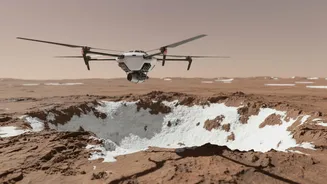
Skyfall's primary objective is to hunt for something hidden: subsurface water ice. To do this, the helicopters will be equipped with a specialized ground-penetrating radar. Orbiters have mapped Mars for years, but their instruments can't see the first few feet below the ground, which is exactly where scientists believe accessible ice deposits are located. The Skyfall helicopters will fly low and slow, allowing their radar to create high-resolution maps of this near-surface zone. The radar antenna itself is a feat of engineering—a lightweight, flexible fabric that unfurls below the helicopter, humorously described as a tiny cape. This design allows the antenna to function without being damaged during landing, enabling the mission to finally 'see' into the ground with a clarity never before possible.
Why the Hunt for Ice Matters
Finding accessible water ice on Mars is one of the most critical goals for future space exploration. Water is heavy and expensive to launch from Earth, so being able to source it locally is a game-changer. For future astronauts, this ice represents a vital lifeline. It can be processed to provide drinking water, breathable oxygen, and even a key ingredient for producing rocket fuel for the return journey home. Beyond its utility for human missions, buried ice is a scientific treasure trove. Ice cores could reveal the secrets of Mars's past climate and potentially hold preserved evidence of ancient microbial life, answering long-standing questions about the planet's habitability.
From Concept to Martian Skies
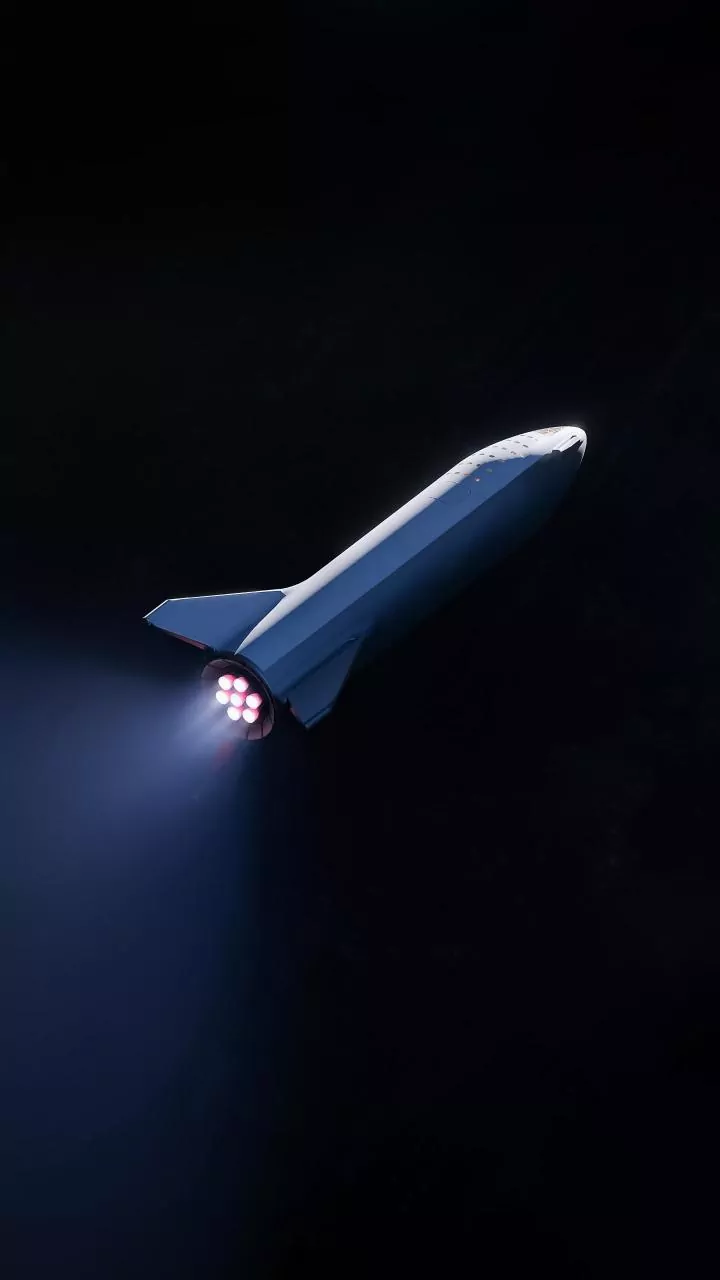
While the Skyfall concept is compelling, it is still on the long road from an idea to a flying mission. The project, a collaboration between NASA's Jet Propulsion Laboratory and AeroVironment, is scheduled for a potential launch in the late 2020s. The helicopters and their unique radar systems are undergoing rigorous testing to ensure they can survive the harsh Martian environment, including extreme temperature swings. The mission will be delivered to Mars by a novel nuclear electric propulsion spacecraft, another major technological leap. If successful, Skyfall won't just provide a map of Martian water; it will create a new blueprint for planetary exploration, one where fleets of autonomous aerial scouts can rapidly survey and analyze alien worlds, paving the way for the first human steps on Mars.