



The 'Doomsday Glacier' Explained
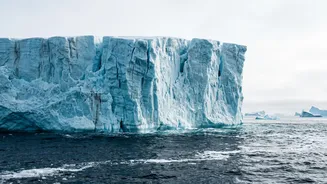
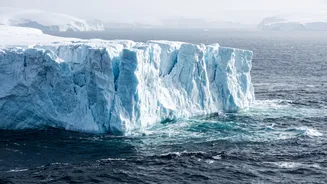
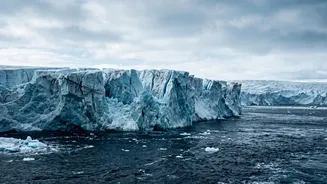
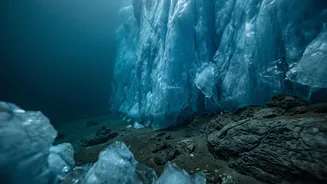
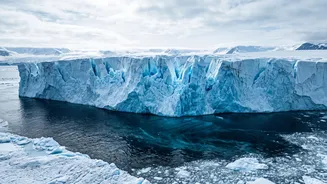
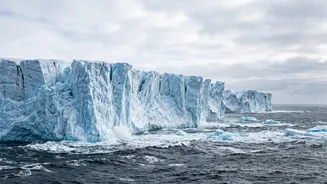
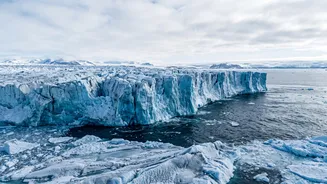
Covering an area roughly the size of Florida or Great Britain, the Thwaites Glacier in West Antarctica is one of the widest and fastest-melting glaciers on Earth. Its alarming rate of retreat has earned it the ominous nickname 'Doomsday Glacier'. This
isn't just hyperbole; the glacier currently contributes about 4% of annual global sea-level rise, shedding around 50 billion tons of ice each year. Scientists are deeply concerned because Thwaites acts like a cork, holding back the rest of the West Antarctic Ice Sheet. Its total collapse could eventually raise global sea levels by more than 65 centimetres, or over two feet, which would have devastating consequences for coastal communities worldwide. Understanding its stability, or lack thereof, is one of the most critical challenges in climate science.
A New, Worrying Projection
A recent study published in Nature Communications has delivered a sobering update. Researchers now project that Thwaites could contribute up to 30 millimetres (1.2 inches) to global sea levels by the year 2100. This figure is roughly double the 15mm contribution that was estimated by previous conventional models. What's particularly alarming is that this new projection holds true even without any additional climate warming beyond current conditions. The findings suggest that the processes driving the glacier's retreat are more advanced and sensitive than previously accounted for, signalling an acceleration that past models failed to capture. This raises the stakes for the glacier's future and the accuracy of global sea-level rise forecasts.
What the Science Uncovered
The breakthrough in the latest research comes from a more detailed look at the glacier's 'grounding zone'—the area where the ice transitions from resting on bedrock to floating on the ocean. Previous models often treated this as a fixed line. However, the new study incorporated satellite data showing that tides are causing a 'tidal pumping' effect. This mechanism pushes warm, salty ocean water several kilometres farther inland beneath the ice than previously assumed. This intrusion of warm water vigorously melts the glacier from below, weakening its connection to the seabed and speeding up its flow toward the ocean. The research, conducted by a team from institutions including the University of California, Irvine, and NASA's Jet Propulsion Laboratory, used improved models that could finally reproduce decades of observed changes in the glacier, adding significant weight to their new projections.
Risk of an Unstoppable Retreat
Another critical finding from the new simulations relates to an underwater mountain called the Mouginot Ridge, which currently acts as a natural brake, helping to restrain the glacier's movement. The study found there is approximately a 60% probability that Thwaites will become detached from this ridge by 2100, a process that could begin as early as the late 2030s. If the glacier becomes 'unpinned' from this ridge, it is expected to retreat much more quickly across a deepening seabed, a geographic feature that naturally sustains and accelerates retreat. This would expose coastal communities around the world to greater flooding risks than currently projected, making the monitoring of this specific interaction a top priority for scientists.
What This Means for India
A 30mm rise from a single glacier may not sound like much, but it is a significant addition to the overall global sea-level rise that threatens India's extensive 7,500-kilometre coastline. Low-lying coastal cities like Mumbai, Kolkata, and Chennai are already highly vulnerable to increased flooding. Rising seas exacerbate coastal erosion, a problem that already affects about one-third of India's coastline. West Bengal and Kerala are among the most affected states. Furthermore, rising sea levels lead to saltwater intrusion into freshwater sources, threatening agriculture, drinking water supplies, and delicate ecosystems like the Sundarbans mangroves. The accelerated melting of Thwaites is a distant alarm that has very real and near-term implications for India's coastal economy, infrastructure, and the millions of people who call the coast home.