







Tiny Archives of an Explosion
On August 6, 1945, the atomic blast over Hiroshima generated a fireball with temperatures exceeding 7,000 degrees Celsius. This extreme heat instantly vaporized buildings, steel, soil, and everything else in its path, creating a turbulent cloud of superheated
plasma. As this cloud rapidly expanded and cooled, the vaporized materials condensed into microscopic, glassy spheres that rained down on the surrounding area. For decades, many of these tiny particles, some no wider than a human hair, have remained hidden within the beach sands of Hiroshima Bay. Initially discovered by a geologist studying marine life, these particles, now dubbed "hiroshimaites," were confirmed to be fallout from the 1945 explosion. They are now understood to be microscopic archives, each one preserving a record of the cataclysmic conditions in which it was formed.
A New Look Through Modern Eyes
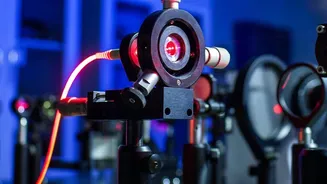
The reason these decades-old samples are back in focus lies in modern technology. Scientists are employing advanced analytical tools like powerful electron microscopes and single-crystal X-ray diffraction to probe the atomic structure of these particles. This allows them to see, with incredible precision, the exact chemical makeup and crystalline arrangement within a single grain of fallout material. Researchers carefully embed the tiny hiroshimaites in resin, polish them, and then analyse them under high-energy electron beams. This process reveals the three-dimensional structure of atoms and molecules, unlocking information that was impossible to access with earlier technologies. It’s this new level of microscopic analysis that has led to a startling discovery.
Discovery of a Never-Before-Seen Alloy
Inside one of these tiny glass-like spheres, researchers have identified a previously unknown metallic alloy. While most of the debris contained expected materials like iron and chromium, one particle stood out for its unusual composition and structure. This microscopic grain contains a complex, highly ordered mixture of iron, chromium, nickel, manganese, molybdenum, and a surprisingly high amount of silicon. This specific combination and crystalline arrangement has not been documented before, either in nature or in industrially produced alloys. It is a type of multicomponent alloy, a category of materials that scientists are increasingly interested in for their potential properties like high strength and resistance to corrosion. This particular alloy appears to have been forged in the unique, chaotic laboratory of the atomic blast itself.
Why This Finding Matters Today
This discovery is more than just a historical curiosity; it has significant implications for modern science. For one, it provides crucial insights for the field of nuclear forensics. By understanding the unique materials created in a nuclear explosion, experts can get better at identifying the source and nature of nuclear events. The composition of these alloys acts as a fingerprint, encoding diagnostic information about the conditions of the blast. Furthermore, the discovery challenges and expands our understanding of materials science. The atomic blast acted as a giant, uncontrolled experiment, creating an exotic alloy under conditions of extreme heat and rapid cooling that are exceptionally difficult to recreate in a lab. Studying how this material formed could help scientists design new advanced alloys with desirable properties without having to resort to such destructive methods.