



The Biggest Bang: Hunga Tonga-Hunga Ha'apai, 2022
When it comes to sheer explosive power in this century, one event stands alone: the eruption of the Hunga Tonga-Hunga Ha'apai submarine volcano in January 2022. Scientists have confirmed it was the largest explosive eruption of the 21st century, with
a force hundreds of times more powerful than the atomic bomb dropped on Hiroshima. Rated as a VEI-6 on the Volcanic Explosivity Index, it was an event on par with the cataclysmic 1991 eruption of Mount Pinatubo. The underwater blast was so violent it created an atmospheric shockwave that circled the entire planet several times and sent a plume of ash and water vapour an astonishing 58 kilometres into the mesosphere. This unique 'phreatoplinian' event, an explosive interaction between magma and seawater, generated a tsunami that caused damage across the Pacific, from Tonga to the coasts of Peru. Remarkably, despite its world-altering power, the direct death toll was very low, with four fatalities reported in Tonga and two in Peru. This eruption was a stark reminder that the largest eruptions are not always the deadliest.
The Deadliest Eruption: Mount Merapi, Indonesia, 2010
The tragic distinction of the 21st century's deadliest eruption belongs to Mount Merapi in Indonesia. In October 2010, the volcano, whose name translates to 'Mountain of Fire', began a series of violent eruptions that would last for over a month and claim the lives of more than 350 people. Unlike the remote blast in Tonga, Merapi is located in densely populated central Java, with thousands of people living on its fertile slopes. The disaster was caused by a devastating combination of hazards. Fast-moving pyroclastic flows—superheated avalanches of gas, ash, and rock—tore down the mountainside at incredible speeds, incinerating everything in their path. Later, heavy seasonal rains mixed with the thick layers of volcanic ash to create destructive mudflows known as lahars, which buried entire villages and caused further devastation. The event forced the evacuation of around 350,000 people and served as a tragic lesson in the dangers of living so close to one of the world's most active volcanoes.
A City Under Siege: Mount Nyiragongo, DRC, 2002
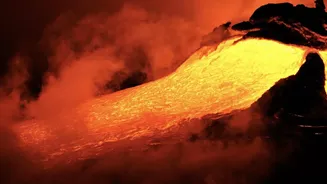
While pyroclastic flows often pose the greatest threat, the 2002 eruption of Mount Nyiragongo in the Democratic Republic of Congo demonstrated the unique horror of exceptionally fast-moving lava. In January of that year, fractures opened on the volcano's flanks, draining its summit lava lake and sending a torrent of molten rock directly towards the city of Goma, just 17 kilometres away. The lava from Nyiragongo is known for its extremely low viscosity, allowing it to flow more like water than the sluggish pace often imagined. It overwhelmed parts of the city, destroying roughly 13% of Goma, including homes, businesses, and a portion of the international airport's runway. The disaster caused around 150 to 245 deaths, many from asphyxiation by carbon dioxide gas released during the eruption or from the explosion of a petrol station engulfed by the lava. The eruption left an estimated 120,000 people homeless, creating a massive humanitarian crisis in a region already facing complex challenges.
A Sudden, Swift Catastrophe: Volcán de Fuego, Guatemala, 2018
The 2018 eruption of Guatemala's Volcán de Fuego, or 'Volcano of Fire', was a catastrophic example of how quickly a familiar presence can turn deadly. Fuego is one of Central America's most active volcanoes, and small, frequent eruptions are common. However, on June 3, 2018, it produced its most devastating eruption in over four decades. With little warning, the volcano unleashed a series of powerful pyroclastic flows that swept down its ravines and into surrounding villages. These flows were so fast and hot that communities like San Miguel Los Lotes were buried almost instantly, leaving residents with no time to escape. The official death toll was placed at nearly 200, but several hundred more people were declared missing, presumed to have been entombed in the superheated ash and rock. The tragedy highlighted the extreme vulnerability of populations living in the shadow of such a relentlessly active volcano, where the line between routine activity and deadly disaster can be crossed in an instant.