




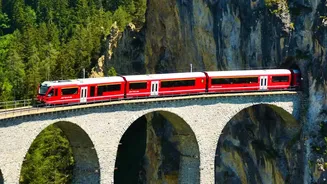
A Journey Recognised by UNESCO
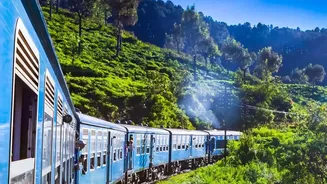
The Nilgiri Mountain Railway (NMR) is more than just a train ride; it is a journey through time. In July 2005, UNESCO recognized its unique heritage by adding it to the World Heritage list as part of the Mountain Railways of India. This metre-gauge line,
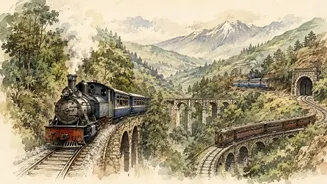
first proposed in 1854 and completed in stages up to 1908, was a marvel of British engineering designed to connect the plains of Mettupalayam with the cool climes of the hill stations, Coonoor and Udhagamandalam (Ooty). The full 46-kilometre route ascends dramatically from an elevation of about 326 metres to over 2,200 metres, navigating 16 tunnels, 250 bridges, and more than 200 sharp curves along the way.
The Problem of the Gradient
Conventional railways rely on the friction between a train's steel wheels and the steel tracks, a principle known as adhesion. This works perfectly on flat ground or gentle slopes. However, on steep inclines, the wheels can lose their grip and begin to slip, making a climb impossible and a descent dangerous. The NMR faces gradients as steep as 1 in 12.5, meaning the track rises one unit for every 12.5 units of forward movement, making it the steepest railway in all of Asia. Adhesion alone is not enough to tackle such a challenging incline. To overcome this, the railway's engineers turned to a specialised technology, making the NMR the only rack railway in India.
How the Rack and Pinion Works
The solution is an ingenious mechanism called a rack and pinion system. Between the two conventional running rails, a third, toothed rail—the 'rack'—is laid down on the track sleepers. The locomotive is fitted with a large, gear-like wheel called a 'pinion' or cogwheel. This pinion meshes with the teeth of the rack rail, much like a gear. Instead of relying on friction, the engine uses this mechanism to physically pull itself up the mountain, providing positive and secure traction. It's like a climber finding solid handholds on a steep cliff face. The specific system used on the NMR is the Abt system, named after its Swiss inventor, Carl Roman Abt. This system uses two or three rows of offset teeth on the rack rail to ensure the locomotive's pinions are always firmly engaged, providing a smooth and continuous climb.
The Sound and Steam of the Climb
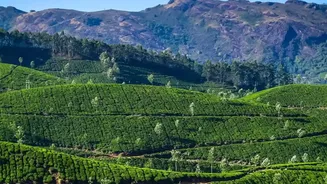
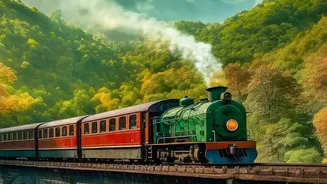
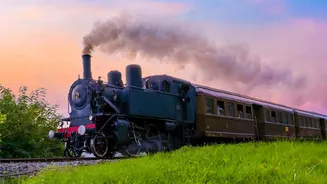
The rack and pinion system is only used on the steepest section of the journey, between Mettupalayam at the base of the hills and Coonoor. This part of the trip is powered by classic X-class steam locomotives, which are specially designed for the task. As the train begins its ascent from Kallar station, the rhythmic chugging is joined by the distinct clanking sound of the pinion engaging the rack. The locomotive is always positioned at the downhill end of the train; it pushes the carriages up the incline and acts as a brake on the way down, ensuring safety. The slow pace, dictated by the intricate mechanics of the climb, allows passengers to fully immerse themselves in the spectacular scenery of the Nilgiri Biosphere Reserve, passing through dense forests and over deep ravines.
A Living Piece of Heritage
From Coonoor, the rack system is no longer needed, and a diesel locomotive takes over for the final, gentler stretch to Ooty. But the legacy of the rack railway is what defines the NMR. The system is a testament to the ingenuity of 19th-century engineers who overcame immense geographical challenges. Today, the railway is not just a mode of transport but a cherished tourist attraction and a vital part of the local culture and economy. The experience of riding this historic train, powered by a century-old technology, offers a rare and tangible connection to India's rich railway history. It stands as a proud, functioning example of how innovative design can conquer even the most formidable landscapes.