






The 2027 Trial: What It Means
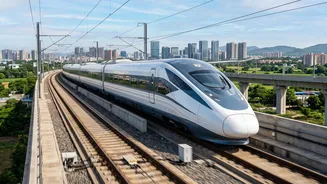
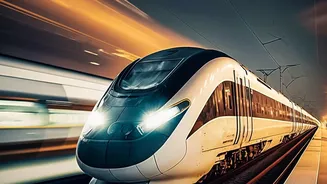
The targeted trial run in mid-2027 marks a pivotal moment for one of India's most complex infrastructure projects. According to Railway Minister Ashwini Vaishnaw, these tests will involve India's first indigenous high-speed train, which is currently being
developed. The trials will take place on a section of the 508-kilometre Mumbai-Ahmedabad corridor. Following a testing period of two to four months to validate safety, speed, and reliability, officials anticipate that a commercial service could be inaugurated on completed stretches of the line. This phased approach means commuters won't have to wait for the entire corridor to be finished to experience bullet train travel. The initial service is expected to launch on the Surat-Bilimora section in Gujarat.
A Project Gaining Momentum
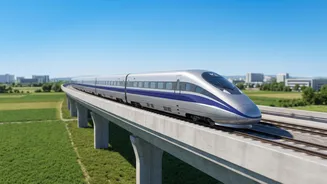
Launched in 2017, the Mumbai-Ahmedabad High-Speed Rail (MAHSR) project has faced significant hurdles, most notably delays in land acquisition, particularly in Maharashtra, and disruptions from the COVID-19 pandemic. These challenges pushed the original completion timeline back several years. However, recent progress has been rapid. As of early 2026, 100% of the required land for the project across both Gujarat and Maharashtra has been acquired, removing a major bottleneck. Construction has advanced significantly, with hundreds of kilometres of viaducts and piers erected. The project is no longer just about civil construction; work on track laying, electrification, and signalling systems is now proceeding in parallel, indicating a new phase of maturity.
The 'Make in India' Connection
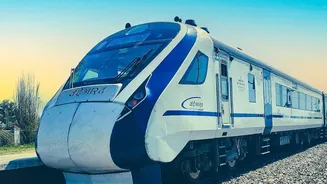
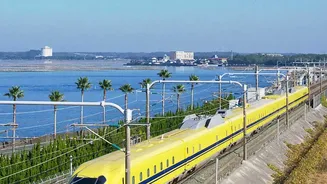
A key aspect of this new phase is the emphasis on domestic manufacturing under the 'Atmanirbhar Bharat' initiative. While the project began with Japanese Shinkansen technology, India is concurrently developing its own high-speed trains. State-owned BEML is manufacturing trainsets with an operational speed of 250 kmph, which are expected to be used in the 2027 trials. The first body frame of this indigenous train has already been completed and sent for crucial structural testing. In the long term, the National High Speed Rail Corporation Limited (NHSRCL) is planning for even faster 'B35' trains, designed to reach speeds of 350 kmph, for future corridors. This dual approach of using proven technology while building domestic capability is crucial for India's ambition to expand its high-speed rail network.
Path to Full Operation
While the 2027 trial is a significant goal, the entire 508-km corridor will open in stages. Officials have indicated that the Surat-Vapi section in Gujarat is a priority, with work progressing quickly. The full line, connecting Mumbai's Bandra Kurla Complex (BKC) to Sabarmati in Ahmedabad, is now projected to be completed by 2029. Once fully operational, the bullet train is expected to reduce the travel time between the two financial hubs from over six hours to just under two hours for the fastest services. This dramatic reduction promises to boost economic activity and enhance connectivity between two of India's most important commercial centres. The project includes 12 stations in total, with work progressing at various stages across all of them.
The Bigger Picture for India
The Mumbai-Ahmedabad line is the blueprint for a much larger vision. The government has already planned seven additional high-speed rail corridors, spanning thousands of kilometres and connecting major cities like Delhi, Varanasi, Chennai, and Hyderabad. The lessons learned and the domestic industrial capacity built during the MAHSR project are expected to be critical for this future expansion. From mastering complex construction techniques, like the 7-km undersea tunnel in Maharashtra, to developing indigenous rolling stock, the project is creating a foundation for a nationwide high-speed network. The successful execution of this first corridor is seen as a litmus test for India's ability to deliver world-class infrastructure projects at scale.