



The Fragile Foundation
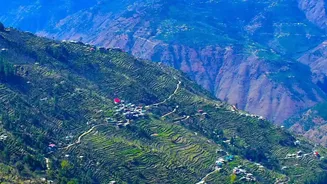
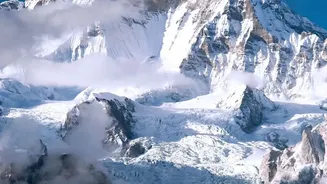
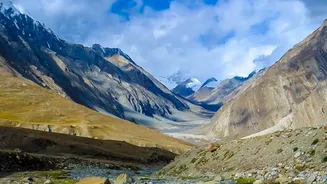
The Himalayas are geologically young and tectonically active mountains. Formed by the ongoing collision of the Indian and Eurasian plates, the region is in a constant state of flux. This process creates incredibly steep slopes made of unconsolidated rock
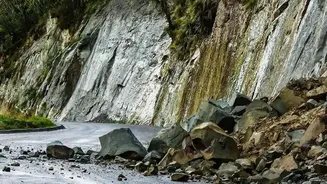
and soil, making them inherently unstable. The entire region is a high-seismic zone, meaning earthquakes are common. Even a minor tremor can be enough to dislodge vast quantities of rock and debris, triggering catastrophic landslides that can block rivers or obliterate anything in their path. This underlying geological instability is the first key reason why the landscape can change so violently and so quickly.
When Rain Becomes a Weapon
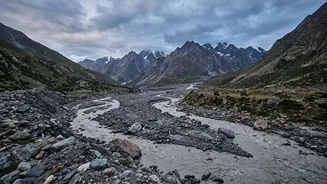
The second critical factor is the region's extreme weather, particularly the phenomenon of cloudbursts. A cloudburst is not just heavy rain; it's a sudden, intense downpour where over 100mm of rain can fall in under an hour over a very small area. In the mountains, steep topography forces moist air to rise and cool rapidly, unleashing these violent torrents. In a narrow valley, this massive volume of water has nowhere to go. It funnels into streams, transforming them into flash floods that gather speed, mud, and boulders, creating a destructive debris flow that moves with terrifying speed and power. These events can happen with little to no warning, often turning a sunny afternoon into a disaster zone in minutes.
The Threat from Melting Ice
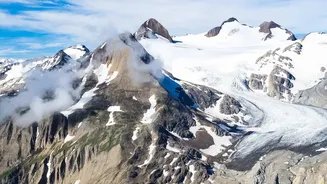
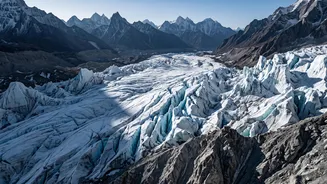
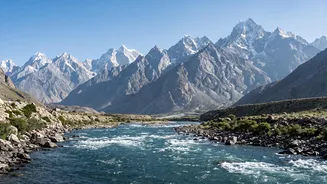
A growing danger comes from above, in the form of Glacial Lake Outburst Floods (GLOFs). As global temperatures rise, Himalayan glaciers are melting at an accelerated rate. This meltwater often collects in lakes dammed by unstable walls of moraine (loose rock and debris) or ice. These natural dams can fail suddenly due to a number of triggers: an avalanche crashing into the lake, an earthquake, or simply the immense pressure of the rising water. The result is the catastrophic release of millions of cubic metres of water in an instant, creating a flood wave far more powerful than any rainfall-induced flood. As glaciers retreat, the number and size of these dangerous lakes are rapidly growing.
A Cascade of Hazards
What makes the Himalayas particularly treacherous is how these dangers are interconnected. It's rarely a single event but a cascade of hazards. An earthquake can trigger a landslide. A landslide can crash into a glacial lake, causing a GLOF. A GLOF or a cloudburst-induced flash flood can undercut the base of a valley, causing even more landslides downstream. A single trigger high in the mountains can set off a chain reaction that results in a complex, fast-moving disaster that is almost impossible to predict or outrun. This domino effect means that a problem starting miles away in an uninhabited area can become a life-threatening catastrophe for communities downstream within minutes.
The Human Factor
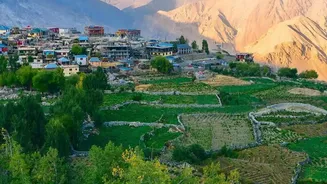
Finally, human activity often exacerbates these natural risks. The construction of roads, dams, and towns can destabilise fragile slopes. Deforestation removes the natural root systems that help hold soil together, increasing landslide risk. Often, infrastructure and settlements are built on alluvial fans—cone-shaped deposits of debris from past floods—which seem flat and safe but are the very paths that future floods are likely to take. While climate change is making extreme rainfall and glacial melting more frequent, poor planning is what puts people and property directly in harm's way, turning natural events into human tragedies.