






The 55% Finding: A Nation of Adventurers
Digital travel platform Agoda recently released its '2027 Asia Travel Pulse' report, and one statistic stood out for India. The survey, which polled over 3,300 travellers across 11 Asian markets, found that a remarkable 55% of Indian travellers are likely
to visit a lesser-known destination in 2027. This figure is significantly higher than the Asian average of just 36%, positioning Indians as the most likely in the region to venture off the beaten path. According to Gaurav Malik, Agoda's Country Director, Indian travellers are becoming more 'intentional' about how they explore, actively seeking unique experiences through offbeat destinations. This desire isn't just about avoiding crowds; it's linked to other growing trends like adventure and spiritual tourism. The same report notes that 42% of Indians see outdoor activities as a key reason to travel, and 14% are motivated by spiritual journeys—three and a half times the Asian average.
The Great Disconnect: Why We Dream But Don't Always Go
While over half of us aspire to explore the unknown, our booking histories often tell a different story. The path from a saved Instagram post of a remote valley to a confirmed flight is filled with obstacles. This is the classic 'intention-action gap'. Psychologically, humans are creatures of comfort. Booking a trip to a familiar destination like Goa or Manali requires less mental energy and carries a lower perceived risk than planning a trip to, say, Ziro Valley in Arunachal Pradesh. The familiar is easy and comfortable, an 'autopilot' decision in a life already full of complex choices. Practical barriers are just as significant. Offbeat destinations can be harder to research, may have less developed infrastructure, and raise questions about safety and accessibility. Decision fatigue is a real phenomenon in travel planning; faced with too many unknowns, the brain often defaults to the simplest, most predictable option. Cost, convenience, and the sheer effort of planning an unconventional trip often lead us back to the tried-and-tested.
What 'Offbeat' Means in 2027
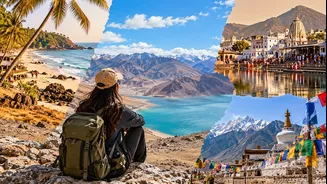
The idea of an 'offbeat' destination is also evolving. It no longer exclusively means a remote, difficult-to-reach location. Today, it can refer to exploring lesser-known neighbourhoods in a major city, choosing a homestay for a local experience, or visiting a popular region during its shoulder season. The Agoda report highlights a growing interest in places that offer meaningful experiences. For example, accommodation searches for Pushkar, especially around Holi, saw a 195% increase, while searches for Dharamshala and Leh also surged. These are not unknown places, but they represent a move towards travel that is more immersive and purposeful, whether for spiritual reasons, adventure, or cultural connection. This shift suggests travellers are looking to escape the 'checklist' approach to tourism and build a deeper connection with the places they visit.
Closing the Gap: How a Dream Becomes a Destination
The gap between dreaming and doing may be shrinking. Technology is a key driver, with platforms making it easier to discover, research, and book accommodations and activities in previously hard-to_reach areas. As more travellers venture out and share their experiences online, the 'unknown' becomes more knowable and therefore less intimidating. The Agoda report also found that Indian travellers are planning longer trips. About 26% say their trips in 2027 will last 8 to 12 days, compared to the 15% average across Asia. Longer stays allow for more exploration beyond the main tourist hubs, making offbeat travel a more feasible and rewarding option. This move towards 'intentional travel'—where the 'why' of the trip guides the planning—is helping people align their actions with their values, turning a vague desire for adventure into a concrete itinerary.