




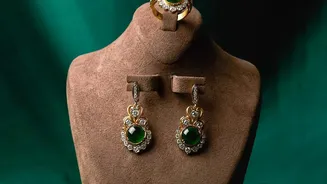

A Vision of Emerald and Diamond
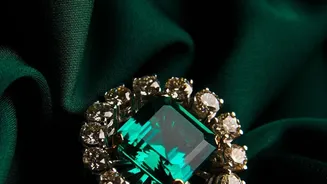
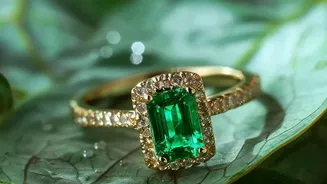
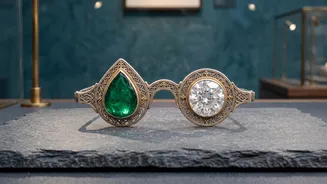
Imagine spectacles with lenses not of glass, but of gemstone. Two such pairs exist, hailing from the incredible craftsmanship of Mughal India. The first, poetically named the 'Gate of Paradise', features two teardrop-shaped lenses carved from a single,
magnificent Colombian emerald. This original gem is believed to have weighed over 300 carats before a master artisan sliced and polished it into transparent panes. Its counterpart is the 'Halo of Light', with lenses cleaved from a single flawless diamond thought to have originated from the legendary Golconda mines, its original form estimated at over 200 carats. The current frames, added around 1890, are themselves a work of art, mounted with rose-cut diamonds. These are not merely eyeglasses; they are masterpieces of lapidary skill and artistic vision.
Lenses for Spiritual Sight
The name 'Gate of Paradise' is deeply symbolic. In Islamic tradition, the color green is closely associated with paradise, salvation, and eternity. Emeralds were also widely believed to hold miraculous powers, including the ability to heal and ward off evil. For a potential wearer like the Mughal emperor Shah Jahan, who was famously distraught after the death of his wife Mumtaz Mahal, looking through green lenses could have been seen as a way to soothe his eyes and soul, offering a glimpse of the eternal paradise he envisioned. Similarly, diamonds were associated with light and spiritual illumination. Therefore, these spectacles were not designed simply to improve physical sight. Their perceived utility was spiritual: they were aids for enlightenment, offering the wearer a filtered, holier view of the world.
The Ultimate Status Symbol
In the opulent world of the Mughal court, luxury was a language of power. Commissioning these spectacles was an unparalleled display of status. The raw materials alone—a flawless diamond and a massive emerald of exceptional purity—were of a quality and size reserved almost exclusively for an emperor. The technical challenge of cutting such large gems into transparent, wearable lenses without shattering them represented an extraordinary feat. This required not only immense wealth but also access to the most skilled craftsmen in the empire. While the exact patron remains unknown, it was undoubtedly a prince or emperor from the golden age of Mughal rule. To own and wear these spectacles was to make a statement of absolute authority, wealth, and sophisticated taste that no one could ignore.
A Question of Function
While breathtakingly beautiful, were they functional in the modern sense? It is unlikely they corrected vision like prescription glasses. Instead, their 'utility' was multifaceted. The tinted emerald lenses may have offered practical comfort by reducing the harsh glare of the Indian sun, a function historically attributed to green stones since the Roman Emperor Nero. The gemstones were also believed to have cooling properties when placed against the skin. But their primary function was deeply intertwined with belief and status. Their use was to see and be seen in a particular light—spiritually enlightened, divinely protected, and royally powerful. They served a purpose that transcended simple optics, functioning as talismans and symbols of supreme standing.