


Ithaca, Greece: The Long-Awaited Homecoming
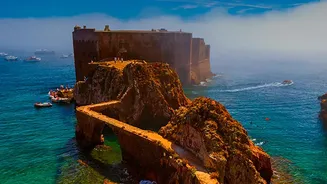
The entire epic revolves around Odysseus’s desperate yearning for his home island of Ithaca. Today, the modern Greek island of the same name is widely accepted as the place Homer described. It’s a rugged, beautiful island in the Ionian Sea, defined by
steep cliffs and brilliant turquoise coves. While the exact location of Odysseus's palace is debated by archaeologists, you can feel the myth in the air. Visit the so-called School of Homer, the ruins of a Mycenaean palace, or the Loizos Cave near Polis Bay, where artifacts, including a shard with a dedication to Odysseus, were discovered, suggesting ancient inhabitants believed this was his kingdom. For travellers, Ithaca is not a land of grand resorts but of quiet villages, stunning beaches like Gidaki, and scenic hiking trails that offer a sense of timeless peace—the very thing its mythical king fought so hard to reclaim.
Gozo, Malta: The Cave of Calypso
One of Odysseus's most famous detours was his seven-year captivity on Ogygia, the island of the beautiful nymph Calypso. While its true location is a mystery, long-standing tradition identifies Ogygia with Gozo, the second-largest island in the Maltese archipelago. This identification dates back to at least the 4th century BC. Visitors to Gozo can explore the cave that locals call Calypso's Cave, which overlooks the stunning red sands of Ramla Bay. Homer described Ogygia as a remote paradise, and the rural, hilly landscape of Gozo certainly fits the description. Whether or not it’s the true Ogygia, the island’s tranquil atmosphere, ancient temples, and dramatic coastline make it easy to imagine why a hero might be tempted to stay.
Djerba, Tunisia: The Land of the Lotus-Eaters
Early in his journey, Odysseus’s crew landed on an island where the locals offered them the lotus fruit, a narcotic that made them forget all thoughts of home. This land of blissful apathy is widely believed to be the island of Djerba, off the coast of Tunisia. Ancient writers like Herodotus mentioned lotus-eating people along the North African coast. Today, Djerba is known not for forgetfulness but for its unique culture, beautiful beaches, and whitewashed villages. It has a long history of tolerance, with ancient Jewish and Ibadi Muslim communities coexisting for centuries. Instead of a memory-erasing fruit, travellers will find a rich history, bustling markets in the town of Houmt Souk, and a laid-back atmosphere that might just make you want to extend your stay—no magic required.
Cape Circeo, Italy: The Island of the Sorceress Circe
The mythical island of Aeaea was home to the sorceress Circe, who famously turned Odysseus's men into pigs before becoming his ally. The most common real-world identification for Aeaea is Cape Circeo (or Monte Circeo), a dramatic promontory on the coast of Italy between Rome and Naples. In ancient times, the surrounding marshland would have made the mountain appear as an island, matching Homer’s description. The name itself is a direct link to the myth. Today, the area is part of Circeo National Park, preserving the ancient forests and coastline. Visitors can explore the landscape and even a cave that local legend associates with the goddess. It was here that Circe advised Odysseus on how to navigate the dangers that lay ahead, including his next great challenge.
Strait of Messina, Italy: Between Scylla and Charybdis
One of the most terrifying parts of Odysseus's journey was navigating the narrow passage between two monsters: Scylla, a six-headed beast who snatched sailors from their decks, and Charybdis, a giant whirlpool that threatened to swallow his entire ship. This deadly channel is believed to be the Strait of Messina, the turbulent stretch of water separating Sicily from mainland Italy. The powerful, colliding currents of the Ionian and Tyrrhenian seas create natural whirlpools and treacherous conditions that plagued ancient sailors. These real-world dangers were personified in myth as monsters. Today, ferries cross the strait safely, but standing on the shore at either Reggio Calabria or Messina, you can still feel the raw power of the water and appreciate the fear that inspired one of literature's most enduring metaphors for facing an impossible choice.