






Two Paths to Sabudana Prep
There are two main schools of thought when it comes to preparing the sabudana (tapioca pearls) for your paratha dough. The more traditional method involves soaking the pearls. Wash them thoroughly until the water runs clear, then soak them for 4-6 hours,
or overnight, in just enough water to cover them. When properly soaked, a pearl should mash easily between your fingers with no hard centre. The alternative method involves dry-roasting the sabudana on a low-to-medium flame for 5-6 minutes until they are crisp, letting them cool completely, and then grinding them into a fine powder. For the smoothest texture, it's a good idea to sieve this flour to remove any coarse bits.
Gathering Your Core Ingredients
Beyond the sabudana itself, a few key ingredients are essential for the perfect paratha. You will need boiled potatoes, which act as the primary binding agent. It's best to mash or grate the potatoes to ensure there are no lumps, which can make rolling the parathas difficult. For flavour and texture, gather roasted peanuts (coarsely crushed), fresh coriander, finely chopped green chillies, and ginger. The primary seasoning is sendha namak (rock salt), which is used during fasting periods. Ghee is the traditional choice for cooking the parathas on the griddle, lending a rich flavour and helping to create a crispy exterior.
Crafting the Perfect Dough
Whether you're using soaked sabudana or sabudana flour, the next step is to form the dough. In a large mixing bowl, combine the prepared sabudana, mashed potatoes, crushed peanuts, chillies, ginger, coriander, and sendha namak. If using sabudana flour, you will need to add water little by little to form a soft dough. Be careful not to add too much water at once, as this can make the dough sticky. Knead all the ingredients together until a cohesive, soft dough forms. Adding a teaspoon of ghee at the end can improve the flavour and make the dough easier to handle. Letting the dough rest for 15-20 minutes allows the flavours to meld and the sabudana to fully hydrate.
Shaping and Rolling the Parathas
The sticky, starchy nature of sabudana dough can make rolling a challenge. To prevent sticking, you can grease your hands with a little oil or ghee. Divide the dough into equal-sized balls. One effective method for shaping is to place a dough ball between two sheets of greased plastic or butter paper and gently roll it out with a rolling pin. You can also simply pat it out with your hands. If the edges crack, don't worry—this is normal. For perfectly round parathas, you can use a round lid or a large cookie cutter to trim the edges. If you used sabudana flour, a little of the reserved dry flour can be used for dusting.
Cooking on the Griddle
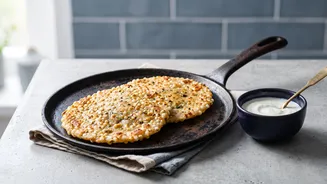
Heat a tawa (griddle) over a medium flame. Once it's hot, carefully place a paratha on it. Let it cook for a minute or two on one side until it starts to look slightly dry and holds its shape. Drizzle some ghee over the top and along the edges, then flip it. Gently press down with a spatula to ensure even cooking. Cook the other side, adding more ghee as needed, until both sides are golden brown and have crispy spots. The key is to be patient and cook on a medium flame to ensure the inside is soft and cooked through while the outside gets wonderfully crisp.
Serving Your Delicious Creation
Sabudana parathas are best served immediately while they are hot and crispy. The classic accompaniment is a bowl of plain curd (yogurt), which provides a cooling contrast to the savoury paratha. They also pair beautifully with a variety of fasting-friendly chutneys, such as a simple coriander and mint chutney or a tangy peanut chutney. These parathas are not only a staple for religious fasts but also a wholesome and satisfying gluten-free meal for any occasion.