

What Exactly Is Colour-Blocking?
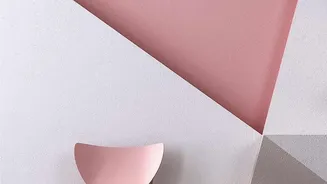
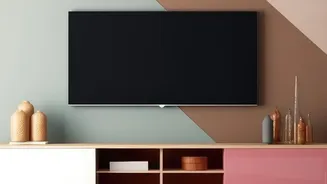
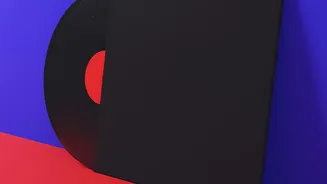
First popularised in fashion, colour-blocking has become a staple in modern interior design for its ability to add drama and highlight architectural features. The technique involves pairing two or more solid blocks of colour directly against each other.
Instead of patterns or gradients, the impact comes from clean, distinct shapes. Think of it as creating art directly on your wall, where geometric forms like rectangles, circles, or even abstract shapes define the space and guide the eye. This approach can make a room feel organised, intentional, and full of energy without adding clutter.
The Golden Rule: Achieve Palette Balance
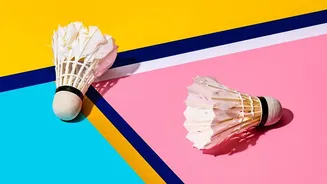
A balanced colour scheme is one that feels calm and cohesive, even when using bold shades. The key to successful colour-blocking is choosing hues that work in harmony. Designers often rely on the 60-30-10 rule: 60% of your space is a dominant colour, 30% is a secondary colour, and 10% is an accent. When creating a colour-blocked art piece, apply this same logic. Choose a dominant colour for the largest block, a secondary shade for a smaller shape, and a vibrant accent for the final pop. This hierarchy creates a sense of order and prevents the colours from competing with each other.
How to Choose Your Colour Story
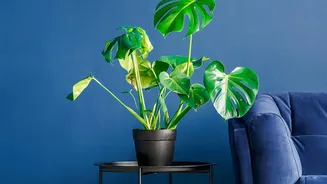
Start by looking at your room's existing palette. Your wall art should feel connected to the space. Pull one or two shades from a rug, a sofa, or even the tones in your wooden furniture. For a calming, harmonious look, choose colours from the same family in varying shades—this is known as a tonal or monochromatic palette. For a more energetic feel, choose complementary colours that sit opposite each other on the colour wheel, like blue and orange. If you're hesitant, start with a neutral base and add just one or two bold colours. Most designers advise sticking to three main colours in a single piece to maintain clarity.
Simple Shapes for Maximum Impact
The beauty of colour-blocking lies in its use of simple geometric forms. You don't need complex artistic skills to create something stunning. Squares, rectangles, arches, and circles are incredibly effective. An painted arch behind a bed can create the illusion of a headboard, while a series of overlapping rectangles can form a dynamic abstract piece. The trick is to keep the lines clean and the shapes distinct. Use painter's tape to mark out your design on a canvas or directly on the wall, ensuring crisp edges that make the colour blocks pop.
Think Beyond Paint
While paint is the most common medium for DIY colour-blocked art, it’s not your only option. You can achieve a similar effect with other materials. Consider creating a composition using sheets of high-quality coloured paper or scrapbooking paper in different hues, then framing the result. Fabric wall hangings made from solid-coloured felt or linen panels can also introduce texture and softness. For a less permanent solution, seek out art prints that feature bold, geometric compositions. This allows you to embrace the trend and experiment with different palettes without committing to painting a wall.