

Three Pairs, Three Stories
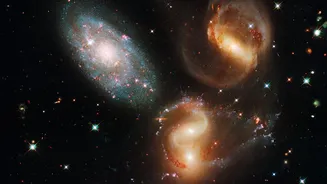
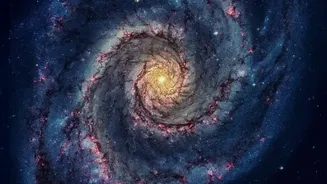
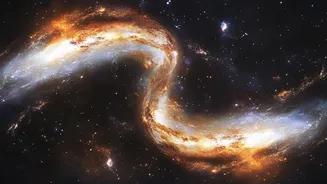
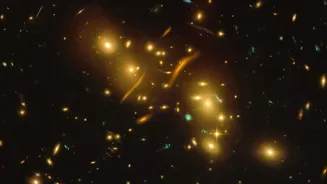
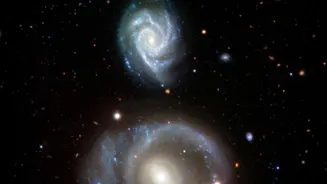
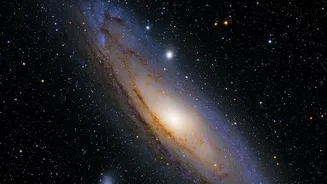
A remarkable image released as NASA's Astronomy Picture of the Day on August 10, 2026, showcases three distinct pairs of galaxies captured in a single frame. At first glance, they might all seem like cosmic dance partners. However, each pair illustrates
a different facet of galactic life, from true mergers to mere chance alignments. The image, taken by astrophotographer Rafael Sampaio, provides a masterclass in cosmic perception, showing how appearances in the vastness of space can be deeply deceiving.
The Cosmic Impostors
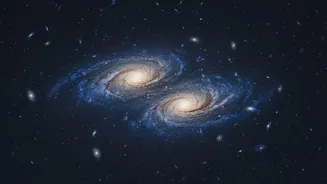
The pair of galaxies in the middle of the image look like they could be interacting, but they are most likely what astronomers call a 'visual pair'. This is an optical illusion where two objects, which can be millions of light-years apart, appear close together from our line of sight on Earth. Think of it like holding your thumb up to the sky to cover the moon; your thumb isn't actually next to the moon, but from your perspective, they align. Astronomers determined that the relative speeds of these two middle galaxies make a true gravitational dance unlikely. The top pair presents a similar mystery, with the two galaxies likely not interacting at all.
A True Galactic Collision
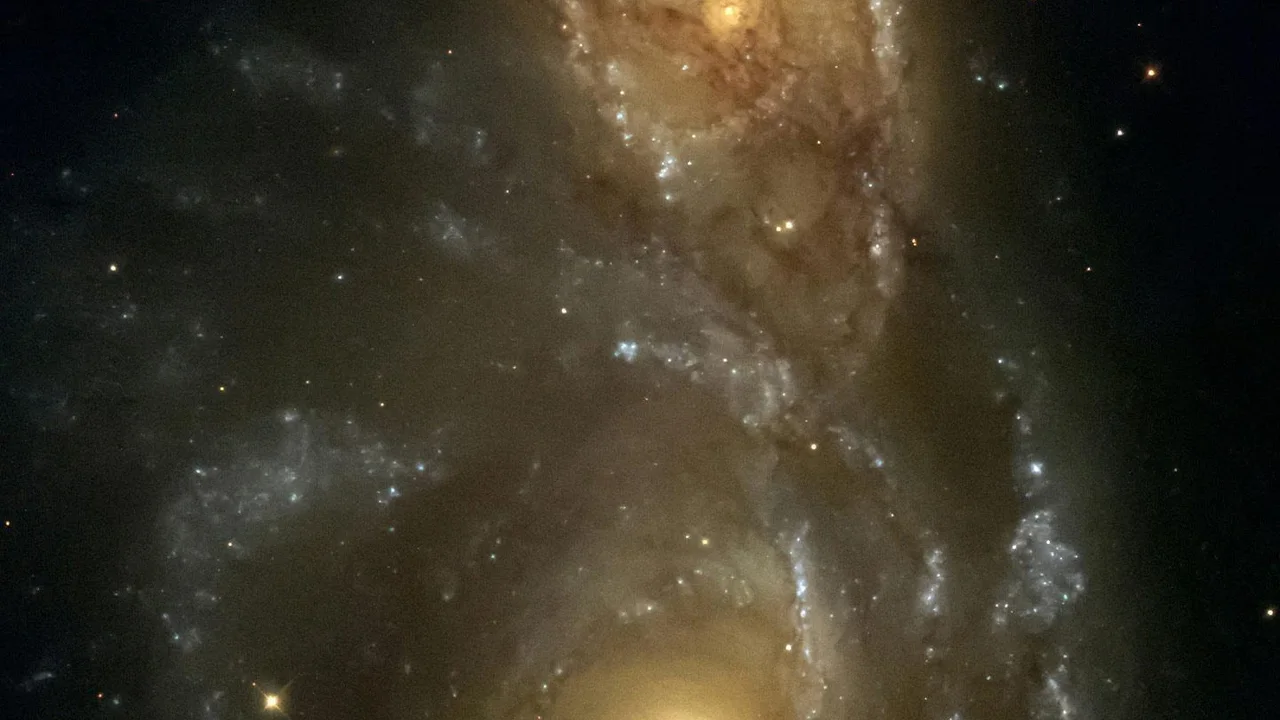
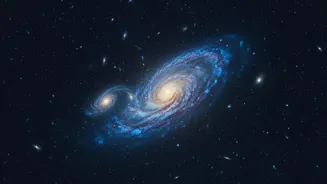
In stark contrast, the duo at the bottom of the image, identified as NGC 4622A and NGC 4622B, are the real deal. These two galaxies are actively interacting, their mutual gravity pulling and distorting their shapes. This is a true pair of neighbours engaged in a cosmic merger that will likely see them become one single, larger galaxy in about a billion years. Studying such genuine collisions is crucial for astronomers, as it provides a live look into the process of galaxy evolution. These mergers trigger bursts of new star formation and fundamentally reshape the galactic structures involved.
How Scientists Tell the Difference
So, how do astronomers avoid being fooled by these cosmic look-alikes? The key is measuring distance and velocity. Using techniques like spectroscopy, scientists can analyze the light from a galaxy to determine its redshift. Redshift tells them how fast a galaxy is moving away from us, which in turn allows them to calculate its distance. If two galaxies that appear side-by-side have wildly different redshifts, it's a clear sign that one is much farther away than the other, making them cosmic strangers rather than intimate partners. They also look for physical signs of interaction, such as distorted shapes or long streamers of stars and gas, known as tidal tails, being pulled from one galaxy to another.
Why This View Matters
This three-pair image beautifully illustrates a fundamental challenge and a vital lesson in astronomy: the universe is a three-dimensional space that we can only view in two dimensions. Distinguishing between true interacting systems and chance alignments is essential for building an accurate model of the cosmos. Misidentifying a visual pair as a merging one could lead to incorrect conclusions about galaxy evolution, mass, and the distribution of dark matter. Images like this are not just breathtakingly beautiful; they are scientific puzzles that remind us to always question what we see and to look for the deeper evidence that reveals the universe's true nature.