



A Parade of Bright Planets
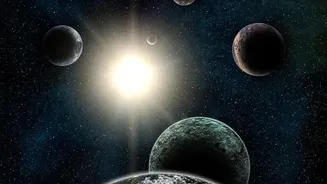
September is a fantastic month for planet-spotting, with all five naked-eye planets making an appearance. Venus will be a stunningly bright beacon in the western sky shortly after sunset all month long, reaching its peak brightness around September 22.
It will be the brightest object in the night sky, aside from the Moon. Look for Saturn, which rises in the east not long after sunset and will be visible for most of the night. If you’re an early riser, the pre-dawn sky offers its own rewards. Jupiter will dominate the eastern sky before sunrise, appearing as a brilliant, white point of light. Reddish Mars can also be spotted in the pre-dawn east, growing brighter as the month progresses. Several times this month, the Moon will pass close to these planets, creating beautiful pairings. A thin crescent Moon will be very close to Jupiter before dawn on September 8 and near Mars on September 6.
The Famous Harvest Moon
September’s full moon is arguably the most famous of the year: the Harvest Moon. In 2026, it will reach its peak fullness on Saturday, September 26. It earns its name for being the full moon that falls closest to the autumnal equinox. Historically, the bright light from this moon, rising near sunset for several evenings in a row, gave farmers extra hours to bring in their crops before the first frost. This unique characteristic is because the Moon's orbit makes a shallow angle to the horizon in early autumn, causing it to rise only about 30 minutes later each night, instead of the usual 50. For the best view, look towards the eastern horizon just after sunset on September 26 and 27. As it rises, the Moon will appear huge and take on a beautiful golden-orange hue.
Welcome Autumn with the Equinox
While it isn't a visual spectacle you can watch, the September equinox is a key celestial milestone. In 2026, it occurs on September 22 or 23, depending on your time zone. For the Northern Hemisphere, this marks the official start of astronomical autumn. On this day, the Sun shines directly over the Earth's equator, and day and night are of nearly equal length everywhere on the globe. After this date, the nights in the Northern Hemisphere will become longer than the days. The equinox period is also known for being a good time to spot auroras, as the alignment of Earth's tilt can lead to more vibrant northern lights displays.
A Ghostly Glow Before Dawn
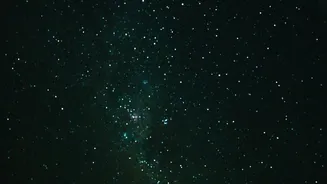
For those with access to truly dark skies away from city lights, September offers a chance to see a more subtle and mysterious phenomenon: the zodiacal light. This faint, pyramid-shaped glow appears in the east about an hour or two before sunrise. Often called the "false dawn," it is caused by sunlight reflecting off a vast cloud of dust particles orbiting the Sun in the inner solar system. The weeks surrounding the equinox are the best times to view it. In September 2026, the best viewing window will be in the days following the New Moon on September 11, when the sky is darkest. Look for a faint, hazy cone of light rising from the horizon through the constellations of the zodiac.
Simple Tips for a Better View
You don’t need any special equipment to enjoy most of these events, but a few simple tips can enhance your experience. First, find a location away from bright city lights. Second, give your eyes about 15-20 minutes to fully adapt to the darkness; this will help you spot fainter stars and phenomena like the zodiacal light. While not essential, a pair of binoculars can bring out amazing detail, revealing the moons of Jupiter or the craters on our own Moon. Finally, check the weather forecast for a clear night. Apps and websites with night sky maps can also help you identify exactly what you're looking at. The most important tip, however, is simply to go outside, look up, and enjoy the cosmic display.