



The Almighty Hummus
First, we need to talk about hummus. Not the tub of grainy paste from the supermarket, but real Israeli hummus. In Israel, hummus is not just a dip; it's a meal. Served warm in a shallow bowl, it’s a creamy, velvety canvas for a pool of high-quality olive
oil, a sprinkle of paprika, fresh parsley, and a swirl of tahini. It’s often topped with whole, soft chickpeas, fava beans, or even spiced ground meat. People don’t just snack on it with a few carrot sticks; they gather at a 'hummusia' (a hummus-focused restaurant) and wipe the bowl clean with fresh, fluffy pita bread. This is hummus in its purest, most revered form—a national obsession and a source of immense pride and culinary debate.
Msabbaha: The Deconstructed Cousin
If you love the flavour profile of hummus but crave a different texture, you need to meet msabbaha. Often described as deconstructed hummus, msabbaha features whole, warm chickpeas that are left intact rather than being fully blended. These tender chickpeas are gently tossed in a generous, slightly thinner sauce of tahini, lemon juice, and garlic. The name msabbaha literally means “swimming” in Arabic, a perfect description for the chickpeas bathing in the rich sauce. It delivers a similar flavour to hummus but with a more substantial, rustic texture that many aficionados prefer. It's a comforting and hearty dish, typically eaten for breakfast or lunch, and represents a more nuanced appreciation for the chickpea itself.
Sabich: The Sandwich Superstar
While not solely a chickpea dish, the role of hummus in a sabich sandwich is non-negotiable and utterly transformative. Sabich is a pita stuffed to the brim with a symphony of textures and flavours: slices of fried eggplant, slow-cooked hard-boiled eggs, Israeli salad (diced tomato and cucumber), pickles, and parsley. But what ties it all together are the generous lashings of creamy hummus and tahini, plus a drizzle of amba, a tangy mango pickle sauce. This beloved street food has its roots in the traditions of Iraqi Jews, who would prepare the ingredients for a Shabbat morning breakfast. In the 1960s, it was adapted into a sandwich format in Ramat Gan and has since become one of Israel’s most iconic and messy-in-the-best-way meals.
Roasted Chickpeas: The Perfect Crunch
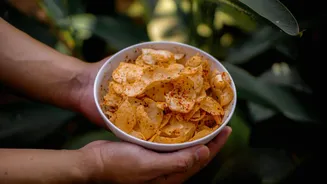
Moving away from spreads and sandwiches, we arrive at the simplest and perhaps most addictive chickpea snack: roasted chickpeas. This is the chickpea in its most direct, snackable form. After being tossed in olive oil and a blend of spices—often paprika, cumin, or the popular za'atar mix—they are roasted until golden brown and irresistibly crunchy. They are a popular healthy snack, offering a satisfying crunch along with a good dose of protein and fibre. You’ll find them served in homes as a go-to nibble, packed in school lunches, or even served alongside drinks at a bar. It’s a testament to the versatility of the chickpea that it can be transformed into something so simple yet so satisfying.