





A Global Alarm Sounds for Feathered Travellers
A sobering new interim report on the State of the World's Migratory Species, backed by the UN, has sounded a global alarm. It reveals that the situation for these incredible travellers is worsening. According to the data, a shocking 49% of migratory species
that are recognised as needing international protection have declining populations, an increase from 44% just two years prior. Furthermore, 24% of these species are now threatened with extinction. The report, prepared by conservation scientists for the Convention on the Conservation of Migratory Species of Wild Animals (CMS), paints a clear picture: the immense pressures of human activity are putting these creatures at unprecedented risk. The findings serve as an urgent call to action for governments worldwide ahead of major conservation conferences.
The Invisible Highways in the Sky
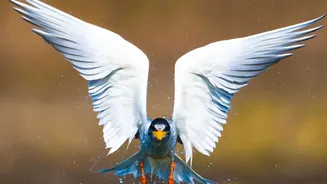
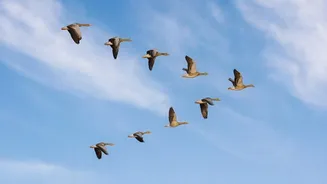
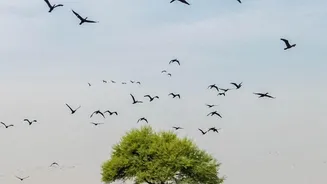
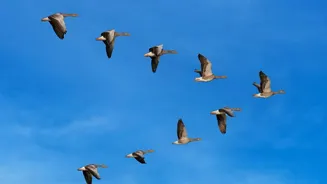
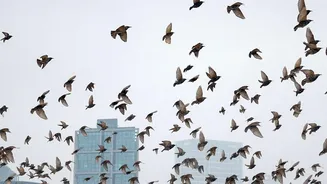
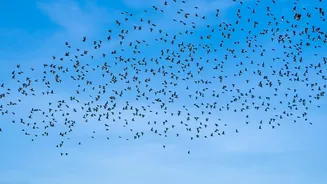
These birds don't travel randomly; they follow specific routes known as flyways. These are ancient, invisible highways in the sky that connect their breeding grounds with places they spend the winter. India holds a uniquely critical position, as it lies at the heart of the vast Central Asian Flyway, which stretches from Siberia to the Indian Ocean. Over 600 species use this particular route. This makes India an essential stopover point for countless birds, from the iconic Bar-headed Goose to the remarkable Amur Falcon. These flyways are not just lines on a map; they are a fragile chain of interconnected habitats—wetlands, forests, and grasslands—that birds depend on for rest and refuelling. The health of these sites in one country directly impacts the survival of bird populations in another.
A Perilous Journey of a Thousand Dangers
The report highlights that the entire migratory journey is fraught with peril. The primary threats are driven by human activity. Habitat loss is chief among them; crucial wetlands and forests are being drained, converted for agriculture, or lost to urban sprawl, leaving birds with nowhere to rest or feed. Climate change is another major factor, disrupting the delicate timing of migration and the availability of food sources, while also increasing the frequency of extreme weather events. On top of this, birds face dangers like illegal hunting, poisoning from pesticides, and collisions with man-made structures like power lines and wind turbines. Because these threats occur across multiple countries, a safe breeding ground is useless if the stopover sites on the way are destroyed.
India’s Critical Role in a Global Effort
Given its strategic location on the Central Asian Flyway, India's conservation efforts are vital for the survival of many species. The nation has launched a National Action Plan for the Conservation of Migratory Birds and is a signatory to the Convention on Migratory Species, demonstrating its commitment. Success stories show what is possible. In Nagaland, for instance, communities that once hunted the visiting Amur Falcons now act as their guardians, celebrating the arrival of the world's largest concentration of this raptor. This turnaround highlights how local action, supported by government policy, can have a world-changing impact. Protecting and restoring India's network of wetlands and other key bird areas is not just a national priority, but a global responsibility.
A Blueprint for Trans-Boundary Protection
The report stresses that because these birds know no borders, conservation efforts cannot afford to have them either. The core recommendation is for enhanced international cooperation. This involves countries along a flyway working together to create a network of safe passages. Coordinated actions could include jointly managing shared populations, aligning legal protections, and sharing data from advanced tracking technologies to pinpoint the most critical habitats. The goal is to ensure that the conservation gains made in one nation are not undone by a lack of protection in the next. The report also notes that conservation can work, pointing to a few species whose status has improved due to targeted, collaborative efforts.