

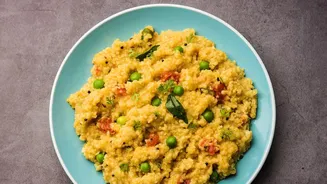

Every Durga Puja, the air in the pandals is thick with the divine aroma of bhog. At its heart is the khichuri, a dish that seems simple but is profoundly different from its everyday counterpart. What elevates this dish from a mere meal to a sacred offering?
The Spirit of the Dish: Offering vs. Meal
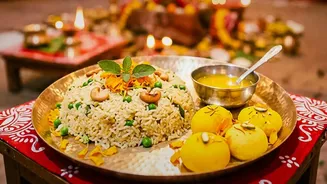
The most significant difference is not in the ingredients, but in the intention. Everyday khichdi is a comfort food, a quick, nourishing meal often made for convenience or when one is feeling under the weather. It's food for the body. Bhoger khichuri, on the other hand, is a 'bhog'—a sacred offering prepared for the Goddess Durga before being distributed as 'prasad'. This act of devotion is central to its identity. It is cooked with a sense of purity, prayer, and community spirit, intended to nourish the soul. This spiritual element is what many believe gives bhog its unique, divine taste that can never be replicated at home, no matter how carefully the recipe is followed.
The Foundation: Special Grains and Roasted Dal
The choice of ingredients is specific and deliberate. Bhoger khichuri is traditionally made with Gobindobhog rice, a short-grained, aromatic variety native to West Bengal. This rice has a unique fragrance and sticky quality that gives the khichuri its characteristic texture. In contrast, everyday khichdi can be made with any available rice, including long-grain varieties like Basmati. The lentil used is typically Sona Moong Dal, which is dry-roasted before cooking. This roasting process imparts a nutty, deep aroma that is a signature of bhoger khichuri. Regular khichdi often uses unroasted moong dal or other lentils like masoor dal, leading to a different flavour profile.
The Flavour Profile: Sattvic Purity
Bhoger khichuri is strictly 'niramish' or vegetarian, and it follows Sattvic principles, meaning it is cooked without onions or garlic. This practice is rooted in the belief that these ingredients are 'tamasic' (producing negative energy) and thus unsuitable for a divine offering. The flavour comes from a careful blend of warming spices like ginger, cumin, cinnamon, cloves, and cardamom. Everyday khichdi, especially outside of a religious context, often starts with a base of sautéed onions and garlic, creating a more robust and savoury, but fundamentally different, taste.
The Cooking Medium: Ghee and Tempering
Generous use of ghee is non-negotiable in bhoger khichuri. It is used not only for cooking the rice and dal but also for frying the vegetables and in the final tempering, or 'phoron'. This liberal use of ghee lends a rich, unmistakable aroma and flavour. While home-style khichdi might use ghee, it is often cooked in vegetable oil or mustard oil, with ghee added at the end if desired. The tempering in bhog often includes whole spices like bay leaves, dried red chillies, and cumin seeds, which infuse the entire dish with their essence.
The Preparation: Communal Cauldron vs. Pressure Cooker
There's a magic to the scale of its preparation. Bhoger khichuri is often cooked in giant cauldrons or 'degs' over wood or coal fires to serve hundreds of devotees at community pandals. This slow, large-scale cooking process allows the flavours to meld together beautifully and sometimes imparts a subtle smokiness. It’s a communal effort, cooked and served by volunteers, which adds to the experience. In contrast, everyday khichdi is typically a quick, one-pot meal made in a pressure cooker or a single pot on a kitchen stove, prized for its speed and simplicity.
The Consistency and Accompaniments
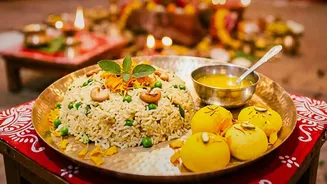
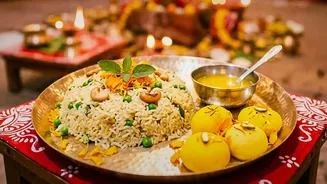
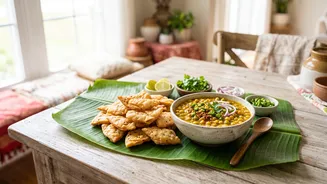
Bhoger khichuri has a distinct consistency—it is thick, soft, and almost porridge-like, where the rice and dal meld into a harmonious whole. It is not a dry or firm pilaf-style dish, nor is it watery. It's served as part of a larger platter, which is also part of the offering. The classic accompaniments are 'labra' (a medley of mixed vegetables), 'beguni' (brinjal fritters), papad, and a sweet tomato chutney. Everyday khichdi can have any consistency based on personal preference and is served with a wider, more variable range of sides, from a simple curd and pickle to an omelette.