

The Current Landscape
India’s electric car market is moving from a niche segment to a noticeable one. In the financial year ending in March 2026, electric passenger vehicles (e-PVs) accounted for about 4.4% of total sales. The first half of the 2026 calendar year saw a massive
81.6% year-on-year surge in e-PV registrations, reaching over 151,000 units. This rapid growth shows that consumers are increasingly warming up to electric mobility. The forecast from India Ratings suggests this momentum will not only continue but accelerate, nearly doubling the market share in just a couple of years. This projection is a strong indicator that the transition from early adopters to mainstream buyers is well underway.
Government Policy in the Driver's Seat
A key force behind this electric push is strong government support. Schemes like the Faster Adoption and Manufacturing of (Hybrid &) Electric Vehicles (FAME) have been crucial. Following the conclusion of FAME-II, the government has introduced new initiatives like the PM E-DRIVE scheme, which allocates significant funds towards subsidies for various EV types and, critically, for charging infrastructure. The scheme includes an allocation of ₹2,000 crore for the installation of tens of thousands of chargers for two, three, and four-wheelers. Furthermore, the Production-Linked Incentive (PLI) scheme for automobiles and advanced chemistry cell (ACC) batteries encourages domestic manufacturing, which is vital for reducing costs and building a local supply chain. These policies work together to make EVs more affordable and address practical concerns like charging availability.
More Models, More Choices
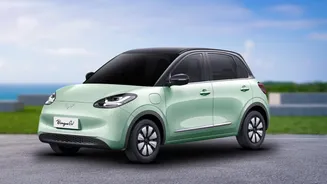
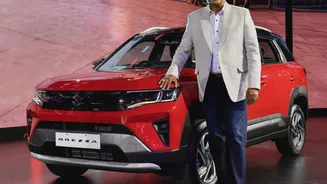
For years, limited choice was a major barrier for potential EV buyers. That is changing rapidly. The Ind-Ra forecast specifically cites the introduction of new models as a primary driver for the expected growth. The first half of 2026 alone saw eight new electric car models launched. Automakers are now offering a wider range of vehicles across different price points, from affordable SUVs to premium sedans. New entrants like Maruti Suzuki, with its e-Vitara, and VinFast have quickly gained market share, intensifying competition. Maruti Suzuki captured a 4.2% market share in the first half of 2026. Meanwhile, established players like Tata Motors, which still holds a commanding lead with about 38% of the market, and Mahindra & Mahindra are expanding their electric portfolios. This flood of new options is making it easier for consumers to find an EV that fits their needs and budget.
Tackling the Infrastructure Hurdle
Despite the positive outlook, challenges remain, with charging infrastructure and range anxiety being the most prominent. However, significant progress is being made. As of mid-2026, India has over 52,000 public EV charging stations. While this is a huge improvement, many are still concentrated in metropolitan areas. The government is actively working to expand this network, particularly along highways, to make long-distance travel more practical. At the same time, advancements in battery technology are leading to vehicles with longer ranges. Several mainstream models from manufacturers like Mahindra and Tata now offer certified ranges of over 600 km, once a feature exclusive to high-end luxury cars. This combination of an expanding charging network and better battery performance is steadily reducing the concern of getting stranded with a dead battery.
The Road Ahead
Achieving a 6-8% market share by FY27 is an ambitious but increasingly plausible goal. The growth will be heavily concentrated in urban centres and among higher-income consumers initially. The favourable economics of EV ownership, including lower running and maintenance costs, are becoming a key selling point. As Shruti Saboo, a Director at India Ratings, noted, the market is demonstrating healthy growth potential supported by favourable ownership costs, a wider range of vehicle options, and rising consumer acceptance. While the journey to mass adoption involves overcoming hurdles like high upfront costs and ensuring a resilient domestic supply chain for components like batteries, the direction of travel is clear. The Indian auto industry is firmly on the path to an electric future.