


A Lifeline Forged in History
Long before it became a heavily guarded border terminal, the railway line passing through Attari was part of a seamless network connecting Lahore and Amritsar. Built in 1862, it was a symbol of the region's shared infrastructure under British rule. The
Partition of 1947 violently redrew the map, transforming this once-local route into an international frontier. The station at Attari, the last stop in India, suddenly found itself on the edge of a new nation, its tracks bearing the weight of history and the sorrow of Partition-era 'ghost trains' that carried refugees across the newly formed border. For decades, this vital link lay dormant, a silent testament to the division.
The 'Agreement Express' is Born
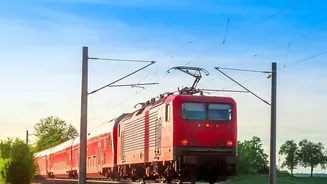
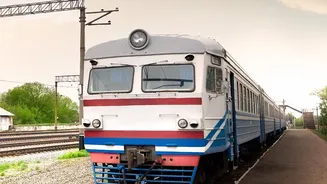
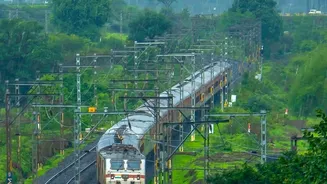
The ice began to thaw with the Shimla Agreement of 1972. Following this diplomatic breakthrough, India and Pakistan signed a specific rail agreement to re-establish a connection. On July 22, 1976, the Samjhauta Express—the name meaning 'agreement' or 'compromise' in both Hindi and Urdu—made its first journey. Initially a daily service running between Amritsar and Lahore, it was a powerful symbol of peace and the most significant travel link for ordinary people on both sides, especially those with families separated by the border. It was more than a train; it was a rolling vessel of hope and reunion.
Attari's Mandatory Role
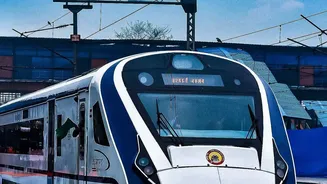
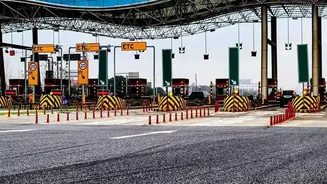
This is where the "historic requirement" of Attari comes into focus. For security and administrative reasons, especially following disturbances in Punjab in the late 1980s, Indian Railways designated Attari as the sole and mandatory checkpoint for all rail passengers. Every person travelling on the Samjhauta Express had to disembark at Attari for comprehensive customs and immigration clearance. The train arriving from Delhi was technically the 'Delhi-Attari Express'. Only after clearing all procedures would passengers board the actual Samjhauta Express for the short, final leg to Wagah and then Lahore. This made Attari station a unique, high-security zone; it's one of the few railway stations in India where a passport and a valid visa were required just to enter the platform.
A Journey of Connection and Tension
For over four decades, the Samjhauta Express was a fixture of cross-border life, alternately operated with an Indian and a Pakistani rake for six months at a time. The journey was a lifeline for families, a path for pilgrims, and a tangible link between two cultures that share deep historical roots. However, the train's journey was often a barometer of the political climate. The service was suspended multiple times, most notably after the 2001 Parliament attack and again following the 2007 bombing of the train itself, a tragic event that claimed over 60 lives. Each suspension severed the only affordable link for countless people.
The End of the Line
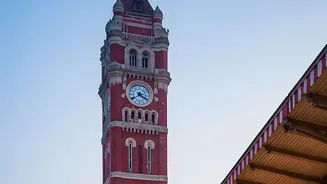
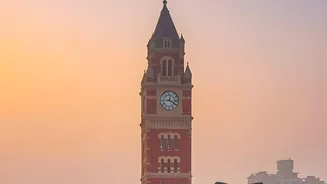
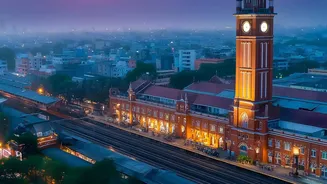
The final chapter for the Samjhauta Express came in August 2019. Following India's decision to revoke Article 370 in Jammu and Kashmir, Pakistan permanently suspended the train service. The bi-weekly train, which had once carried the hopes of thousands, fell silent. Today, the Attari railway station, officially renamed Attari Sham Singh station, stands largely deserted. The tracks that once led to Lahore are quiet, serving as a poignant reminder of an era of connection that has been indefinitely paused. The bustling customs halls and platforms now echo with the memory of the millions of journeys they once facilitated.