





The World of Giants
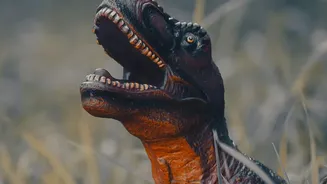
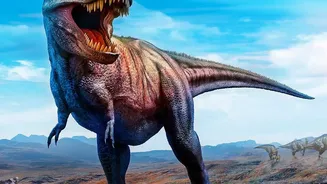
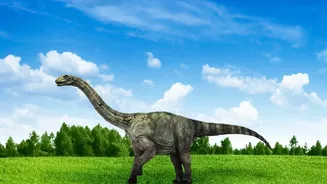
Our collective image of the dinosaur era is dominated by giants. From the long-necked Argentinosaurus to the fearsome T-Rex, these massive creatures have captured our imagination and, quite literally, the fossil record. Their enormous bones are more likely
to withstand the ravages of time, giving us a somewhat skewed view of the prehistoric world. Even the smallest known non-avian dinosaurs were not particularly tiny. Species like Microraptor and Fruitadens weighed around 400-700 grams, roughly the size of a modern crow or a small rabbit. Compared to the smallest mammals or lizards today, which can be as light as a couple of grams, the dinosaur world seems to have a conspicuous vacancy at the lower end of the size spectrum. For decades, scientists had a straightforward explanation for this.
The Preservation Problem
The long-standing theory behind the missing mini-dinos is fossilization bias. The process of becoming a fossil is incredibly rare, and it heavily favours the big and tough. The delicate, hollow bones of a sparrow-sized creature are far more likely to be crushed, eaten by scavengers, or simply weather away before they can be safely buried in sediment. Think of it this way: the chances of an elephant skeleton surviving are much higher than those of a mouse. This principle, known as taphonomy, suggests that countless tiny dinosaur species may have existed, but their remains were simply too fragile to ever make it into the 21st century for us to find. It was a neat and logical explanation, but recent evidence has thrown a wrench in the works.
A New Twist in the Fossil Tale
A new study, published in the journal Evolution, puts this classic theory to the test. Researchers looked at exceptionally well-preserved fossil sites, such as the Jehol Group in China. These locations are famous for their ability to fossilize small, delicate creatures, offering a pristine snapshot of an ancient ecosystem. In these fossil beds, paleontologists have found an abundance of tiny prehistoric mammals, lizards, and amphibians right alongside dinosaurs. Yet, even in these ideal conditions, dinosaurs smaller than about 400 grams are completely missing. This suggests their absence is not just an artifact of a poor fossil record. The tiny dinosaurs might not be missing from the rocks; they might have been missing from the world itself.
The Surprising Culprit: Our Furry Ancestors
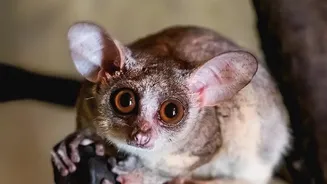
If preservation bias isn't the whole story, what is? The study proposes a compelling alternative: competition. Using mathematical models, scientists determined that basic dinosaur biology alone could not explain the lack of tiny species. The researchers theorize that during the Mesozoic Era, the ecological niches for very small, ground-dwelling animals were already filled to capacity by another group of creatures: our own ancestors, the early mammals. These shrew-like critters were already thriving by eating insects, seeds, and plants, effectively dominating the undergrowth. This intense competition may have prevented dinosaurs from evolving into smaller forms, essentially locking them out of the 'tiny' market. In a world ruled by giants, it was the smallest mammals who held their ground.
The Exception That Took Flight
There is, however, one group of dinosaurs that did become tiny: birds. The study suggests that the evolution of flight was the key that unlocked this potential. By taking to the air, early avian dinosaurs could escape the crowded ecosystem on the forest floor. They were no longer in direct competition with mammals for food and territory. This newfound freedom allowed them to exploit new opportunities and evolve into the vast array of smaller body sizes we see today, from the eagle all the way down to the two-gram bee hummingbird—a creature nearly 200 times smaller than the smallest known non-avian dinosaur.