







What is Changing for OpenAI?
OpenAI is fundamentally altering how it acquires and manages the vast computational power needed to build and run its AI models. The new roadmap has two core pillars: securing exponentially more capacity and exerting greater direct control over its physical
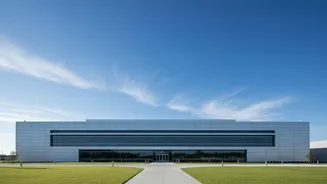
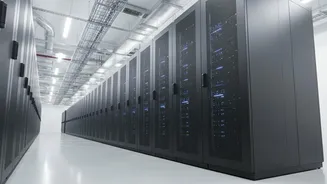
infrastructure. This represents a move away from simply leasing capacity from cloud providers. The company is now getting into the business of building its own data centers and co-designing its own custom AI chips. This shift from a consumer of cloud services to a full-stack infrastructure operator is a defining step in its evolution from a research lab to an industrial powerhouse. Recent announcements confirm this direction, with projected infrastructure spending reaching a staggering $750 billion by 2030.
The Insatiable Thirst for Capacity
The driving force behind this strategy is the relentless growth in the size and complexity of AI models. Each new generation requires a monumental leap in processing power for both training and inference (the process of running the model to generate a response). To meet this demand, OpenAI is making enormous financial commitments. Recent deals include a $300 billion contract with Oracle, a $138 billion deal with Amazon Web Services, and an additional $250 billion commitment to its primary partner, Microsoft Azure. At the same time, OpenAI is building its own massive data center campuses, such as 'Project Camellia' in Georgia, which is designed to consume 3.2 gigawatts of power. This campus alone represents a $20 billion initial investment on the path to a larger goal. By securing capacity through multiple avenues, OpenAI is trying to ensure it won’t be bottlenecked by supply shortages in the global AI hardware market.
Why 'Direct Control' Matters
Taking direct control over infrastructure gives OpenAI several strategic advantages. First, it allows for the creation of custom-designed hardware optimized specifically for its models. The company recently unveiled 'Jalapeño,' its first custom AI chip co-developed with Broadcom, which is designed to make running its models faster and cheaper. Second, owning and designing data centers provides greater control over costs, performance, and the security of its supply chain. This reduces dependence on any single partner. Third, it allows OpenAI to innovate across the entire technology stack—from the silicon chip to the user-facing application—creating a powerful feedback loop where each layer is optimized for the others. This vertical integration is seen as critical for long-term competitiveness in the AI race.
A New Chapter with Microsoft
OpenAI's push for more control might seem to signal a rift with its deepest partner, Microsoft. However, the relationship appears to be evolving rather than fracturing. In April 2026, the two companies revised their partnership, loosening Microsoft’s exclusive grip. While Microsoft remains the primary cloud partner, OpenAI now has the explicit right to deploy its models on other clouds like Amazon Web Services and Google Cloud. This gives OpenAI more flexibility and access to a wider market. For Microsoft, the deal secures its access to OpenAI's models through 2032 and even gives it access to OpenAI's custom chip designs to inform its own silicon strategy. The change reflects a maturation of the partnership, allowing both companies to pursue independent growth while maintaining their core strategic alignment.
Reshaping the Entire AI Industry
OpenAI's massive infrastructure build-out is sending ripples across the technology landscape. It signals that the future of AI leadership may depend on controlling the physical means of production, much like industrial giants of the past. This trend is putting immense pressure on global energy grids and water resources, prompting companies like OpenAI to build data centers with features like closed-loop water cooling and demand-response capabilities to reduce their environmental impact. Furthermore, it is forcing a strategic recalculation for other AI labs, which may now feel compelled to follow suit with their own infrastructure investments to remain competitive. The move solidifies AI development as a game of unprecedented capital expenditure, reshaping the economics of the entire sector.