







What is the Proposed Deal?
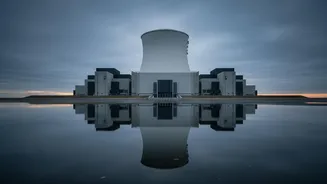
The United States and Saudi Arabia have signed a civil nuclear cooperation agreement, often called a "123 Agreement," which sets the legal framework for the US to export nuclear technology and materials. The goal is to allow American companies to build,
supply, and support a fleet of nuclear power plants in the Kingdom. Saudi Arabia, one of the world's top oil producers, wants to diversify its energy mix to meet surging domestic electricity demand, driven by population growth and ambitious development projects under its Vision 2030 plan. By using nuclear power for electricity and water desalination, the Kingdom can free up more of its crude oil for export. This 30-year agreement paves the way for US firms to play a central role, aiming to lock in American influence and shut out competitors like Russia and China.
An Enormous Economic Prize
The "tens of billions" figure refers to the immense value of contracts for constructing and maintaining nuclear reactors over several decades. US companies like Westinghouse, with its AP1000 reactor, and construction giant Bechtel are positioned to be major beneficiaries. The deal could generate a cascade of economic activity for American firms specializing in nuclear equipment, fuel cycle services, engineering, and maintenance, creating high-paying jobs in the US. For Saudi Arabia, the deal is a cornerstone of its Vision 2030 strategy to build a diversified, knowledge-based economy by fostering new high-tech industries and developing a skilled local workforce in science and engineering.
The Geopolitical Power Play
This agreement is about much more than just energy and economics; it's a strategic chess move in a volatile region. For the US, it's a way to reinforce a decades-old strategic alliance, counter the growing influence of China and Russia in the Gulf, and maintain a hand on the region's nuclear future. For Saudi Arabia, developing nuclear power is a matter of technological sovereignty and strategic autonomy. It's also deeply intertwined with its intense rivalry with Iran. Saudi leaders have openly stated that if Iran develops a nuclear weapon, the Kingdom will follow suit, making any nuclear development on its soil a subject of intense international scrutiny.
The Uranium Enrichment Question
The most significant and controversial aspect of the deal is whether Saudi Arabia will be permitted to enrich its own uranium. Uranium enrichment is a process that can produce fuel for nuclear reactors, but also the fissile material for nuclear weapons. Critics fear that allowing Saudi Arabia to enrich uranium could spark a nuclear arms race in the Middle East. A previous US agreement with the UAE in 2009 required the Emirates to forgo domestic enrichment, a standard that many non-proliferation experts want to see applied to Saudi Arabia. However, Riyadh has resisted these limitations, insisting on its right to a full nuclear fuel cycle. This issue remains the central sticking point and the primary source of concern for regional actors and arms control advocates.
Hurdles and Headwinds
The deal is far from finalized. It faces a review period in the US Congress, where there are significant concerns about proliferation risks. Further complicating matters, President Trump has stated that the deal's implementation is contingent on Saudi Arabia normalizing relations with Israel by joining the Abraham Accords, a condition that was not part of the initial signed agreement and which Saudi Arabia has not publicly accepted. This has created confusion and added a major political hurdle. Balancing the immense commercial interests against the grave security implications will require navigating a complex web of diplomacy, legislative approval, and regional tensions before any reactors can be built.