


The Essential Gear
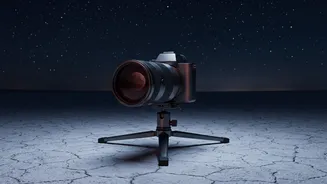
You don't need to spend a fortune to photograph a lunar eclipse. The core equipment is likely already in your camera bag. First, a DSLR or mirrorless camera that allows for manual control is essential. Second, you’ll need a sturdy tripod. As the moon
gets darker during the eclipse, your shutter speeds will get longer, making a stable platform non-negotiable to avoid blurry images. Finally, a remote shutter release or using your camera's self-timer function will prevent the camera shake that happens when you press the shutter button.
Choosing the Right Lens
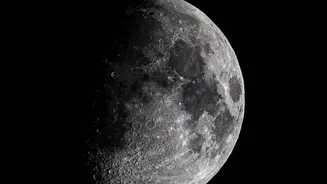
While any lens can capture the eclipse in a wide landscape, to make the moon a prominent feature, you need a telephoto lens. A focal length of at least 200mm to 300mm is recommended to capture details on the lunar surface. Many standard 'kit' zoom lenses that come with cameras reach this length. The longer the lens, the bigger the moon will appear in your frame. If you're working with a 75-300mm lens, for example, zoom all the way in for the most dramatic close-ups. Don't worry if the moon still looks small on your screen; you can always crop the image later to make it appear larger.
Nailing the Focus
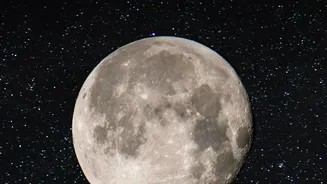
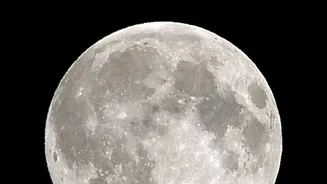
Autofocus systems often struggle in the low light of an eclipse. Your best bet is to switch your lens to manual focus (MF). Before the eclipse begins, point your camera at the bright, full moon and use your camera’s ‘Live View’ mode on the rear screen. Digitally magnify the view as much as possible (usually 5x or 10x) and carefully turn the focus ring until the edge of the moon or the details of its craters are perfectly sharp. Some cameras have a feature called 'focus peaking,' which highlights the in-focus areas on your screen, making this process even easier. Once focus is set, be careful not to bump the focus ring for the rest of the shoot.
Dialing in Your Settings
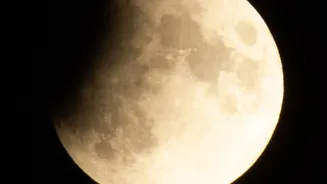
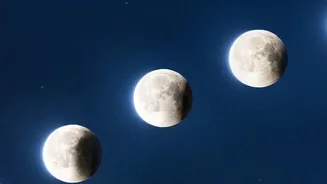
The key to a great eclipse photo is adjusting your settings as the event progresses. Start by setting your camera to Manual (M) mode. This gives you full control over the exposure triangle: aperture, shutter speed, and ISO. Begin with a low ISO, like 100 or 200, to minimize graininess. As the partial eclipse begins and the moon is still bright, a good starting point is an aperture of f/8 to f/11 and a shutter speed around 1/125s to 1/250s. This will capture the crisp details of the lunar surface.
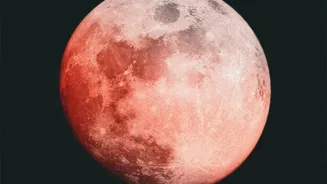
Shooting Totality: The Blood Moon
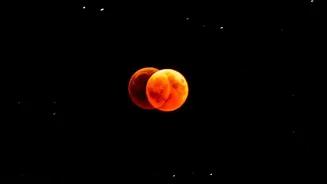
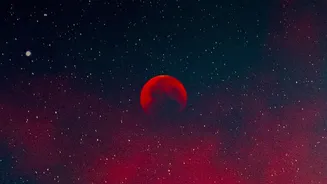
As the Earth's shadow completely covers the moon (totality), it will become much darker and glow with a reddish hue. Your initial settings will now produce a very dark image. You need to let more light into the camera. Open your aperture to its widest setting (the smallest f-number, like f/2.8 or f/4). You'll also need to increase your ISO to between 800 and 1600 and slow your shutter speed significantly. A shutter speed of around 1 to 2 seconds is often required. The eclipse unfolds slowly, so you have plenty of time to experiment with different shutter speeds to get the brightness just right. Shooting in RAW format instead of JPEG is also highly recommended, as it gives you much more flexibility to adjust exposure and color during post-processing.