
Why Your Cooking Method Matters
The way you prepare your food can dramatically alter its nutritional profile. Cooking improves the digestion and absorption of many nutrients. For instance, the antioxidant lycopene in tomatoes becomes more available when cooked. However, heat can also
reduce key vitamins, especially water-soluble ones like Vitamin C and B vitamins, which can be lost or broken down. High-temperature, dry-heat methods like frying and grilling can create harmful compounds, while gentler, moisture-based techniques tend to preserve more nutrients and add less unhealthy fat. Understanding this balance is the first step toward making every meal a healthier one.
Water-Based Wonders: Steaming and Poaching
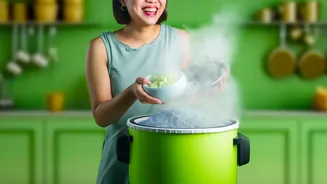
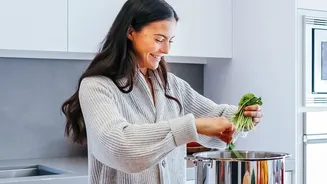
Steaming and poaching are among the healthiest ways to cook. Steaming cooks food with hot vapor, a gentle method that is excellent at preserving heat-sensitive, water-soluble vitamins that would otherwise leach into cooking water. It requires no added fat, keeping calorie counts low, and it helps food retain its natural flavour, texture, and colour. Poaching involves submerging food in gently simmering liquid, like broth or water. It's ideal for delicate proteins like fish and eggs, keeping them moist and tender without drying them out. Both methods avoid the creation of harmful compounds associated with high-heat cooking.
Dry-Heat Heroes: Roasting and Baking
Roasting and baking use the dry heat of an oven to cook food. These methods are great for bringing out sweetness and flavour without needing much, if any, added fat. Compared to frying, baking can deliver a similarly satisfying texture with significantly fewer calories and less unhealthy fat. This makes it a heart-healthy alternative for everything from chicken to potatoes. To maximize the benefits, use minimal oil and don't crank the heat too high. Roasting vegetables can even enhance the availability of certain antioxidants.
The High-Heat Debate: Grilling and Broiling
Grilling and broiling are popular for the unique flavour they impart, and they allow fat to drip away from food. However, cooking meat at these high temperatures can create potentially harmful chemicals called heterocyclic amines (HCAs) and polycyclic aromatic hydrocarbons (PAHs). PAHs form when fat drips onto the heat source and creates smoke that coats the food, while HCAs form within the muscle of the meat from the intense heat. To grill more safely, choose lean cuts of meat, marinate them first (which can reduce HCA formation), pre-cook meat in the microwave, and avoid charring your food.
Fast and Fresh: Stir-Frying and Sautéing
Stir-frying and sautéing involve cooking food quickly in a pan with a small amount of oil. Because the cooking time is short, it helps preserve the texture and many nutrients in vegetables that might be lost with longer methods. Using a little healthy fat like olive oil can even help your body absorb fat-soluble vitamins and antioxidants. The key to a healthy stir-fry is to use minimal oil, keep the heat high, and move the food constantly. If food begins to stick, adding a splash of broth or water instead of more oil is a great trick.
A Method to Moderate: Frying
Deep-frying involves submerging food in hot oil, which adds a significant amount of fat and calories. This cooking method has been linked with health concerns when done frequently. High-heat frying can also produce harmful compounds like acrylamide, particularly in starchy foods like potatoes. Pan-frying uses less oil, but can still add up. If you enjoy fried foods, think of them as an occasional treat rather than a daily staple. When possible, using an air fryer or oven-baking can provide a similar crispy texture with a fraction of the oil.